
About Eva Forest
Lived 1928 – 2007 (aged 79). Eva Forest was a Spanish editor, physician writer, politician, physician, resistance fighter and publisher.
Genoveva Forest Tarrat was a Spanish far-left activist, writer and prisoner. Born into an anarchist family in Barcelona, she studied medicine in Madrid. During the 1970s, she supported the Basque terrorist organization ETA in their resistance to the government of dictator Francisco Franco. From 1974 to 1977, she was imprisoned for complicity in the Cafetería Rolando bombing, which killed 13 people in Madrid. After Spain's transition to democracy, she served a term as a senator from 1992 until 1993. The wife of the Spanish writer Alfonso Sastre, she died in May 2007.
Forest's writings were political in nature. Her best known books include Operación Ogro: Cómo y por qué ejecutamos a Carrero Blanco (1974), an account of the assassination of the Spanish Prime Minister admiral-general Luis Carrero Blanco by ETA, and Testimonios de lucha y resistencia (1976), a testimony to the situation of political prisoners and the use of torture. Her first narrative text, Onintze en el país de la democracia (1985), is a fictional account of political violence under a democratic regime.
Early life and education Eva Forest was born in April 1928 in Barcelona. Her parents were anarchists who considered the institution of schooling to be oppressive; accordingly, they did not enroll their daughter in formal education until the end of the Spanish Civil War in 1939. In 1950, she moved to Madrid to study medicine. There she met her future husband, Having been arrested in the 1956 university protests, Sastre and Forest fled to Paris where they lived in exile until 1962. for the constituency of Gipuzkoa in 1992. She served in this position until 1993. In 2005, she joined the Basque party Herritarren Zerrenda, which was later declared unconstitutional and banned by the Spanish Supreme Court.
She died in May 2007, aged 79, after a long period of illness. She was survived by her husband Alfonso and their three children, Juan, Pablo and Eva.
Literary work Forest's writings, focused on political themes, were concerned with the resistance to Spain's dictatorship, the fight for Basque independence and political violence. Two of her widely known works (Diario y cartas desde la cárcel, 1975 and Testimonios de lucha y resistencia, 1976) are testimonies to her experience in prison and suffering torture. Her book on the assassination of Luis Carrero Blanco (Operación Ogro: Cómo y por qué ejecutamos a Carrero Blanco, 1974) sheds light on ETA's motives and tactics in carrying out the act. Her first attempt at narrative writing, Onintze en el país de la democracia (1985), is a fictional account of political violence under a democratic regime.
Selected publications
Don’t just read it —
keep it.
Full-length biographies made to live with: read them, listen on the way to work, watch them tonight.
- E-book
- Audio
- Video
Instant download · yours to keep · every purchase keeps this site free
Important facts
Family & relationships
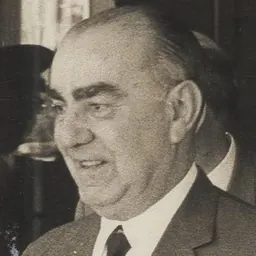
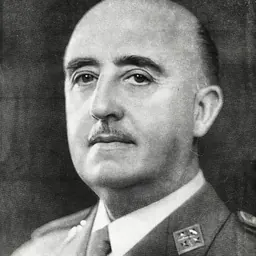
People in Eva Forest's life
Named in this biography and alive at the same time


Related people
Same field, nearest in time



Contemporaries
People whose lives overlapped Eva Forest's



Frequently asked questions
Who was Eva Forest?
Spanish publisher and writer (1928-2007)
When was Eva Forest born?
Eva Forest was born on 6 April 1928 in Barcelona.
When did Eva Forest die?
Eva Forest died on 19 May 2007 in Hondarribia.
What was Eva Forest's occupation?
Eva Forest was an editor, physician writer, politician, physician, resistance fighter and publisher.
What nationality was Eva Forest?
Eva Forest was Spanish.
Sources & further reading
Cite this page
APA: Biography.guide. (2026). Eva Forest. https://biography.guide/eva-forest/
MLA: "Eva Forest." Biography.guide, https://biography.guide/eva-forest/.
Chicago: "Eva Forest." Biography.guide. https://biography.guide/eva-forest/.
Data last updated: 2026-09-20 · Spot an error? Report a correction.
Page generated 2026-09-27 05:28 UTC