
About Eustachy Sapieha
Lived 1881 – 1963 (aged 81). Eustachy Sapieha was an Austrian and Polish diplomat, politician and foreign minister.
Eustachy Kajetan Sapieha (2 August 1881 – 20 February 1963) was a Polish nobleman, prince of the Sapieha family, politician, Polish Minister of Foreign Affairs, and deputy to the Polish parliament (Sejm).
Politics In 1900–04, he studied forestry in Zurich and afterwards earned a degree as an engineer. He was a conservative activist from Kresy, and worked with the German installed Regency Council and Józef Piłsudski during the First World War. In 1917 he unsuccessfully negotiated with the Polish National Committee. Afterwards, disappointed with Piłsudski's leftist policies, he was an organizer of the failed 1919 coup d'état; despite that, he subsequently worked with Piłsudski and supported him. During the Polish-Soviet War, he served in the cavalry.
Diplomatic career On 16 June 1919, Sapieha was delegated as the ambassador of Poland to the United Kingdom. On 4 June 1920 he and Erazm Piltz, representing the Polish government, signed the Treaty of Trianon in Paris.
In 1920, he was chosen by Prime Minister Władysław Grabski to be Minister of Foreign Affairs. Although he successfully negotiated several agreements with Western powers, he was faced with the delicate situation over the plebiscites in Upper Silesia. On 24 March 1921 the British Embassy at Warsaw wrote to Earl Curzon in London to say that he had just called upon Prince Sapieha whom he found "very depressed at the result of voting in Upper Silesia, which has on the whole turned out far worse than the Polish Government had anticipated...He agreed with me that the victory reports in the newspapers were foolish and any public rejoicing regrettable." His negotiations over federation with Lithuania also failed and, faced with criticism from the National Democrats, he resigned his post later in the year.
Parliament and WWII In 1928–29 he was a Sejm deputy from the Nonpartisan Bloc for Cooperation with the Government. After the Soviet invasion of Poland in 1939 he was arrested by the Soviets and imprisoned in the Lubyanka prison. After the Sikorski-Mayski Agreement, he joined Anders' Army. In 1941 he travelled to Kenya. He did not return to post-war communist Poland, and remained in Nairobi.
In 1956 he was awarded the Order of the White Eagle by the Polish government in exile.
Don’t just read it —
keep it.
Full-length biographies made to live with: read them, listen on the way to work, watch them tonight.
- E-book
- Audio
- Video
Instant download · yours to keep · every purchase keeps this site free
Important facts
People in Eustachy Sapieha's life
Named in this biography and alive at the same time
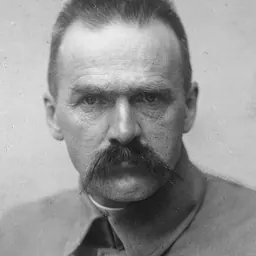


Related people
Same field, nearest in time

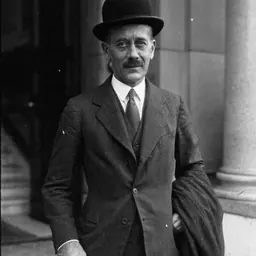
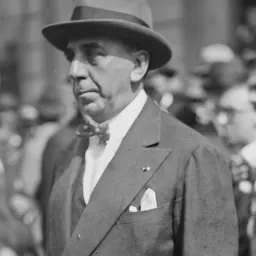
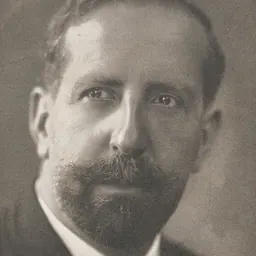
Contemporaries
People whose lives overlapped Eustachy Sapieha's





Frequently asked questions
Who was Eustachy Sapieha?
Polish politician (1881-1963)
When was Eustachy Sapieha born?
Eustachy Sapieha was born on 2 August 1881 in Verkhnia Bilka.
When did Eustachy Sapieha die?
Eustachy Sapieha died on 20 February 1963 in Nairobi.
What was Eustachy Sapieha's occupation?
Eustachy Sapieha was a diplomat, politician and foreign minister.
What nationality was Eustachy Sapieha?
Eustachy Sapieha was Austrian and Polish.
Sources & further reading
Cite this page
APA: Biography.guide. (2026). Eustachy Sapieha. https://biography.guide/eustachy-sapieha/
MLA: "Eustachy Sapieha." Biography.guide, https://biography.guide/eustachy-sapieha/.
Chicago: "Eustachy Sapieha." Biography.guide. https://biography.guide/eustachy-sapieha/.
Data last updated: 2026-09-20 · Spot an error? Report a correction.
Page generated 2026-09-27 05:22 UTC