
About Eurith D. Rivers
Lived 1895 – 1967 (aged 71). Eurith D. Rivers was an American lawyer, politician, governor, judge, jurist and prosecutor.
Career Rivers was elected to the Georgia House of Representatives in 1924 and to the Georgia State Senate in 1926. During this time, he was a member of the Ku Klux Klan. The reference was made towards chain stores, which the Ku Klux Klan opposed.
His election as governor came after a stormy Democratic primary in 1936 in which the race served as a surrogate referendum on US President Franklin Roosevelt's New Deal. Since Georgia did not allow three consecutive terms, Governor Eugene Talmadge was not eligible for re-election. Talmadge, who strongly opposed the New Deal and had delayed its implementation in Georgia, ran for the US Senate and backed Charles D. Redwine for governor. Rivers, who, as Speaker, had strongly supported the New Deal, was his opponent and won with about 60 percent of the vote, the same margin by which Talmadge lost his Senate race.
Rivers' first two-year term as governor saw Georgia pass the legislation required to bring New Deal programs into the state, and was widely acclaimed. Rivers created the 7-month school year. Under Rivers' leadership, electrical services were expanded to rural areas of the state. Georgia moved from the lowest-ranked state to the top of the list in the number of rural electrification associations. When he was in office, the State Bureau of Unemployment Compensation was created, allowing Georgians to receive unemployment benefits.
Upon his election, Rivers named Ku Klux Klan Imperial Wizard Hiram Wesley Evans as a member of his staff.
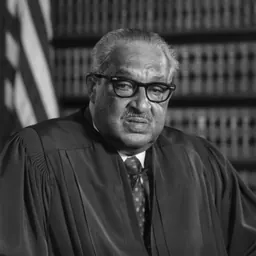
When Arthur Perry and Arthur Mack, two black men, faced rushed death sentences by an all-white jury for alleged murder, attorney and future Supreme Court justice Thurgood Marshall requested Rivers to grant due process to the defendants. Rivers himself was criminally charged with corruption and embezzlement, related to the sale of pardons, in 1942. At trial, the jury deadlocked, and Rivers was not retried.
In 1939, Rivers proclaimed a state holiday for the December premiere of the film Gone With the Wind.
Rivers sought the governorship again in 1946 but finished a distant third behind Eugene Talmadge and James V. Carmichael in the Democratic primary.
Later life and death Rivers was never again elected to public office. He became a successful radio station owner. Rivers retired to Miami-Dade County, Florida, after putting WEDR Radio on the air in Miami. He died in Atlanta, Georgia, in 1967 and is interred in a mausoleum in the City Cemetery in Lakeland, Georgia.
Rivers is the most recent Georgia governor to have been born outside the state.
Don’t just read it —
keep it.
Full-length biographies made to live with: read them, listen on the way to work, watch them tonight.
- E-book
- Audio
- Video
Instant download · yours to keep · every purchase keeps this site free
Important facts
People in Eurith D. Rivers's life
Named in this biography and alive at the same time


Related people
Same field, nearest in time

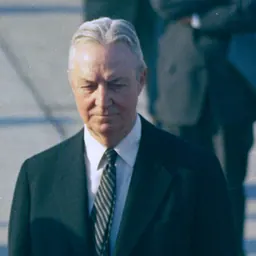
Contemporaries
People whose lives overlapped Eurith D. Rivers's
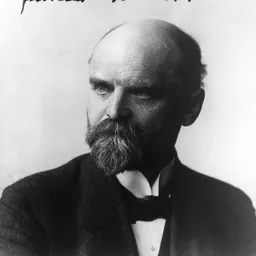
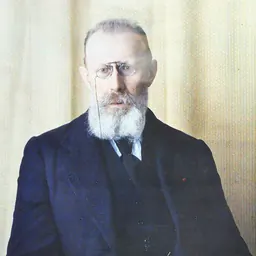
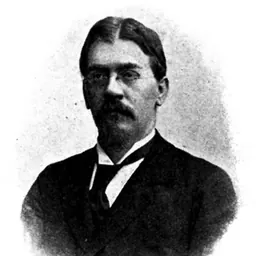

Frequently asked questions
Who was Eurith D. Rivers?
American politician: Governor of Georgia (1895–1967)
When was Eurith D. Rivers born?
Eurith D. Rivers was born on 1 December 1895 in Center Point.
When did Eurith D. Rivers die?
Eurith D. Rivers died on 11 June 1967 in Atlanta.
What was Eurith D. Rivers's occupation?
Eurith D. Rivers was a lawyer, politician, governor, judge, jurist and prosecutor.
What nationality was Eurith D. Rivers?
Eurith D. Rivers was American.
Sources & further reading
Cite this page
APA: Biography.guide. (2026). Eurith D. Rivers. https://biography.guide/eurith-d-rivers/
MLA: "Eurith D. Rivers." Biography.guide, https://biography.guide/eurith-d-rivers/.
Chicago: "Eurith D. Rivers." Biography.guide. https://biography.guide/eurith-d-rivers/.
Data last updated: 2026-09-20 · Spot an error? Report a correction.
Page generated 2026-09-27 05:22 UTC