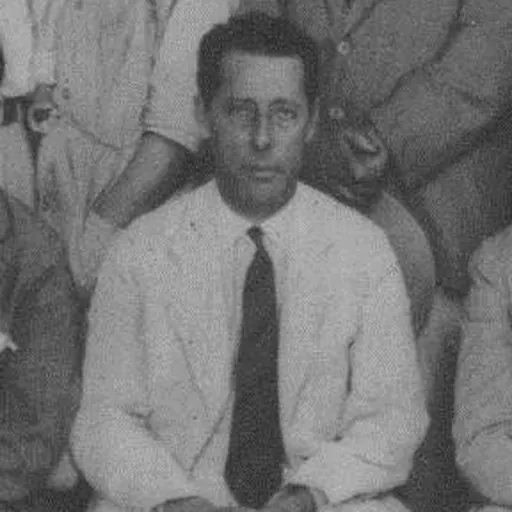
About Eugenio Rayneri Piedra
Lived 1883 – 1960 (aged 76–77). Eugenio Rayneri Piedra was a Cuban architect.
Eugenio Rayneri Piedra (1883–1960) was a Cuban architect, he was the designer of numerous buildings in Havana.
Eugenio Rayneri Piedra was the son of Eugenio Rayneri Sorrentino a noted architect and designer of the entrance of the Colón Cemetery, the Palace of the Marquise of Villalba, and the Mercado de Tacón. Notably, Rayneri Piedra was one of the architects of the Cuban National Capitol Building (Capitolio Nacional), completed in 1929 during the administration of President Gerardo Machado Morales together with architects Govantes & Cabarrocas, Raul Otero and Bens Arrarte among others. Both Rayneri Piedra and his father won the International Contest for the Capitolio with their entry named "The Republic". Rayneri Piedra was the Artistic and Technical Director during the construction of the building, built by American construction company Purdy & Henderson. The first graduate of the University of Notre Dame School of Architecture (Indiana, USA) in 1904, returned to Havana to enter into private practice with his father. He won an international competition for Cuba's Presidential Palace, and was founder and first president of the Cuban Society of Architects. He was also professor at the University of Havana, brother of pianist Laura Rayneri Piedra, and uncle of ballet master Fernando Alonso (dancer).
El Capitolio
Capitolio floor plan. Havana, Cuba. 2-Entrance Portico, 3-Rotunda, 4-Apse, 5-Salon de Marti, 6-Library, 7-Committee room, 8-Stair of Honor, 9-Patio-garden, 10-Salon (pasos perdidos), 12-Secretary, 14-Senate, 15-Cámara, 16-Gallery. According to its architect, Eugenio Rayneri Piedra, the inspiration for the cupola came from the Panthéon in Paris by way of Bramante's Tempietto in San Pietro in Montorio.
The cupola, which is stone clad around a steel frame that was constructed in the United States, is set planimetrically forward on the building to allow for the apse that contains La Republica, the "Statue of the Republic". At almost 92 m (302 ft) high, the dome was the highest point in the city of Havana until 1956 when the FOCSA Building was built reaching a height of 121 meters (397 ft). The Capitolio had the third highest dome in the world at the time of its construction.
Don’t just read it —
keep it.
Full-length biographies made to live with: read them, listen on the way to work, watch them tonight.
- E-book
- Audio
- Video
Instant download · yours to keep · every purchase keeps this site free
Important facts
People in Eugenio Rayneri Piedra's life
Named in this biography and alive at the same time

Related people
Same field, nearest in time
Contemporaries
People whose lives overlapped Eugenio Rayneri Piedra's


Frequently asked questions
Who was Eugenio Rayneri Piedra?
Cuban architect
When was Eugenio Rayneri Piedra born?
Eugenio Rayneri Piedra was born in 1883 in Havana.
When did Eugenio Rayneri Piedra die?
Eugenio Rayneri Piedra died in 1960 in Havana.
What was Eugenio Rayneri Piedra's occupation?
Eugenio Rayneri Piedra was an architect.
What nationality was Eugenio Rayneri Piedra?
Eugenio Rayneri Piedra was Cuban.
Sources & further reading
· Wikipedia: Eugenio Rayneri Piedra
· DBpedia: Eugenio Rayneri Piedra
Cite this page
APA: Biography.guide. (2026). Eugenio Rayneri Piedra. https://biography.guide/eugenio-rayneri-piedra/
MLA: "Eugenio Rayneri Piedra." Biography.guide, https://biography.guide/eugenio-rayneri-piedra/.
Chicago: "Eugenio Rayneri Piedra." Biography.guide. https://biography.guide/eugenio-rayneri-piedra/.
Data last updated: 2026-09-24 · Spot an error? Report a correction.
Portrait: Wikimedia Commons · author & licence
Page generated 2026-10-03 09:36 UTC