
About Eugenio Chiesa
Lived 1863 – 1930 (aged 66). Eugenio Chiesa was an Italian politician and chamber of Deputies (Italy).
Eugenio Chiesa (18 November 1863 – 22 June 1930) was an Italian accountant who found a job with a toy factory. He worked his way up through the ranks and, when the opportunity arose, acquired the business and became very rich. By that time he had also entered politics. As a young man he had been greatly influenced by the writings of Mazzini: he remained a committed Risorgimento-republican throughout his life. His long political career was also marked by several high-profile anti-corruption campaigns. Between 1904 and 1926 he served as a member of the Chamber of Deputies (the lower house of the kingdom's bicameral parliament). After 1922 he emerged as an uncompromising opponent of Fascism. In June 1924 he was among the first members of parliament openly to accuse Mussolini in connection with the (presumed) murder of Matteotti a couple of weeks earlier. Eugenio Chiesa ended his life in exile.
Biography Provenance and early years Eugenio Chiesa was born and grew up in Milan, concluding his education with an accountancy qualification, following which he took a job in the manufacturing sector.
At an early age he displayed his republican convictions by becoming a member of the "Società democratica della gioventù" (loosely, "Young Democrats") and embarking on a parallel career as a journalist, notably in an exceptionally polemical article which he contributed in March 1883 to the only edition that was ever published of "Il Quarantotto" ("The '48") in which he attacked what he termed "government moderation". A month earlier, on 6 February 1883, his name had appeared under another similarly passionate article in "La Nuova Italia", another short-lived political journal dedicated to preserving the political legacy of Giuseppe Mazzini.
Republican Party of Italy The period was one in which attempts were underway to firm up a new organisational structure for the republican movement. Chiesa was part of a new generation that created the foundations for a political party which valued the Mazzinian heritage and opposed the dead hand of conservatism and political moderation, while at the same time harnessing and containing the burgeoning of socialism among the "popular classes". In a letter of December 1892 addressed to Napoleone Colajanni, Chiesa writes of "our new Milanese organisation", which will be the theme of a congress to be held in Bologna in 1893 and of an initiative promised for October 1894 by the "Consociazione repubblicana romagnola" (loosely, "Republican Convocation of Romagna"). Thus was born the Italian Republican Party, formally inaugurated at Bologna on 21 April 1895. Chiesa emerged as an early and effective advocate for what has survived to become the most long-lasting of Italy's various political parties.
At around the turn of the century, the political heat had reduced and Chiesa felt able to return with his family to their home in Milan. He now faced trial in respect of an allegedly inflammatory article he had published in the magazine "Ribelle", but with the able advocacy of Giuseppe Marcora, his distinguished defence attorney, he secured an acquittal, which in turn opened the way for a cautious return to engagement in mainstream politics. Early in 1900 Eugenio Chiesa was duly elected to membership of the Milan city council. At the party congress, held that year in Florence during the first three days in November, he co-produced and presented a report dealing mainly with party organisational issues.
During the early years of the twentieth century, Chiesa came out in opposition to a sizable minority of party colleagues pushing for a closer working relationship - possibly even some form of alliance - with the Socialist Party (which despite continuing electoral progress was itself undergoing its own internal disputes about how far to compromise ideology for political pragmatism). Chiesa was robust in his insistence that he could never accept "collectivist solutions" agreed in alliance with the socialists, who would almost certainly, in terms of election results, generally emerge as the numerically weightier member of any partnership. In an electoral college vote held in March 1902, Chiesa gave his support to the anarchist Pietro Calcagno, who was imprisoned on the island of Ventotene at the time, rather than to the high-profile socialist candidate Filippo Turati. ) He frequently became a regular participant in debates, noted for the lucidity and incisiveness of his contributions. In June 1907 he was prominent among parliamentarians condemning the series of scandals unfolding on the Genoa stock exchange. In October 1907 he added his name to those of several Socialist and Radical deputies on a telegramme addressed to "Prime Minister" Giolitti in which the signatories condemned the conduct of "Carabinieri" (police) who had shot at striking workers. In July 1908 he again hit the headlines when he teamed up with Claudio Treves to head up negotiations to settle a trade dispute at the Fabriano paper mill.
It was also in 1909 that he submitted a parliamentary question, which the government chose not to answer, concerning reported links between the young widowed industrial heiress (and alleged spy) Baroness Eleonora Siemens Füssli, and General Fecia di Cossato. His presumptuousness earned him no fewer than five challenges to duels, according to Guelfo Civinini, writing in the Corriere della Sera.
Chiesa was among those deeply opposed to the military intervention identified in Italian sources as The Libyan War of 1911–12. During February 1912, as the unilateral Decree for African Annexation was under discussion, he spoke out fiercely against the repressive measures undertaken on behalf of the Italian government by the nation's colonial administrators in Libya. On the domestic front at this time he was a prominent advocate in parliament for employee rights in the private sector.
In February 1913 Chiesa participated prominently in a major street demonstration at Iesi against the government's renewal of the unpopular "Triple alliance" with Germany and Austria, whereby the participants agreed to intervene militarily in support of any alliance member in the event of foreign invasion. The alliance had long been unpopular among Italians especially among republicans, liberals and socialists, since across much of what became the Kingdom of Italy in 1861 folk memories lingered on for generations of Austria's role as a frequently repressive colonial power. Then in June 1913 he questioned the Minister of Justice as to whether any rule existed blocking freemasons from appointment as magistrates, and followed through with more detailed enquiries. Many of the leading republicans in Italy were freemasons at this time, and Chiesa was celebrated - or, among opponents, notorious - for the energy he devoted to supporting the interests of fellow masons. A committed believer in the separation of church and state, he also intervened in parliament to protest about the way in which religious education was being delivered in "certain Milan elementary schools". Later that year, when the Milanese "Camera del lavoro" (loosely, "trades union confederation") called a general strike, Chiesa invited "Prime Minister" Giolitti to intervene personally, as mediator between the bosses and the workers' representatives, and invoking the services of the city prefect. As a true republican, Chiesa had an ingrained sympathy for the emerging trades union movement, which he intellectualized as the "revolutionary syndicalism" of the Sorelian matrix. Always exceptionally active politically, both inside and outside parliament, he battled tirelessly for freedom of thought and expression, and for corresponding modernisation and updates to legislation. During the aftermath of what came to be termed the Massacre of Ancona – in which three young demonstrators were shot dead – after an "antimilitarism" demonstration got badly out of hand, Chiesa was characteristically robust and uncompromising in his very public criticism. He was one of the parliamentarians who blamed the government directly for what had happened, and he attended the funerals of the three victims. The tragedies in Ancona were part of a nationwide week of protests. After the so-called "Red Week" was over, Eugenio Chiesa worked to try to repair the broken relations between the government and the many political activists of the extreme left. Moreover, and probably more controversially, in a Republican Party meeting held early in August 1914 Chiesa openly declared that if the monarch broke the government's self-imposed neutrality ordinance (in order to enter the war on the Austrian side), it would signal that the time had come for Italy to adopt a republican government."... giunta l'ora di instaurare in Italia il governo repubblicano". Chiesa himself travelled to Lyon and then to Bordeaux to promote the idea: it turned out, however, that the French government was not prepared to accept an initiative that clearly did not have the support of the Italian government.
By the end of 1914, the Italian government was coming under intensive pressure from Berlin, Paris, Vienna and London to enter the war. Behind the scenes, a promises bidding war was in progress. It is impossible to know if Chiesa was aware of all this in any detail, but he evidently believed that the government was making preparations to intervene militarily on the side of the French and British and their Russian allies. During this time Chiesa addressed parliament to signal his backing for "Prime Minister" Salandra's adoption of what was becoming known, possibly with a nod and a wink, as "active neutrality". During the early part of May 1915, directly before Italy entered the war on the side of the Franco-Russian-English entente, Chiesa was to be found taking part in the street demonstrations organised by Milanese left-wing interventionists. Italy's declaration of war took place on 23 May 1915: Chiesa immediately asked to be conscripted into the army and sent to the front line. Over the next three and a half years he took a lead among the deputies in pushing the government to do everything necessary to support the country's military effort. In June 1915 he called on the chamber to suspend an important budget discussion in order that members might be updated about the war. In his new posting he was mandated to organise a consignment of equipment for the army air corps: he ventured to question some of the details. After the war was over he was characteristically inclusive in sharing his conclusions from 1917, which appear in a pamphlet he wrote entitled "L'Aeronautica di guerra nella gestione del Commissariato generale". In November 1917, in the aftermath of Caporetto, Army Chief of Staff Luigi Cadorna was replaced. That same month "the honorable Eugenio Chiesa" was appointed "Commissario Generale per l’Aeronautica", in the context of a broader reconfiguration which marked the start of a distancing of what became the Italian Air Force from under the direct command of the army. Chiesa was now responsible for coordinating and presiding over industrial mobilisation in respect of aircraft production.
Post-war challenges In the immediate aftermath of the war, a commission of enquiry was created to look into various controversial aspects of the conduct of the war. In respect of Chiesa's time in charge of aeronautical procurement between November 1917 and December 1918, their report accepted that his work and decisions had been undertaken correctly, both politically and administratively. The period was one of intense activity for Chiesa, both internationally and on the home front. His own area of responsibility included the negotiation of war reparations. Nevertheless, the extravagant secret undertakings from the English that may have been decisive in securing Italian participation in the war in May 1915 were only partially fulfilled at the Peace Conference. In respect of Fiume the nature of the undertakings provided to the Italians in 1915 remained unclear, but the cityfolk were left to believe that the territory would indeed become part of Italy. In September 1919 Chiesa travelled to Fiume to demonstrate his support for Gabriele D'Annunzio's attempt to free the territory for annexation to Italy, in defiance of eventual Peace Conference decisions. He undertook to inform parliament in Rome of the widespread exasperation across Fiume, and later that month was voluble in doing so. It soon became apparent that larger forces were at work, however.
With regard to his parliamentary constituency, Chiesa contributed effectively to the funding, planning and construction of the "Marina di Carrara" port facilities at Massa di Carrara, and to the extensive economic developments in the area that followed on from the port development.
Fascism and exile During the years directly following the First World War politics in western Europe, whether on the streets or at government level, continued to be impacted by the toxic nationalist currents that had characterised the first part of the century. Before 1922, however, fascist violence was for the most part restricted to the streets. In the eyes of commentators familiar with subsequent developments, Chiesa was one of a number of established politicians who adopted an attitude of "culpable indulgence" towards fascism. The attitude earned a strong reproach from the young radical intellectual Piero Gobetti (who would die young in 1926 following a severe beating by fascist thugs). There were nevertheless many within the Italian political establishment, Eugenio Chiesa among them, who believed or persuaded themselves that Italian Fascism could be "constitutionalised". He tried to make common cause with socialist parliamentarians, but as the socialist historian Gaetano Salvemini observes, there were too many contraducations in the way: "...the republicans were few in number, and dominated by old parliamentary twisters like ... Chiesa". In May 1923, as a member of the Electoral Reform Commission, Chiesa voted against the so-called Acerbo Project, a parliamentary device intended to ensure a permanent majority for the Fascist Party in the Chamber of Deputies (parliament). In June 1924, following the killing of Matteotti, Eugenio Chiesa was among the first unreservedly to impute responsibility for the atrocity to the Head of Government.
In 1925 Chiesa published his book "La mano nel sacco", a volume of articles he had already published individually in "La Voce Repubblicana" between September 1924 and March 1925, described by Gobetti as "a courageous well documented book, denouncing those whom he had previously mistaken for innivators". One of the more eye-catching disclosures in the book was Chiesa's report that a senior group of his fellow freemasons, led by Grand master Domizio Torrigiani, had collected three and a half million lire (then equivalent, at the official rate and contemporary values, to approximately 40,000 British Pounds) for Mussolini as a way of supporting the "March on Rome", which took place less than a week after the money was handed over.
In 1926, having established his credentials as an incorrigible antifascist, Eugenio Chiesa was forced into exile. In Italy, his home was ransacked by fascist paramilitaries. That year he was one of several opposition parliamentarians to have his membership of the Chamber of Deputies declared forfeit. His business assets were liquidated.
He escaped through Switzerland, settling briefly, like a number of other Italian political exiles including his fellow former parliamentarian Cipriano Facchinetti, at Annemasse, by the Franco-Swiss border south of Geneva. From there he relocated to Sèvres, on the edge of Paris. His final move was to Giverny, a small riverside municipality in the countryside, known to art lovers as the former home, between 1883 and 1926, of Claude Monet. In France, Chiesa was free to pursue his political interests and sustain a network of contacts with other Italian exiles. He was also more deeply engaged than ever in the politics of Italian free masonry, which had come under intensifying persecution in Italy since 1923, despite the enthusiasm with which many leading Italian Freemasons had initially backed the Mussolini take-over. Money was a problem, since the Italian government had succeeded in stripping him of virtually all his wealth and possessions. He was able to find enough basic accountancy work in and around Giverny to support himself and his daughter, however. It was reconstituted after a fashion in 1927 as the Paris-based Concentrazione Antifascista Italiana. Chiesa was called upon to take part in the leadership of the new organisation, but there is little indication of his having been much involved in it, though he had been active in calling for its creation. Most of the leaders of the Italian Republican Party were masons during this period, and it is likely that Chiesa participated fully in the movement's activities from the outset, though it is only in respect of his final four years, during the period of his exile in France when, under somewhat unusual and unhappy circumstances, he briefly became "Grand Master" for the exiled Italian order, that his masonic involvement becomes frequently referenced in sources. He was then one of those who on 12 January 1930 went on reconstitute, at the "Taverna Gruber", now in Parisian exile, the Grand Orient of Italy. Chiesa was elected "Grand Master", serving for slightly more than six months till his death on 22 June 1930.
Don’t just read it —
keep it.
Full-length biographies made to live with: read them, listen on the way to work, watch them tonight.
- E-book
- Audio
- Video
Instant download · yours to keep · every purchase keeps this site free
Important facts
People in Eugenio Chiesa's life
Named in this biography and alive at the same time

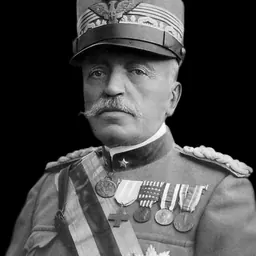

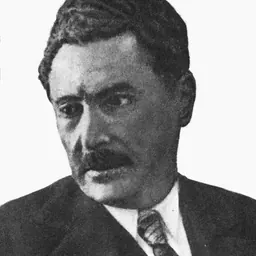

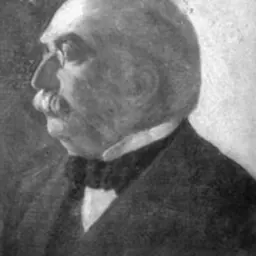
Related people
Same field, nearest in time





Contemporaries
People whose lives overlapped Eugenio Chiesa's
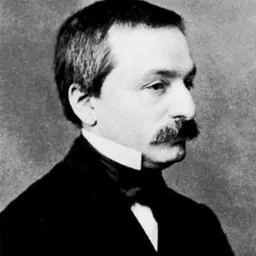




Frequently asked questions
Who was Eugenio Chiesa?
Italian politician (1863–1930)
When was Eugenio Chiesa born?
Eugenio Chiesa was born on 18 November 1863 in Milan.
When did Eugenio Chiesa die?
Eugenio Chiesa died on 22 June 1930 in Giverny.
What was Eugenio Chiesa's occupation?
Eugenio Chiesa was a politician and chamber of Deputies (Italy).
What nationality was Eugenio Chiesa?
Eugenio Chiesa was Italian.
Sources & further reading
Cite this page
APA: Biography.guide. (2026). Eugenio Chiesa. https://biography.guide/eugenio-chiesa/
MLA: "Eugenio Chiesa." Biography.guide, https://biography.guide/eugenio-chiesa/.
Chicago: "Eugenio Chiesa." Biography.guide. https://biography.guide/eugenio-chiesa/.
Data last updated: 2026-09-22 · Spot an error? Report a correction.
Page generated 2026-09-27 05:27 UTC