
About Eugénie Le Brun
Lived 1873 – 1908 (aged 34–35). Eugénie Le Brun was an Egyptian writer.
Eugénie Le Brun also known as Madame Rushdi (died October 16, 1908) was a French-born early Egyptian feminist intellectual, influential salon host, and close friend of Huda Sha'arawi.
Early life and marriage
Le Brun was born in France and raised in an upper-middle-class family. She was well educated and actively participated in elite French intellectual life. As the daughter of a middle-class family with little relative financial security, Le Brun's future place within society would be dictated completely by the position of her future husband.
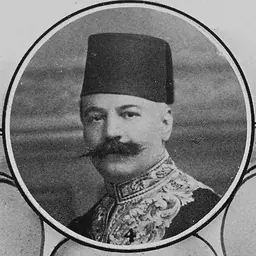
Le Brun met a prominent Egyptian landowner, Husayn Rushdi Pasha during the latter's time in France. Rushdi was born in a wealthy family of Turkish descent in Cairo and sent abroad for education in Geneva and later France. Le Brun married Rushdi who would eventually become the Egyptian Prime Minister from 1914-1917. Upon Rushdi completing his education in France, Le Brun returned with him to Cairo in 1892 to fulfill a string of prominent positions within the colonial Egyptian government.
Feminism
After moving to Cairo and undertaking the required religious study, Le Brun converted to Islam. She argued that through careful investigation of the Quran and contrary to popular western belief, Islam could be a liberalizing force and afforded women many important rights. As such, she took an interest in Islamic justice for women and often attended Islamic court proceedings. The perceived abuses of women's marital rights that Le Brun witnessed in judge decisions would later be the main focus of her book, Harem et les Musulmanes. She attempted to stress the distinction between Islam as a religion and the "distortions that the corrupt religious establishments and powerful figures had introduced to it".
Le Brun believed the best way to negotiate the separation between the public and private sphere was through intellectual activities. As such, she hosted the leading weekly women's salon in her home in Egypt beginning in the mid 1890s. While primarily focused on literary discourse, the salon topics frequently discussed intense political subjects. On one occasion, Le Brun remarked the topics ranged from "feminism, cinematographe, the naiveté of Americans, the Boxer Rebellion, the interpretation of dreams, to Karl Marx".
In addition to weekly salon gatherings, Le Brun also advocated for the education of women. She contended that while a "woman’s first duty is to her family, she can perform this duty better if she is well-educated". Sha’arawi used to attend the salons hosted by Le Brun in the 1880s where social practices such as veiling were discussed. Le Brun convinced Sha'arawi that the veil stood in the way of Egyptian women's advancement and this led Sha'arawi's public unveiling later. Sha’arawi also viewed Le Brun as an invaluable mentor with a long-lasting effect on her intellectual development and influenced by her that, after Le Brun's death in 1908, Sha’arawi wrote in her memoir: "I had come to rely heavily upon her good counsel but even after her death I felt her spirit light the way before me. When I was about to embark on something, I often paused to ask myself what she would think, and if I sensed her approval I would proceed".
Books
Le Brun wrote many books and letters throughout her lifetime. The following two were published under the pseudonym "Mme. Rachid-Pacha Niya Salima" in Paris:
Don’t just read it —
keep it.
Full-length biographies made to live with: read them, listen on the way to work, watch them tonight.
- E-book
- Audio
- Video
Instant download · yours to keep · every purchase keeps this site free
Important facts
People in Eugénie Le Brun's life
Named in this biography and alive at the same time

Related people
Same field, nearest in time


Contemporaries
People whose lives overlapped Eugénie Le Brun's


Frequently asked questions
Who was Eugénie Le Brun?
Egyptian Feminist
When was Eugénie Le Brun born?
Eugénie Le Brun was born in 1873 in Paris.
When did Eugénie Le Brun die?
Eugénie Le Brun died on 16 October 1908 in Cairo.
What was Eugénie Le Brun's occupation?
Eugénie Le Brun was a writer.
What nationality was Eugénie Le Brun?
Eugénie Le Brun was Egyptian.
Sources & further reading
Cite this page
APA: Biography.guide. (2026). Eugénie Le Brun. https://biography.guide/eugenie-le-brun/
MLA: "Eugénie Le Brun." Biography.guide, https://biography.guide/eugenie-le-brun/.
Chicago: "Eugénie Le Brun." Biography.guide. https://biography.guide/eugenie-le-brun/.
Data last updated: 2026-09-20 · Spot an error? Report a correction.
Page generated 2026-09-27 05:18 UTC