
About Eugene W. Stetson
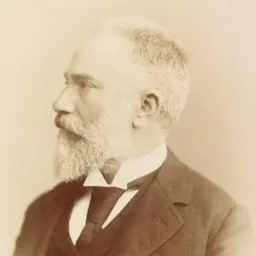
Lived 1881 – 1959 (aged 77). Eugene W. Stetson was a businessperson and banker.
Eugene William Stetson (December 5, 1881 – July 20, 1959) was an American banker and corporate executive who served as president and later chairman of the Guaranty Trust Company of New York, one of the largest financial institutions in the United States. A prominent practitioner of what became known as "relationship banking," Stetson combined commercial banking with sustained participation in the management of client companies. His career connected Wall Street finance with the development of several major American corporations, most notably The Coca-Cola Company, the Illinois Central Railroad, and the Southern Company.
In 1919, Stetson helped structure and finance the acquisition of Coca-Cola from the family of Asa Griggs Candler. He became one of the trustees controlling the reorganized corporation and remained a Coca-Cola board director for approximately forty years. At the Illinois Central, he helped direct a long-term program of debt reduction, refinancing, and physical rehabilitation that was credited with saving the railroad from probable bankruptcy during and after the Great Depression. Stetson also performed public and wartime service. During World War II, he served on the advisory board of the New York Ordnance District, assisted American Red Cross war-fund campaigns, and promoted the purchase of United States defense bonds.
In 1950, President Harry S. Truman appointed Stetson to the board of the federal Commodity Credit Corporation.
Early life and education
Stetson was born on December 5, 1881, in Hawkinsville, Georgia, to James Daniel Stetson and Eugenia Sophia Pate Stetson. His father worked as a cashier of the Hawkinsville Bank and Trust Company and later became an officer of the American National Bank in Macon, Georgia. The family moved to Macon when Eugene was about ten. He attended the Gordon Institute, a military preparatory school in Barnesville, Georgia, before entering Mercer University in 1897.
At Mercer, Stetson became a member of Phi Delta Theta and managed the university's baseball team. The position required him to arrange travel, negotiate financial guarantees, raise money, and administer the athletic association. He eliminated the association's debt and created a surplus, an episode later treated by his biographers as an early example of his organizational ability. Stetson left in 1901 without satisfying the formal requirements for a degree after disputes involving the baseball program, although he continued to identify with the class of 1901 and later reconciled with the university.
Early banking career
On July 1, 1901, Stetson joined the American National Bank of Macon. Initially employed as a teller and debt collector at about $40 a month, he learned the operational side of commercial banking. In 1904 he became cashier (the principal operating officer) of the Exchange Bank in Fitzgerald, Georgia.
In 1908, Stetson helped organize the Citizens National Bank of Macon. He first served as cashier and became president in 1910. The bank cultivated relationships with textile mills, warehouses, farms, merchants, and railroads central to the economy of middle Georgia. Stetson also became a director of the Bibb Manufacturing Company and other regional enterprises. His overlapping roles were characteristic of early-twentieth-century American commercial banking, in which local information, personal reputation, and interlocking business networks often substituted for standardized credit data.
Stetson served two terms as president of the Macon Chamber of Commerce and helped organize the Georgia State Chamber of Commerce. When Macon acquired its privately operated water system, he served as an arbitrator for the city. His advocacy of industrialization, transportation investment, and access to northern capital reflected the economic program associated with the contemporary New South.
Guaranty Trust Company
Recruitment and relationship banking
In 1916, Charles H. Sabin, president of the Guaranty Trust Company, recruited Stetson as a vice president. Guaranty sought an executive familiar with southern banking, cotton finance, textiles, railroads, and the commercial networks of the southeastern United States. Sabin offered him an annual salary of $18,000 on September 25, 1916. Before moving to New York, Stetson supervised the voluntary liquidation of Citizens National; its shareholders received $150 for each $100 share in addition to dividends paid while the bank operated.
At Guaranty, Stetson attracted business, evaluated credit, cultivated correspondent banks, and maintained corporate relationships. He eventually joined the bank's executive committee. His business circle included Robert W. Woodruff, W. Averell Harriman, Thomas J. Watson, Thomas W. Lamont, and pharmaceutical executive H. Smith Richardson.
Stetson's method was an example of relationship banking: the accumulation of private information through repeated dealings and the provision of financial and advisory services over an extended period. In its early-twentieth-century form, this could include board membership and direct participation in corporate policy. Such relationships could reduce information asymmetry and provide borrowers with patient capital, but they could also concentrate influence in banks, entrench insiders, and create conflicts between a bank's duties as creditor, securities intermediary, trustee, and corporate director.
Coca-Cola financing
In 1919, Atlanta banker Ernest Woodruff sought financing to purchase Coca-Cola from the Candler family. The Trust Company of Georgia could not complete the $25 million transaction alone. Introduced through a mutual acquaintance, Woodruff and Stetson assembled a syndicate that included Guaranty Trust, the Trust Company of Georgia, Chase National Bank, and Bankers Trust. The purchasers paid $15 million in cash and $10 million in preferred shares of a newly incorporated Delaware company.
The syndicate offered 417,000 common shares to the public at $40 each, while 83,000 shares were reserved for the bankers. The August 26, 1919 offering was oversubscribed within hours. Stetson, Woodruff, and Coca-Cola executive Samuel Candler Dobbs became trustees of a five-year voting trust and Stetson joined Coca-Cola's board and executive committee. The transaction converted a closely held regional manufacturer into a publicly traded company and supplied capital for expansion.
Stetson remained associated with Coca-Cola for the rest of his life. He advised on banking arrangements, financing, trademarks, acquisitions, marketing, and the company's relations with its independent bottlers. He became a close friend and counselor to Robert W. Woodruff after Woodruff became company president in 1923. Litigation involving the bottling contracts illustrates the legal and governance problems surrounding the growing system, although Stetson was not a party to the later cases.
Other corporate work and litigation
Stetson used comparable methods with industrial, retail, transportation, and financial companies. At various times he was associated with Air Reduction Company, Canada Dry Ginger Ale, Textile Banking Company, French-American Banking Corporation, Tri-Continental Corporation, Selected Industries, United Drug Company, McCrory Stores, United Cigar Stores, Aviation Corporation, W. A. Harriman Securities, Missouri–Kansas–Texas Railroad, and Seaboard Air Line Railroad. Contemporary directories and company reports show how extensively bankers occupied corporate boards during this period.
Some of the overlapping roles that characterized Guaranty's business became the subject of shareholder litigation. In Litwin v. Allen, a New York court examined transactions involving Guaranty directors and affiliated investment companies and held directors liable for losses on one repurchase arrangement. The case became a frequently cited illustration of fiduciary scrutiny during the reorganization of American finance after 1929.
Stetson chaired the executive committee of the French-American Banking Corporation from 1930 until 1957. His work sustaining Franco-American financial relations before and after the German occupation of France led the French government to appoint him a chevalier of the Legion of Honour in 1952.
President and chairman
Stetson was elected president of Guaranty Trust on January 16, 1941, succeeding Palen Conway. His accession came as the United States expanded defense production and the bank increased its government-finance and war-industry business. Guaranty's holdings of United States government securities rose from approximately $1 billion in 1941 to $1.7 billion in 1942. The bank developed emergency facilities, continued compensation for employees entering military service, and provided services to companies producing war matériel.
On January 19, 1944, Stetson became chairman of the board and J. Luther Cleveland succeeded him as president. Stetson retired from executive management in January 1947 but remained a director and executive-committee member. His tenure spanned wartime controls, rapid growth in federal debt, and an era in which commercial banks were redefining their roles after the banking reforms of the 1930s.
Morgan–Guaranty merger During the late 1950s, Stetson participated in discussions to merge Guaranty Trust with J.P. Morgan & Co. The institutions had long-standing business and personal connections, but commercial-bank competition, regulatory change, and the growing financial requirements of corporations increased the pressure for consolidation. Stetson supported combining Guaranty's deposit base and commercial-banking operations with Morgan's name and client network.
The merger took effect on April 24, 1959, creating Morgan Guaranty Trust Company of New York. Stetson was among the Guaranty directors elected to the combined board and remained a director until his death less than three months later. The new bank's first annual report credited him with helping bring about the union and integrate the institutions.
In 1941, after Harriman left for London to administer Lend-Lease assistance, he asked Stetson to replace him as chairman of the railroad's executive committee. Stetson supported a policy that placed debt reduction, modernization, and long-term solvency ahead of immediate dividends. Wartime traffic supplied earnings that the railroad used to retire obligations and rehabilitate equipment.
The railroad ultimately consolidated 33 bond issues secured by 27 mortgages into a unified mortgage dated November 1, 1949. The refinancing reduced carrying costs and simplified a capital structure created through decades of construction, acquisition, and reorganization.
Illinois Central president Wayne A. Johnston later described Stetson as the principal architect of the refinancing and debt-reduction program. Stetson remained chairman of the executive committee until his death, when Johnston succeeded him. The railroad's 1959 annual report credited Stetson's leadership with strengthening its financial position.
Southern Company and regional development
After retiring from full-time banking, Stetson advised the organization of the Southern Company, which emerged from the court- and regulator-supervised breakup of Commonwealth & Southern under the Public Utility Holding Company Act of 1935. In 1947, the U.S. Securities and Exchange Commission approved a new holding company for Alabama Power, Georgia Power, Mississippi Power, and Gulf Power.
When Commonwealth & Southern distributed Southern Company shares in 1949, Stetson acted as a designated proxy holder in an effort to ensure regional control. Federal restrictions on interlocking relationships kept him from serving on the utility's board, but he continued as an adviser. The company moved its headquarters to Atlanta and established Southern Services in Birmingham.
Stetson also served as a trustee and advisory-committee member of the Southern Research Institute, which conducted industrial research in chemistry, textiles, medicine, and later aerospace engineering.
Public, wartime, and civic service
Although Stetson never held elective office, he undertook several governmental and quasi-public assignments. During World War II, he served on the advisory board of the New York Ordnance District, which assisted coordination of military procurement in the New York–New Jersey industrial region. He also served for a year as chairman of the New York Clearing House Committee and in 1943 became president of the New York City group of the New York State Bankers Association.
On January 16, 1942, Stetson instituted a voluntary payroll-deduction program for Guaranty employees to purchase United States defense bonds. The program reportedly achieved participation throughout the staff and generated more than $1.1 million in purchases. He also chaired the commerce and industry committee of the New York Red Cross drives from 1941 through 1943 and became vice-chairman of the 1944 Greater New York War Fund.
After the war, Stetson served on a committee that assisted the United Nations in seeking a permanent headquarters in New York City.
In February 1950, President Truman appointed Stetson to the advisory board of the Commodity Credit Corporation, the federal agency that supported agricultural prices and financed inventories of farm commodities. His selection drew on his experience in cotton finance, agricultural markets, warehouses, railroads, and southern banking. Stetson resigned in September 1950; Erle Cocke Sr. was appointed to succeed him in June 1951.
Personal life
Stetson married Josephine Moulton Shaw on December 28, 1904. They had two children before she died of scarlet fever in 1912. In 1915, he married Iola Lamar Wise of Macon; they had three children.
Death
Stetson suffered a cerebral hemorrhage on July 17, 1959, and died at Doctors Hospital in Manhattan on July 20, aged 77. He was survived by his wife, Iola; daughters Josephine Stetson Hatcher and Grace Stetson Haverstick; sons Eugene William Stetson Jr., Charles Pate Stetson, and Basil Wise Stetson; and fifteen grandchildren.
Stetson's papers, including correspondence, speeches, business records, scrapbooks, photographs, and material concerning Guaranty Trust, Coca-Cola, Illinois Central, and Southern Company, are held by Mercer University Archives. Mercer dedicated the Eugene W. Stetson Memorial Library in 1965 and named its School of Business and Economics for him in 1984.
Honors
Honorary Doctor of Laws, Mercer University, 1933 Chevalier of the French Legion of Honour, 1952 Mercer University alumni award for meritorious service, 1953 Stetson Avenue in Chicago named in his honor, 1955 Bishop's Cross of the Episcopal Diocese of New York, 1959 Eugene W. Stetson Memorial Library dedicated at Mercer University, 1965 Mercer's School of Business and Economics named for him, 1984
Don’t just read it —
keep it.
Full-length biographies made to live with: read them, listen on the way to work, watch them tonight.
- E-book
- Audio
- Video
Instant download · yours to keep · every purchase keeps this site free
Important facts
People in Eugene W. Stetson's life
Named in this biography and alive at the same time




Related people
Same field, nearest in time

Contemporaries
People whose lives overlapped Eugene W. Stetson's

Frequently asked questions
Who was Eugene W. Stetson?
5 Dec 1881 - 20 Jul 1959
When was Eugene W. Stetson born?
Eugene W. Stetson was born on 5 December 1881 in Hawkinsville.
When did Eugene W. Stetson die?
Eugene W. Stetson died on 20 July 1959.
What was Eugene W. Stetson's occupation?
Eugene W. Stetson was a businessperson and banker.
Sources & further reading
· Wikipedia: Eugene W. Stetson
Cite this page
APA: Biography.guide. (2026). Eugene W. Stetson. https://biography.guide/eugene-w-stetson/
MLA: "Eugene W. Stetson." Biography.guide, https://biography.guide/eugene-w-stetson/.
Chicago: "Eugene W. Stetson." Biography.guide. https://biography.guide/eugene-w-stetson/.
Data last updated: 2026-09-20 · Spot an error? Report a correction.
Page generated 2026-09-27 05:26 UTC