
About Eugene Merle Shoemaker
Lived 1928 – 1997 (aged 69). Eugene Merle Shoemaker was an American astronomer and geologist, known for Comet Shoemaker–Levy 9 and Planetary science.
Early life and formal education Shoemaker was born in Los Angeles, California, the son of Muriel May (née Scott), a teacher; and George Estel Shoemaker, who worked in farming, business, teaching, and motion pictures. His parents were natives of Nebraska. During Gene's childhood they moved between Los Angeles, New York City, Buffalo, New York and Wyoming, as George worked on a variety of jobs. George hated living in big cities, and was quite satisfied to take a job as director of education for a Civilian Conservation Corps (CCC) camp in Wyoming. His wife soon found life in a remote cabin quite unsatisfactory. They compromised, when Muriel got a teaching job in Buffalo. She could teach in the Buffalo School of Practice of the State Teachers College at Buffalo during the school year while keeping Gene with her, then both would return to Wyoming during the summers. Gene's passion for studying rocks was ignited by the science education courses offered by the Buffalo Museum of Education. He enrolled in the School of Practice in the fourth grade, and began collecting samples of minerals. Within a year, he was also taking high-school-level evening courses. The family moved back to Los Angeles in 1942, where Gene enrolled in Fairfax High School at the age of thirteen. He completed high school in three years. During that time he also played violin in the school orchestra, excelled in gymnastics, and got a summer job as an apprentice lapidary.
Shoemaker enrolled in the Caltech in 1944, at the age of sixteen. (Astronomer and co-discoverer of the Shoemaker-Levy comet, David H.) Levy said that Shoemaker had never considered going to any other university than Caltech.
The Shoemakers had three children: two daughters and one son. Carolyn saw her work as keeping house and raising the children especially after they settled in Flagstaff in the 1960s. She had tried teaching school before they married, but found the work unsatisfying. She also traveled sometimes with Gene, but stopped after she noticed that her absence affected the children. After their children were grown, Carolyn wanted something meaningful to combat the "empty nest" feeling. By then, Gene suggested that she take up astronomy and join his team looking for asteroids approaching Earth. A student working at Lowell Observatory commenced teaching her astronomy. She showed great potential and launched her career as a planetary astronomer at age 51. She continued the work until her death in 2021.
Astrogeology and Apollo
In 1960, Shoemaker directed a team at the USGS center in Menlo Park, California, to generate the first geological map of the Moon using photographs taken by Francis G. Pease. Shoemaker also helped pioneer the field of astrogeology by founding the Astrogeology Research Program. He was prominently involved in the Lunar Ranger missions to the Moon, joining the television imaging team of Harold Urey and Gerard Kuiper, which turned into a preparatory mission for the future crewed landing. Shoemaker was then chosen to be the principal investigator for the Surveyor program's television experiment, and then the lunar geology principal investigator for Apollo 11, Apollo 12, and Apollo 13. He was a CBS News television commentator on the early Apollo missions, especially the Apollo 8 and Apollo 11 missions, appearing with Walter Cronkite during live coverage of those flights.
According to David H. Levy, just before the crewed Moon landings,
The fatal crash happened when Hale-Bopp was still visible to the naked eye, having passed perihelion and having moved into the southern celestial hemisphere.
Awards and tributes Shoemaker received a large number of awards for his professional work. According to the obituary published by the USGS Astrogeology Science Center, these included: Doctorate of Science, Arizona State College, Flagstaff, 1965. John Price Wetherill Medal of the Franklin Institute, co-recipient with E.C.T. Chao, 1965. Arthur S. Flemming Award, 1966. Doctorate of Science, Temple University, 1967. NASA Medal for Scientific Achievement, 1967. U.S. Department of the Interior Honor Award for Meritorious Service, 1973. Member, U.S. National Academy of Sciences, 1980. U.S. Department of the Interior Distinguished Service Award, 1980. Arthur L. Day Medal of the Geological Society of America, 1982. G.K. Gilbert Award of the Geological Society of America, 1983. Rieser Kulturpreis, co-recipient with E.C.T. Chao and Richard Dehm, 1983. Honorary Doctorate of Science, University of Arizona, 1984. Barringer Award of the Meteoritical Society, 1984. Kuiper Prize of the American Astronomical Society, Division for Planetary Sciences, 1984. Leonard Medal of the Meteoritical Society, 1985. Distinguished Alumni Award of the California Institute of Technology, 1986. Rittenhouse Medal of the Rittenhouse Astronomical Society, co-recipient with C.S. Shoemaker, 1988. National Medal of Science, 1992. Whipple Award, American Geophysical Union, 1993. Fellow, American Academy of Arts and Sciences, 1993. AIAA Space Science Award, 1996. NASA Exceptional Scientific Achievement Medal, 1996. William Bowie Medal, American Geophysical Union, 1996. Special Award, American Association of Petroleum Geologists, 1997. Shoemaker Award, Texas Section of the American Institute of Professional Geologists, awarded posthumously, 1997.
On July 24, 1997, a memorial for Shoemaker and Jurgen Rahe was presented in the U.S. House of Representatives by California representative George E. Brown Jr. The memorial was published in the Congressional Record. The memorial credited Shoemaker with being either the discoverer or co-discoverer of 820 asteroids and comets during his career.
A ring-like topographic feature in Western Australia, an astrobleme previously named the "Teague ring" was renamed "Shoemaker Crater" in honor of Shoemaker. The Near Earth Asteroid Rendezvous space probe was renamed "NEAR Shoemaker" in his honor. It arrived at asteroid 433 Eros in February 2000, and landed on the asteroid after a year of orbital study. He was previously honored with the asteroid 2074 Shoemaker, discovered and named by his colleague, Eleanor F. Helin.
In their 2020 album, Human. :II: Nature., Finnish metal band Nightwish paid tribute to Shoemaker in the song "Shoemaker". Composer Tuomas Holopainen says he was inspired by his biography, which moved the entire band to tears.
List of discovered minor planets
Shoemaker is credited by the Minor Planet Center with the co-discovery of 183 minor planets between 1977 and 1994.
Don’t just read it —
keep it.
Full-length biographies made to live with: read them, listen on the way to work, watch them tonight.
- E-book
- Audio
- Video
Instant download · yours to keep · every purchase keeps this site free
Important facts
Family & relationships
People in Eugene Merle Shoemaker's life
Named in this biography and alive at the same time




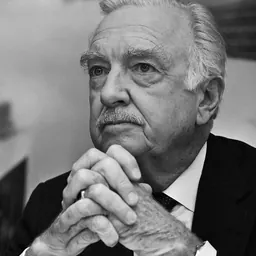


Related people
Same field, nearest in time


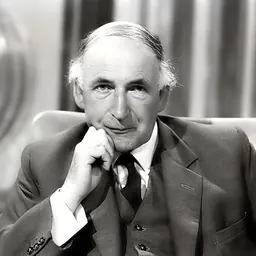
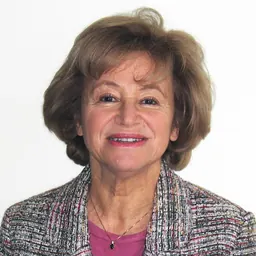
Contemporaries
People whose lives overlapped Eugene Merle Shoemaker's
Frequently asked questions
Who was Eugene Merle Shoemaker?
American geologist and astronomer
When was Eugene Merle Shoemaker born?
Eugene Merle Shoemaker was born on 28 April 1928 in Los Angeles.
When did Eugene Merle Shoemaker die?
Eugene Merle Shoemaker died on 18 July 1997 in Alice Springs.
What was Eugene Merle Shoemaker's occupation?
Eugene Merle Shoemaker was an astronomer and geologist.
What was Eugene Merle Shoemaker known for?
Eugene Merle Shoemaker was known for Comet Shoemaker–Levy 9 and Planetary science.
What nationality was Eugene Merle Shoemaker?
Eugene Merle Shoemaker was American.
Sources & further reading
· Wikipedia: Eugene Merle Shoemaker
· DBpedia: Eugene Merle Shoemaker
Cite this page
APA: Biography.guide. (2026). Eugene Merle Shoemaker. https://biography.guide/eugene-merle-shoemaker/
MLA: "Eugene Merle Shoemaker." Biography.guide, https://biography.guide/eugene-merle-shoemaker/.
Chicago: "Eugene Merle Shoemaker." Biography.guide. https://biography.guide/eugene-merle-shoemaker/.
Data last updated: 2026-09-20 · Spot an error? Report a correction.
Page generated 2026-09-27 05:25 UTC