
About Eugene M. Fahey
Born 1951. Eugene M. Fahey is an American judge.
Eugene M. Fahey (born September 1, 1951) is an American judge who served as an Associate Judge of the New York Court of Appeals from 2015 to 2021.
Education and early career Born in Buffalo, New York, Fahey attended St. Joseph's Collegiate Institute in the Town of Tonawanda, and received a Bachelor of Arts (cum laude) from State University of New York at Buffalo in 1974, and was elected to the Buffalo Common Council, serving from 1978 to 1983. He received a Juris Doctor from SUNY Buffalo Law School in 1984, Fahey remained in the race as the Conservative Party candidate, but did not actively campaign, and received only a small proportion of the vote in the general election, also won by Masiello.
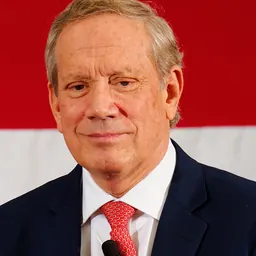
Governor George Pataki appointed Fahey to the Appellate Division, Fourth Department in December 2006. allowing depositions of foreign witnesses using video technology in certain circumstances; clarifying when someone can request electronic material from government agencies under the Freedom of Information Law; holding that sex offenders have a right to effective assistance of counsel in civil confinement proceedings; and dissenting from a ruling affirming a criminal conviction in a case where the prosecutor was accused of mischaracterizing DNA evidence (which was later reversed by the New York State Court of Appeals).
New York State Court of Appeals In January 2015, Fahey was nominated to the New York State Court of Appeals by Governor Andrew M. Cuomo. The New York State Senate unanimously confirmed his nomination on February 9, 2015. Fahey retired from the court on December 31, 2021, after reaching the constitutional mandatory retirement age of 70.
Notable opinions In Davis v South Nassau Communities Hosp., 26 NY3d 563 , Fahey concluded that "where a medical provider has administered to a patient medication that impairs or could impair the patient's ability to safely operate an automobile, the medical provider has a duty to third parties to warn the patient of that danger."
In People v Otis Boone (30 NY3d 521 ), Fahey wrote that because of the high error rate of eyewitness identifications, a trial court must caution a jury about the potential fallibility of an identification of a defendant by a person of a different race when the defendant asks for such an instruction.
In Expressions Hair Design v Schneiderman, 32 NY3d 382 , Fahey explained that state law allows businesses to post different prices for customers paying with cash or check and customers paying with credit card.
In Deutsche Bank Natl. v Flagstar Capital Mkts., 32 NY3d 139 , Fahey wrote that parties to a contract cannot use certain language to "pause" the statute of limitations period.
In People v Aleynikov, 31 NY3d 383 , Fahey wrote for the court when it upheld a defendant's criminal conviction for uploading proprietary source code to a computer server without authorization.
In People v Wiggins, 31 NY3d 1 , Fahey explained that a delay between a defendant's arrest and plea exceeding six years violated constitutional speedy trial protections.
In Matter of Nonhuman Rights Project, Inc. v Lavery, (31 NY3d 1054 [concurring]), Fahey concurred in the Court’s decision to deny an animal rights group’s motion for leave to appeal in a habeas corpus case brought on behalf of two confined chimpanzees, writing separately to explain: “The issue whether a nonhuman animal has a fundamental right to liberty protected by the writ of habeas corpus is profound and far-reaching. It speaks to our relationship with all the life around us. Ultimately, we will not be able to ignore it. While it may be arguable that a chimpanzee is not a 'person,' there is no doubt that it is not merely a thing.”
In Williams v Beemiller, Inc. (33 NY3d 523 [dissent]), Fahey dissented from the court's decision that New York State courts cannot exercise "long arm" jurisdiction over out-of-state gun merchants who place firearms in the stream of commerce knowing that such weapons will be resold for illegal purposes in this state.
In People v Cadman Williams (35 NY3d 24 ), Fahey, writing for the court, held that a trial court must hold an evidentiary hearing (a "Frye hearing") before admitting DNA evidence derived from proprietary “black box” technology that cannot be reviewed by relevant independent experts and the scientific community at large.
Don’t just read it —
keep it.
Full-length biographies made to live with: read them, listen on the way to work, watch them tonight.
- E-book
- Audio
- Video
Instant download · yours to keep · every purchase keeps this site free
Important facts
People in Eugene M. Fahey's life
Named in this biography and alive at the same time
Related people
Same field, nearest in time



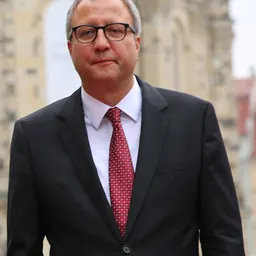
Contemporaries
People whose lives overlapped Eugene M. Fahey's

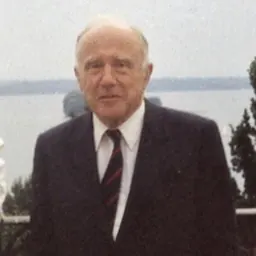
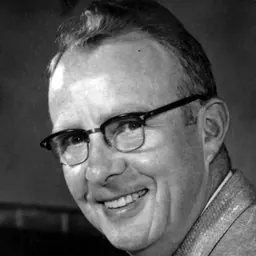

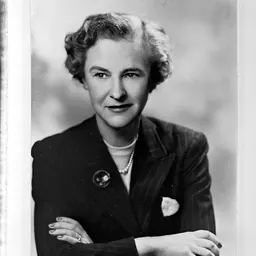
Frequently asked questions
Who is Eugene M. Fahey?
American judge (born 1951)
When was Eugene M. Fahey born?
Eugene M. Fahey was born on 1 September 1951 in Buffalo.
What is Eugene M. Fahey's occupation?
Eugene M. Fahey is a judge.
What nationality is Eugene M. Fahey?
Eugene M. Fahey is American.
Sources & further reading
Cite this page
APA: Biography.guide. (2026). Eugene M. Fahey. https://biography.guide/eugene-m-fahey/
MLA: "Eugene M. Fahey." Biography.guide, https://biography.guide/eugene-m-fahey/.
Chicago: "Eugene M. Fahey." Biography.guide. https://biography.guide/eugene-m-fahey/.
Data last updated: 2026-09-20 · Spot an error? Report a correction.
Page generated 2026-09-27 04:58 UTC