
About Eugene Landy
Lived 1934 – 2006 (aged 71). Eugene Landy was an American psychologist, psychotherapist and therapist, known for Brian Wilson.
Eugene Ellsworth Landy (November 26, 1934 – March 22, 2006) was an American psychologist known for his controversial 24-hour therapy program and treatment of celebrity clients. Landy's regimen involved supervising and micromanaging his client's life with a team of counselors and doctors. His most notable patient was the Beach Boys' Brian Wilson, with whom he formed a business and creative partnership in the 1980s.
Born in Pittsburgh, Pennsylvania, Landy aspired to show business as a teenager, working odd jobs as a radio producer, and was an early manager to guitarist George Benson. During the 1960s, Landy studied psychology, earning his doctorate at the University of Oklahoma. After moving to Los Angeles, he treated many celebrity clients, including musician Alice Cooper and actors Richard Harris, Rod Steiger, Maureen McCormick, and Gig Young.
Brian Wilson became a patient of Landy's program in 1975. Landy was discharged within a year due to his burdensome fees. In 1982, Landy was re-employed as Wilson's therapist, subsequently becoming his executive producer, business manager, co-songwriter, and business adviser. Landy co-wrote and co-produced Wilson's first two solo projects, Brian Wilson (1988) and the unreleased Sweet Insanity (1990), and allegedly ghostwrote portions of Wilson's first memoir Wouldn't It Be Nice: My Own Story (1991).
In 1989, the state of California revoked Landy's professional license amidst accusations of ethical violations and patient misconduct. Although Landy ceased to be Wilson's psychologist, Landy continued to act as Wilson's business partner until a 1992 restraining order barred Landy from contacting the musician. Landy then continued his practice with licensure in New Mexico and Hawaii until his death from lung cancer at the age of 71. His treatment of Wilson was dramatized in the 2014 biopic Love & Mercy, in which Landy is portrayed by Paul Giamatti.
Background Eugene Ellsworth Landy was born on November 26, 1934, in Pittsburgh, Pennsylvania, the only child of Jules C. Landy, a medical doctor and psychology professor,
While serving the hospital, Landy became cultured in the language used by its teenagers.
Around 1972, Landy founded a Beverly Hills clinic, the Foundation for the Rechanneling of Emotions and Education (FREE). Unusually, he had his own press kit. At Landy's insistence, Wilson appeared on Saturday Night Live, choosing to perform a solo piano rendition of "Good Vibrations" which received mixed feedback. In 1977, Wilson was asked if Landy had too much control; he said, "I thought so, but there was nothing I could do about it and I eventually gave in to it. ... [He had] control of my life legally through the commitment of my wife. ... He definitely helped me. It cost over a hundred thousand dollars – he charged a hell of a lot per month." Wilson then reported that Landy was replaced with a different doctor. Six months after meeting Wilson, she had reported Landy to the state's attorney general, who informed her that nothing could be done without the cooperation of Wilson's family. Ledbetter felt that the family had been at their "rope's end" with Wilson, and that they did not know what to do to help him. She said that three years into their relationship, Landy ordered Wilson to sever ties with her.
Music and business associations
Between 1983 and 1986, Landy charged about $430,000 annually, forcing Wilson's family members to devote some publishing rights to his fee. In 2015, Wilson remembered of the song: "we were just having a good time. ... it was fun."
In late 1987, Landy and Wilson became creative partners in a company called Brains and Genius, a business venture where each member would contribute equally and share any profits from recordings, films, soundtracks, or books. This prompted the record's co-producer P.F. Sloan to pen a letter to Billboard that refuted Landy's claim. Sloan later surmised that Landy had made the claim in order to gain credibility and appease members of the medical community who were questioning why Landy felt that he was an appropriate songwriting collaborator for Wilson.
For the publishing of Wilson's autobiographic memoir, Wouldn't It Be Nice: My Own Story, Landy stood to earn 30% of its proceeds. The book glorifies Landy and its contents were challenged for plagiarism. Landy denied accusations that he was involved as a ghostwriter. Wilson later distanced himself from the book. In a 1995 court case, Wilson's lawyers argued that HarperCollins were aware that Wilson's statements in the book were either manipulated or written by Landy.
State intervention Action was taken against Landy's professional practice as a result of the Beach Boys' and Wilson family's struggles for control.
In February 1988, the State of California Board of Medical Quality charged Landy with ethical and license code violations stemming from the improper prescription of drugs and various unethical personal and professional relationships with patients, citing one case of sexual misconduct with a female patient, along with Wilson's psychological dependency on Landy. Landy denied the allegations, but later admitted to one of the seven charges which accused him of wrongfully prescribing drugs to Wilson. Landy surrendered his psychological license, complying with an agreement made with the state of California, and was not allowed applications for reinstatement for the next two years.
salign = left [Wilson] still has an oral drive. He would still overeat and overdose if you let him. He has total freedom in every other way. — Wilson's psychiatrist Sol Samuels, 1988
Landy estimated that, from 1983 to 1991, his fees had cost Wilson approximately $3 million. In 1991, Wilson told reporters that his prescribed medications included Cogentin, Eskalith, Xanax, Navane, and Serentil.
Love & Mercy Landy's treatment of Wilson in the 1980s was dramatized in the 2014 biographical film Love & Mercy, in which Landy is portrayed by Paul Giamatti. These events are told from the point of view of Wilson's then-girlfriend Melinda Ledbetter. Screenwriter Oren Moverman stated that virtually everything in the 1980s portions was sourced from conversations he had with Ledbetter. He felt that Landy was the most difficult character to write for, "even though many things that he says in the movie I actually have recording of, in real life he was a cartoon and in real life he was so over the top." Giamatti said he prepared for the role by meeting Landy's early career acquaintances and listening to hours of tapes where "he'd just keep talking and talking, in these completely huge paragraphs. They were brilliant-sounding, but if you dug into them they didn't make much sense."
Landy's son Evan disputed the film's accuracy, believing that his father was unfairly portrayed. Mike Love commented that Evan's account was "very interesting because you get an intimate look at someone who was with Brian every day for a few years." Although he had not watched the film, he also said that it overstated Ledbetter's role in stopping the treatment. Both Brian Wilson and Melinda Ledbetter have attested to the accuracy of the film's portrayal of Eugene Landy, with Brian Wilson stating "[Giamatti] was very scary as Landy—he even got his voice right." Ledbetter said: "After I first saw the film, I had to just drive around for a couple of hours to clear my head, then I remembered that what Landy did to Brian was even worse. You don't get a sense of it in the movie, but it happened on a daily basis, for years."
Personal life Landy's first three marriages ended in divorce. Margalit Fox, obituarist for The New York Times, identified longtime domestic partner Alexandra Morgan as his fourth wife and survivor. of pneumonia complicated by lung cancer. Wilson's daughter Carnie quoted her father saying, "Dr. Landy died today. I know a lot of people didn't like him, but I loved him."
Legacy
In 2015, Wilson reflected, "I thought he was my friend, but he was a very fucked-up man," and also, "I still feel that there was benefit. I try to overlook the bad stuff, and be thankful for what he taught me."
Music producer Don Was commented in 1995 that Wilson had been "so different from his public image as a drug burnout or of someone catatonic and propped up by a greedy psychologist. ... I knew Landy. I was around for the tail end of it, and I saw some gray in there; he wasn't just this evil guy who took over Brian."
Mike Love said in a 2004 interview, "He was very tough and egregious and scandalously expensive with Brian's money. But I have to give credit for saving Brian's life. ... He was the only guy we knew who could handle Brian because Brian was a monumental case."
Don’t just read it —
keep it.
Full-length biographies made to live with: read them, listen on the way to work, watch them tonight.
- E-book
- Audio
- Video
Instant download · yours to keep · every purchase keeps this site free
Important facts
People in Eugene Landy's life
Named in this biography and alive at the same time

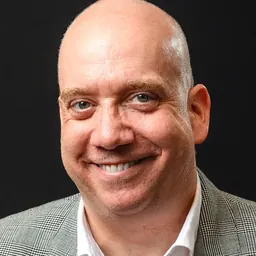





Related people
Same field, nearest in time
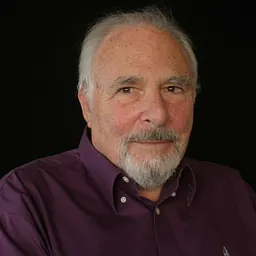

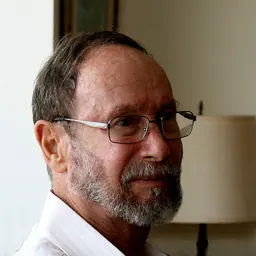
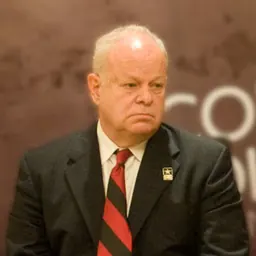
Contemporaries
People whose lives overlapped Eugene Landy's



Frequently asked questions
Who was Eugene Landy?
American psychologist (1934–2006)
When was Eugene Landy born?
Eugene Landy was born on 26 November 1934 in Pittsburgh.
When did Eugene Landy die?
Eugene Landy died on 22 March 2006 in Honolulu.
What was Eugene Landy's occupation?
Eugene Landy was a psychologist, psychotherapist and therapist.
What was Eugene Landy known for?
Eugene Landy was known for Brian Wilson.
What nationality was Eugene Landy?
Eugene Landy was American.
Sources & further reading
Cite this page
APA: Biography.guide. (2026). Eugene Landy. https://biography.guide/eugene-landy/
MLA: "Eugene Landy." Biography.guide, https://biography.guide/eugene-landy/.
Chicago: "Eugene Landy." Biography.guide. https://biography.guide/eugene-landy/.
Data last updated: 2026-09-22 · Spot an error? Report a correction.
Page generated 2026-09-27 05:01 UTC