
About Eugene Lanceray
Lived 1875 – 1946 (aged 71). Eugene Lanceray was a Russian painter, professor, scenographer, sculptor, illustrator and mosaicist.
Lanceray and his 1909 work "Ships of Peter the Great's time" on a 2025 Russian sheet of stamps.
Yevgeny Yevgenyevich Lanceray (; – 13 September 1946), also often spelled Eugene Lansere, was a Russian graphic artist, painter, sculptor, mosaicist, and illustrator, associated stylistically with Mir iskusstva ("World of Art"). His father, Eugeny Lanceray, was a sculptor and also an artist. He died at 40 years old. He then traveled to Paris, where he continued his studies at the Académie Colarossi and Académie Julian between 1896 and 1899. Other prominent members of Mir iskusstva included Lanceray's uncle Alexandre Benois, Konstantin Somov, Walter Nouvel, Léon Bakst, and Dmitry Filosofov.
Eugene Lanceray was younger than the masters of Mir iskusstva and initially acted as their student. His creative method and aesthetic views evolved under the influence and guidance of Benois, although, by some aspects of his talent, Lanceray may have exceeded his teacher. His first significant works in the field of easel painting and graphics were created in the late 1890 - early 1900s. The main creative interests of the artist were turned at that time to the "historical", mainly architectural landscape.
Lanceray left Saint Petersburg in 1917, and spent three years living in Dagestan, During the same period, Lanceray also worked as a theatrical designer.
Three years before his death, he was honored with the Stalin Prize, and in 1945 he was awarded the title of People's Artist of the RSFSR. He died in Moscow at the age of 71.
Works Moscow Kazansky railway station
One of the most well-known works of Lanceray is the mural of the Moscow Kazansky railway station (1932–1934 and 1944–1946).
Schusev, the famous Russian architect and a frequent character of Lanceray's diaries, was responsible for the whole process from the very beginning. In 1916, Schusev, Benois, Serebriakova, Lanceray were hired to plan the decorations and paintings for the Kazanskiy railway station, but the revolution broke off the plans.
Lanceray at work on a panel for the Kazanskiy railway station. 1932 was the year when the state reform of architecture was carried out in the USSR, and ‘Stalinist’ architecture with its monumental style became canonical. Lanceray, an experienced monumental painter with conservative views, was invited from Tbilisi to Moscow to continue working at The Central Railway Station decorations. He was in charge of the restaurant located inside. In the 1932-1934 paintings, Lanceray tried to show specific features of every painted region. For instance, Murmansk displays a busy crew ship, while Crimea is depicted by a smiling Tatar woman against the background of a clear sky, exotic trees and a working carpenter.
In the thirties, he managed to complete such murals as Moscow Construction, Murmansk, Crimea, and others. In January 1934, after gluing the first canvas to the plafond Lanceray writes: "A turning, formidable day: today they glued the first picture, Crimea. Of course, I am shocked by the effect. It is small, puny, completely not picturesque, completely not monumental. <..> At this distance, there is no other volumetric effect <..> That's when you learn the experience and mastery of Byzantium!"
Because of the irregular construction of the building, high ceilings and unpredictable light, the artist faced difficulties to make the painting bright and noticeable. Besides its place and its scale, a distinctive feature of this work is that it was made using tempera paint. The artist also preferred to paint on a canvas that would then be attached to the ceiling. But, while Lanceray was disappointed with his inappropriate use of technique, the Committee members were not really satisfied with the subject of Lanceray's paintings. Nowadays, the decorated plafond of the Kazansky railway station looks very contrast. Heavy Soviet paintings of predominantly brown shades seem lost among pompous gilded stucco molding.
Today, this part of the building is used as a superior lounge, where people who buy business class tickets can wait for their departure. On every New Year's Eve, there is a constructed stage where children's performances are shown and music concerts are played. If approved, these artworks of Lanceray would be the first examples of monumental painting, which the Ukrainian state will protect.
Don’t just read it —
keep it.
Full-length biographies made to live with: read them, listen on the way to work, watch them tonight.
- E-book
- Audio
- Video
Instant download · yours to keep · every purchase keeps this site free
Important facts
more
Evgeniĭ Evgenʹevich Lansere, Eugeny Evgenevich Lanceray, Yevgeny Lansere, Yevgeni Yevgeniyevich Lansere, Jewgenij Jewgenjewitsch Lanceret, Jewgenij Jewgenjewitsch Lanssere, Evgeny Evgenyevich Lanceray, Ievgueni Ievguenievitch LancerayPeople in Eugene Lanceray's life
Named in this biography and alive at the same time

Related people
Same field, nearest in time
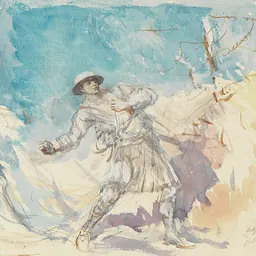
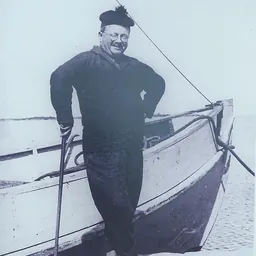
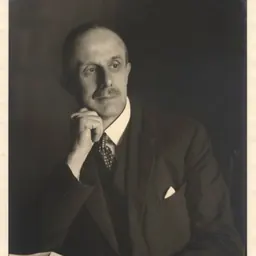

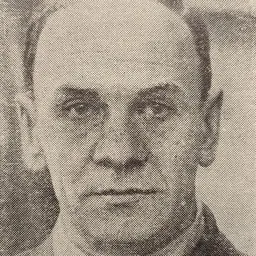
Contemporaries
People whose lives overlapped Eugene Lanceray's


Frequently asked questions
Who was Eugene Lanceray?
Russian artist (1875-1946)
When was Eugene Lanceray born?
Eugene Lanceray was born on 4 September 1875 in Pavlovsk.
When did Eugene Lanceray die?
Eugene Lanceray died on 13 September 1946 in Moscow.
What was Eugene Lanceray's occupation?
Eugene Lanceray was a painter, professor, scenographer, sculptor, illustrator and mosaicist.
What nationality was Eugene Lanceray?
Eugene Lanceray was Russian.
Sources & further reading
Cite this page
APA: Biography.guide. (2026). Eugene Lanceray. https://biography.guide/eugene-lanceray/
MLA: "Eugene Lanceray." Biography.guide, https://biography.guide/eugene-lanceray/.
Chicago: "Eugene Lanceray." Biography.guide. https://biography.guide/eugene-lanceray/.
Data last updated: 2026-09-20 · Spot an error? Report a correction.
Page generated 2026-09-27 05:22 UTC