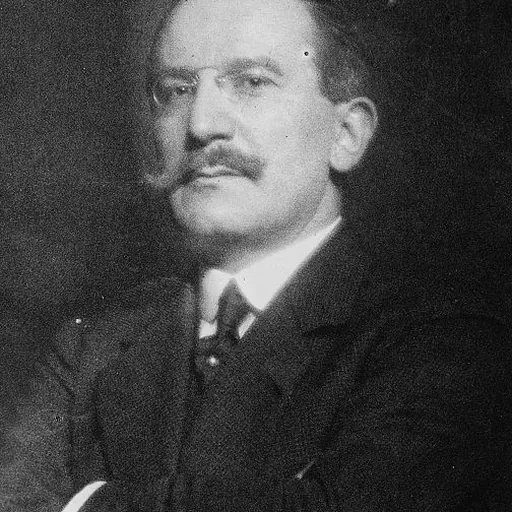
About Léon Bakst
Lived 1866 – 1924 (aged 58). Léon Bakst was a Russian and French painter, designer, costume designer, scenographer, draftsperson and graphic artist.
Early life Leyb-Khaim Izrailevich (later Samoylovich) Rosenberg was born in Grodno, Grodno Governorate of the Russian Empire (now Belarus) into a middle-class Jewish family. As his grandfather was an exceptional tailor, the Tsar gave him a very good position, and he had a huge and wonderful house in Saint Petersburg. Later, when Leyb's parents moved to the capital, he would visit his grandfather's house every Saturday. He said that he had been very impressed as a youth by that house, always returning with pleasure. At the young age of twelve, he won a drawing contest and decided to become a painter. However, the parents disapproved of it and even threw away his paints.
Following the divorce and remarriage of his parents, Bakst found it impossible to live with his new stepmother. Consequently, he moved into a rented apartment with his three siblings (two sisters and a brother). As the eldest child, he assumed financial responsibility for the family, supporting them by taking on various painting commissions and working as a book illustrator. After completing his studies at the gymnasium, he attempted to enter the St. Petersburg Academy of Arts; however, he initially failed the entrance examination. He was permitted to attend classes as an auditor (non-credit student) until he eventually gained full admission in 1883.
At the time of his first exhibition (1889) he took the surname of Bakst, though the origin of the pseudonym is still unclear. There are at least three versions, according to the main one, his mother's grandmother had the maiden name Bakster. Alexander Benois, a life-long friend of Leon, recalled that 'Leo gave a prolonged and confusing explanation that the surname was taken after some of distant relatives'.
At the beginning of the 1890s, Bakst exhibited his works with the Society of Watercolourists. He still often visited Saint Petersburg. After the mid-1890s, Bakst became a member of the circle of writers and artists formed by Sergei Diaghilev and Benois, who in 1899 founded the influential periodical Mir iskusstva, meaning "World of Art". His graphics for this publication brought him fame.
Career
Bakst continued painting, producing portraits of Filipp Malyavin (1899), Vasily Rozanov (1901), Andrei Bely (1905), Zinaida Gippius (1906). He also worked as an art teacher for the children of Grand Duke Vladimir Alexandrovich of Russia. In 1902, he took a commission from Tsar Nicholas II to paint Admiral Avellan and Russian sailors arriving in Paris, a painting he started there, during the celebrations from the 17 to 25 October 1893. However, it took him 8 years to finish this work.
In 1898, he showed his works in the Diaghilev-organized First Exhibition of Russian and Finnish Artists; in World of Art exhibitions, as well as the Munich Secession, exhibitions of the Union of Russian Artists, etc. During the Russian Revolution of 1905, Bakst worked for the magazines Zhupel, Adskaya Pochta, , and , then for an art magazine called Apollon.
Beginning in 1909, Bakst worked mostly as a stage-designer, designing sets for Greek tragedies. In 1908, he gained attention as a scene-painter for Diaghilev with the Ballets Russes. He produced scenery for Cléopâtre (1909), Scheherazade (1910), Carnaval (1910), Narcisse (1911), Le Spectre de la Rose (1911), L'après-midi d'un faune (1912) and Daphnis et Chloé (1912). During this time, Bakst lived in western Europe because, as a Jew, he did not have the right to live permanently outside the Pale of Settlement in the Russian Empire [needs references as inconsistent with his full ability to live and work in St Petersburg and other areas of the Empire. (Masters and specialists with skills were usually exempted from such limitations)].
Terror Antiquus depicted destruction of Atlantis, Lion Gate of Mycenae, Tiryns and Acropolis of Athens, with Kore presiding over to symbolize chaos and inevitability of human force; 1908, oil on canvas, 250 × 270 cm, Russian Museum. Despite being known for his work as a stage designer, art was also commissioned by various English families during the Art Deco era. During this time, he produced such works as the Sleeping Beauty series for James and Dorothy de Rothschild at Waddesdon Manor in 1913. The story is depicted in seven panels that line the walls of an oval, theatrical styled "Bakst room" in the Buckinghamshire manor house. thumb leftIn 1914, Bakst was elected a member of the Imperial Academy of Arts. Bakst's comprehensive, many-sided talent showed itself in various areas — he worked as a designer of clothes, set decorations, interiors, textile, etc. Apart from a series of interior designs for the Rothschilds, he also designed exhibitions for ‘Mir Iskusstva’ society and occupied a post of a furniture and interior designer at ‘Sovremennoe Iskusstvo’ (rus. ‘Modern Art’). American silk industry businessman Arthur Selig invited Bakst to create textile design, their collaboration had great success. After the Revolution of 1917 Leon's sister died from hunger in Russia. When Bakst received the news, he suffered a nervous breakdown, becoming so ill that he couldn't tolerate any irritants such as light, noise, or touch. His servant, Linda, exploited his condition to steal his money — she took all the honoraria that came to the house and intimidated the artist, forcing him to include her and her husband as heirs to his will. By chance he managed to send a note to an influential friend and patron Alice Warder Garrett (1877–1952), an art philanthropist, who helped his sister Sofia rescue Léon. They first met in Paris in 1914, when Mrs. Garrett was accompanying her diplomat husband in Europe, Bakst soon depended upon Garrett as both a confidante and agent.
One of Bakst's last paintings: Portrait of Rachel Strong, future Countess Henri de Boisgelin; 1924, oil on canvas, 130×89 cm, Museum of Avant-Garde Mastery. In 1922, Bakst broke off his relationship with Diaghilev and the Ballets Russes. During this year, he visited Baltimore and, specifically Evergreen House — the residence of his American friend Alice Garrett. Garrett became Bakst's representative in the United States upon her return home in 1920, organizing two exhibitions of the artist's work at New York's Knoedler Gallery, as well as subsequent traveling shows. When in Baltimore, Bakst re-designed the dining room of Evergreen into a shocking acidic yellow and 'Chinese' red confection. The artist transformed the house's small c. 1885 gymnasium into a colourfully Modernist private theatre. This is believed to be the only extant private theatre designed by Bakst.
Léon Bakst was also a prolific writer, his literary legacy in three languages includes novels, numerous publications in magazines, critics, essays, letters to friends and colleagues.
Bakst died on 27 December 1924, in a clinic in Rueil Malmaison, near Paris, from lung problems (oedema).
Cultural depictions Anna Pavlova, film by Emil Loteanu; portrayed by Igor Dmitriev (1983).
Selected works
Don’t just read it —
keep it.
Full-length biographies made to live with: read them, listen on the way to work, watch them tonight.
- E-book
- Audio
- Video
Instant download · yours to keep · every purchase keeps this site free
Important facts
more
Rozenberg Lev Samoilovich Bakst, Leon Bakst, Lev Samoilovich Rozenberg, Lev Samoïlevitch Rosenberg, Leon Nikolaievich Bakst, Léon Nikolaevich Bakst, Léon Nicolaevitch Bakst, Léon Nikolaievich Bakst, Léon Nikolaïevitch Bakst, Leon Nikolajewitsch Bakst, Lev Samoilovich Bakst, Lev Samojlovitsj Bakst, Lev Schmule Rozenberg, Leon Nikolaevich Bakst, Leon NiPeople in Léon Bakst's life
Named in this biography and alive at the same time




Related people
Same field, nearest in time

Contemporaries
People whose lives overlapped Léon Bakst's


Frequently asked questions
Who was Léon Bakst?
Russian artist (1866–1924)
When was Léon Bakst born?
Léon Bakst was born on 27 January 1866 in Hrodna.
When did Léon Bakst die?
Léon Bakst died on 27 December 1924 in Rueil-Malmaison.
What was Léon Bakst's occupation?
Léon Bakst was a painter, designer, costume designer, scenographer, draftsperson and graphic artist.
What nationality was Léon Bakst?
Léon Bakst was Russian and French.
Sources & further reading
Cite this page
APA: Biography.guide. (2026). Léon Bakst. https://biography.guide/leon-bakst/
MLA: "Léon Bakst." Biography.guide, https://biography.guide/leon-bakst/.
Chicago: "Léon Bakst." Biography.guide. https://biography.guide/leon-bakst/.
Data last updated: 2026-09-23 · Spot an error? Report a correction.
Portrait: Wikimedia Commons · author & licence
Page generated 2026-09-27 05:06 UTC