
Zinaida Gippius
Russian poet, playwright, editor, short story writer and religious thinker
About Zinaida Gippius
Lived 1869 – 1945 (aged 75). Zinaida Gippius was a Russian and French poet, writer, playwright, literary critic and prose writer.
Zinaida Nikolayevna Gippius (, ; – 9 September 1945) was a Russian poet, playwright, novelist, editor and religious thinker. She is considered one of the major figures in Russian symbolism.
She began writing at an early age, and by the time she met Dmitry Merezhkovsky in 1888 was already a published poet. The two married in 1889. Gippius published her first book of poetry, Collection of Poems. 1889–1903, in 1903, and her second collection, Collection of Poems. Book 2. 1903–1909, in 1910. After the 1905 Revolution, the couple became critics of the tsarist government; they spent several years abroad during this time, including trips for treatment of health issues. They denounced Russia's 1917 October Revolution, seeing it as a cultural disaster, and in 1919 emigrated to Poland.
After living in Poland they moved to France, and then to Italy, continuing to publish and to take part in Russian émigré circles, though Gippius's harsh literary criticism made enemies. The tragedy of the exiled Russian writer was a major topic for Gippius in emigration, but she also continued to explore mystical and covertly sexual themes, publishing short stories, plays, novels, poetry, and memoirs. The death of Merezhkovsky in 1941 was a major blow to Gippius, who died a few years later in 1945.
Biography Zinaida Gippius was born on , in Belyov, Tula Governorate, the eldest of four sisters. Her father, Nikolai Romanovich Gippius, a respected lawyer and a senior officer in the Russian Senate, was a Russian of German descent. His ancestors, who originally spelled their name Hippius, emigrated to Russia in the 16th century. Her mother, Anastasia Vasilyevna , was the daughter of the Yekaterinburg chief of police.
Nikolai Gippius's job entailed constant traveling, and because of this his daughters received little formal education. Taking lessons from governesses and visiting tutors, they attended schools sporadically in whatever city the family happened to stay for a significant period of time (Saratov, Tula and Kiev, among others). At the age of 48, Nikolai Gippius died of tuberculosis, and Anastasia Vasilyevna, knowing that all of her girls had inherited a predisposition to the illness that killed him, moved the family southwards, first to Yalta (where Zinaida had medical treatment) then in 1885 to Tiflis, closer to their uncle Alexander Stepanov's home.
By this time, Zinaida had already studied for two years at a girls' school in Kiev (1877—1878) and for a year at the Moscow Fischer Gymnasium.
Zinaida started writing poetry at the age of seven. By the time she met Dmitry Merezhkovsky in 1888, she was already a published poet. "By the year 1880 I was writing verses, being a great believer in 'inspiration', and making it a point never to take my pen away from paper. People around me saw these poems as a sign of my being 'spoiled', but I never tried to conceal them and, of course, I wasn't spoiled at all, what with my religious upbringing," she wrote in 1902 in a letter to Valery Bryusov. A good-looking girl, Zinaida attracted a lot of attention in Borzhomi, but Merezhkovsky, a well-educated introvert, impressed her first and foremost as a perfect kindred spirit. Once he proposed, she accepted him without hesitation, and never came to regret what might have seemed a hasty decision.
In October 1903, the Collection of Poems. 1889–1903, Gippius's first book of poetry, came out; Innokenty Annensky later called the book the "quintessence of fifteen years of Russian modernism." Valery Bryusov was greatly impressed too, praising the "insurmountable frankness with which she document[ed] the emotional progress of her enslaved soul." Gippius was the driving force behind the Meetings, as well as the magazine Novy Put (1903–04), launched initially as a vehicle for the former. By the time Novy Put folded (due to a conflict caused by the newcomer Sergei Bulgakov's refusal to publish her essay on Alexander Blok), Gippius (as Anton Krainy) had become a prominent literary critic, contributing mostly to Vesy ('Scales').
1905–1917 Gippius, Merezhkovsky and Filosofov. Caricature by Re-Mi (Nikolai Remizov) The 1905 Revolution had a profound impact on Gippius. During the next decade the Merezhkovskys were harsh critics of Tsarism, radical revolutionaries like Boris Savinkov now entering their narrow circle of close friends. In February 1906 the couple left for France to spend more than two years in what they saw as self-imposed exile, trying to introduce Western intellectuals to their 'new religious consciousness'. In 1906 Gippius published the collection of short stories Scarlet Sword , and in 1908 the play Poppie Blossom came out, with Merezhkovsky and Filosofov credited as co-authors.
Gippius saw the October Revolution as the end of Russia and the coming of the Kingdom of Antichrist. "It felt as if some pillow fell on you to strangle... Strangle what — the city? The country? No, something much, much bigger," — she wrote in her 26 October 1917, diary entry.
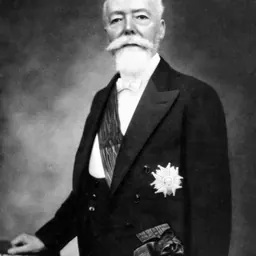
In Paris Gippius concentrated on making appointments, sorting out mail, negotiating contracts and receiving guests. The Merezhkovsky's talks, as Nina Berberova remembered, always revolved around two major themes: Russia and freedom. Backing Merezhkovsky in his anti-Bolshevik crusade, she was deeply pessimistic as regards what her husband referred to as his 'mission'. "Our slavery is so unheard of and our revelations are so outlandish that for a free man it is difficult to understand what we are talking about," she conceded. Encouraged by the success of Merezhkovsky's Da Vinci series of lectures and Benito Mussolini's benevolence, in 1933 the couple moved to Italy where they stayed for about three years, visiting Paris only occasionally. With the Socialist movement rising there and anti-Russian emigration feelings spurred by President Paul Doumer's murder in 1932, France felt like a hostile place to them. Living in exile was very hard for Gippius psychologically. As one biographer put it, "her metaphysically grandiose personality, with its spiritual and intellectual overload, was out of place in what she herself saw as a 'soullessly pragmatic' period in European history." Regardless of whether or not the 1944 text of Merezhkovsky's allegedly pro-Hitler "Radio speech" was indeed a prefabricated montage (as his biographer Zobnin asserted), there was little doubt that the couple, having become too close to (and financially dependent on) the Germans in Paris, had lost respect and credibility as far as their compatriots were concerned, many of whom expressed outright hatred toward them. His death came as a heavy blow to Gippius, and she began to contemplate suicide. With her secretary Vladimir Zlobin still around, though, Gippius resorted to writing what she hoped would some day gel into the comprehensive life story of her late husband. As Teffi remembered,
In March 1944, Gippius began to complain of a feeling of paralysis and in the right side of her body. A physician was called, who diagnosed her with sclerosis; this fact was kept hidden from Gippius. In March of 1945, her condition worsened; by August, she experienced difficulties in speaking. Gippius died on 9 September 1945, at 3:33 PM. Her last written words were: "Low is my price.... And wise is God." She was interred in Sainte-Genevieve-des-Bois Russian Cemetery with her husband. A small group of people attended the ceremony, among them Ivan Bunin.
Legacy
Modern scholars see Gippius's romantically tinged early poems as mostly derivative, Semyon Nadson and Friedrich Nietzsche being the two most obvious influences. The publication of Dmitry Merezhkovsky's symbolist manifesto proved to be a turning point: in a short time Gippius became a major figure of Russian Modernism. Her early symbolist prose carried the strong influence of Dostoyevsky, while one of her later novels, Roman Tzarevich (1912), was said to be influenced again by Nietzsche. Gippius's first two short story collections, New People (1896) and Mirrors (1898), examining "the nature of beauty in all of its manifestations and contradictions," were seen as formulaic. Her Third Book of Short Stories (1902) marked a change of direction and was described as "sickly idiosyncratic" and full of "highbrow mysticism." Parallels have been drawn between Gippius's early 20th century prose and Vladimir Solovyov's Meaning of Love, both authors examining the 'quest for love' as the means for self-fulfillment of the human soul.
It was not prose but poetry that made Gippius a major innovative force. "Gippius the poet holds her own special place in Russian literature; her poems are deeply intellectual, immaculate in form, and genuinely exciting." Critics praised her originality and technical virtuosity, claiming her to be a "true heir to Yevgeny Baratynsky's muse". Critic Simon Karlinsky commented that as a poet, she was equal to the acclaimed poets Marina Tsvetaeva and Anna Akhmatova, but "as a historical phenomenon, she is probably more important than either of them."
Her Collection of Poems. 1889–1903 became an important event in Russian cultural life. Having defined the world of poetry as a three-dimensional structure involving "Love and Eternity meeting in Death", she discovered and explored in it her own brand of ethic and aesthetic minimalism. Symbolist writers were the first to praise her 'hint and pause' metaphor technique, as well as the art of "extracting sonorous chords out of silent pianos," according to Innokenty Annensky, who saw the book as the artistic peak of "Russia's 15 years of modernism" and argued that "not a single man would ever be able to dress abstractions in clothes of such charm [as this woman]." Men admired Gippius's outspokenness too: Gippius commented on her inner conflicts, full of 'demonic temptations' (inevitable for a poet whose mission was 'creating a new, true soul', as she put it), with unusual frankness.
The 1906 collection Scarlet Sword, described as a study in the 'human soul's metaphysics' performed from the neo-Christian standpoint, propagated the idea of God and man as one single being. The author equated 'self-denial' with the sin of betraying God, and detractors suspected blasphemy in this egocentric stance. Sex and death themes, investigated in the obliquely impressionist manner formed the leitmotif of her next book of prose, Black on White (1908). The 20th century also saw the rise of Gippius the playwright (Saintly Blood, 1900, Poppie Blossom, 1908). The most acclaimed of her plays, The Green Ring (1916), futuristic in plotline, if not in form, was successfully produced by Vsevolod Meyerhold for the Alexandrinsky Theatre. Anton Krainy, Gippius's alter ego, was a highly respected and somewhat feared literary critic whose articles regularly appeared in Novy Put, Vesy and Russkaya Mysl. Gippius's critical analysis, according to Brockhaus and Efron, was insightful, but occasionally too harsh and rarely objective.
The 1910 Collection of Poems. Book 2. 1903–1909 garnered good reviews; Bunin called Gippius's poetry 'electric', pointing at the peculiar use of oxymoron as an electrifying force in the author's hermetic, impassive world. Some contemporaries found Gippius's works curiously unfeminine. Vladislav Khodasevich spoke of the conflict between her "poetic soul and non-poetic mind." "Everything is strong and spatial in her verse, there is little room for details. Her lively, sharp thought, dressed in emotional complexity, sort of rushes out of her poems, looking for spiritual wholesomeness and ideal harmony," modern scholar Vitaly Orlov said.
Gippius's novels The Devil's Doll (1911) and Roman Tzarevich (1912), aiming to "lay bare the roots of Russian reactionary ideas," were unsuccessful: critics found them tendentious and artistically inferior. "In poetry Gippius is more original than in prose. Well constructed, full of intriguing ideas, never short of insight, her stories and novellas are always a bit too preposterous, stiff and uninspired, showing little knowledge of real life. Gippius's characters pronounce interesting words and find themselves in interestingly difficult situations but fail to turn into living people in the reader's mind. Serving as embodiments of ideas and concepts, they are genuinely crafted marionettes put into action by the author's hand, not by their own inner motives."
The events of October 1917 led to Gippius severing all ties with most of those who admired her poetry, including Blok, Bryusov and Bely. The history of this schism and the reconstruction of the ideological collisions that made such a catastrophe possible became the subject matter of her memoirs The Living Faces (, 1925). While Blok (the man whom she famously refused her hand in 1918) saw the Revolution as a 'purifying storm', Gippius was appalled by the 'suffocating dourness' of the whole thing, seeing it as one huge monstrosity "leaving one with just one wish: to go blind and deaf." Behind all this, for Gippius, there was a kind of 'monumental madness'; it was all the more important for her to keep a "healthy mind and strong memory," she explained.
After Last Poems (1918) Gippius published two more books of verse, Poems. 1911–1920 Diaries (1922) and The Shining Ones (1938). Her poetry, prose and essays published in emigration were utterly pessimistic; the 'rule of beastliness', the ruins of human culture, and the demise of civilization were her major themes. Most valuable for Gippius were her diaries: she saw these flash points of personal history as essential for helping future generations to restore the true course of events. Yet, as a modern Russian critic has put it, "Gippius's legacy, for all its inner drama and antinomy, its passionate, forceful longing for the unfathomable, has always borne the ray of hope, the fiery, unquenchable belief in a higher truth and the ultimate harmony crowning a person's destiny. As she herself wrote in one of her last poems, "Alas, now they are torn apart: the timelessness and all things human / But time will come and both will intertwine into one shimmering eternity'."
Selected bibliography
Poetry Collection of Poems. 1889–1903 (Собрание стихов. 1889–1903) Collection of Poems. Book 2. 1903–1909 (Собрание стихов. Книга 2, 1910) The Last Poems (1914–1918) Poems. 1911–1912 Diary (1922, Berlin). Poems. 1911–1920 Diaries (1922) The Shining Ones (1938, poetry collection)
Prose New People (1896, short stories) Mirrors (1898, short stories) The Third Book of Short Stories (1902) Scarlet Sword (1906, short stories) Black on White (1908, short stories) Moon Ants (1912, short stories) The Devil's Doll (1911, novel) Roman-Tzarevich (1912, novel) Words from the Heavens (1921, Paris, short stories)
Drama Sacred Blood (1900, play) Poppie Blossom (1908, play) The Green Ring (1916, play)
Non-fiction The Living Faces (1925, memoirs)
English translations Apple Blossom, (story), from Russian Short Stories, Senate, 1995. The Green Ring, (play), C.W. Daniel LTD, London, 1920. Poems, Outside of Time: an Old Etude (story), and They are All Alike (story), from A Russian Cultural Revival, University of Tennessee Press, 1981.
Don’t just read it —
keep it.
Full-length biographies made to live with: read them, listen on the way to work, watch them tonight.
- E-book
- Audio
- Video
Instant download · yours to keep · every purchase keeps this site free
Important facts
Family & relationships
People in Zinaida Gippius's life
Named in this biography and alive at the same time


Related people
Same field, nearest in time

Contemporaries
People whose lives overlapped Zinaida Gippius's





Frequently asked questions
Who was Zinaida Gippius?
Russian poet, playwright, editor, short story writer and religious thinker (1869-1945)
When was Zinaida Gippius born?
Zinaida Gippius was born on 8 November 1869 in Belyov.
When did Zinaida Gippius die?
Zinaida Gippius died on 9 September 1945 in Paris.
What was Zinaida Gippius's occupation?
Zinaida Gippius was a poet, writer, playwright, literary critic and prose writer.
What nationality was Zinaida Gippius?
Zinaida Gippius was Russian and French.
Sources & further reading
Cite this page
APA: Biography.guide. (2026). Zinaida Gippius. https://biography.guide/zinaida-gippius/
MLA: "Zinaida Gippius." Biography.guide, https://biography.guide/zinaida-gippius/.
Chicago: "Zinaida Gippius." Biography.guide. https://biography.guide/zinaida-gippius/.
Data last updated: 2026-09-20 · Spot an error? Report a correction.
Page generated 2026-09-27 05:25 UTC