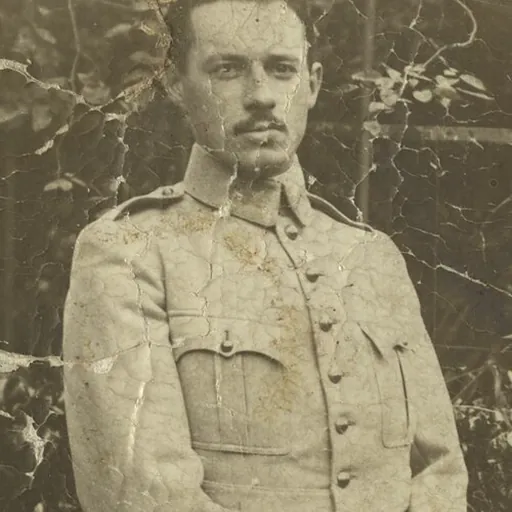
About Eugene Houdry
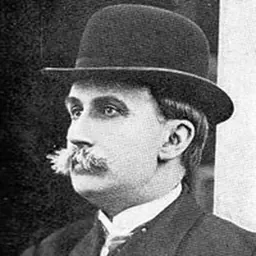
Lived 1892 – 1962 (aged 70). Eugene Houdry was a French and American engineer, inventor and businessperson, known for Catalytic cracking.
Eugène Jules Houdry (Domont, France, April 18, 1892 – Upper Darby Township, Pennsylvania, July 18, 1962) for which he received the Perkin Medal among others.
Houdry was seriously wounded in the Juvincourt sector during the Second Battle of the Aisne. Most of the French tanks used in this offensive were rendered inoperable and very few reached their objective. Houdry was injured while trying to organize repairs to the damaged tanks under heavy fire. Through the family steel company, he met automobile and parts manufacturers, and engineers who were trying to improve engine performance. This sparked Houdry's interest in high-performance fuels. Recognizing that the key to better performance of automobiles and airplanes was the improvement of fuels, he became interested in the catalytic processes used to convert coal and lignite to gasoline. and Pierre.
Following the war, there was an increasing demand for motor fuel. It was feared that petroleum stocks, which were being processed using thermal cracking, would not meet the demand. Scientists sought new ways to produce liquid fuels from bitumen, coal, and lignite. In Italy, a French pharmacist named E. A. Prudhomme was the principal scientist of a group experimenting with promising techniques for water-gas synthesis. In 1922, Houdry convinced Prudhomme to join him at Beauchamp and set up a fuel research laboratory under Houdry's management. By 1927, having tested hundreds of catalysts, which could be successfully regenerated under certain conditions. Although the process was successfully demonstrated, it was expensive and yields were lower than predicted.
As discussed in more detail below (See Inventions), Houdry worked with the American oil companies, Socony Vacuum and Sun Oil to develop pilot plants for improved fuels. was also one of the founders), Houdry vocally and publicly criticized Petain, stating that he did not speak for the French people. Houdry supported General Charles de Gaulle, leader of the provisional French government in exile. Among others at the company who helped Houdry in the development of the catalytic cracking process was Alex Golden Oblad.
The process was further developed by two MIT engineers, Warren K. Lewis and Edwin R. Gilliland, under contract to Standard Oil of New Jersey, now ExxonMobil. They developed the process into fluid catalytic cracking, which solved the problem of having to shut down the process to burn the coke off the catalyst by using a continuously circulating fluidized catalyst made of a fine zeolite powder. This process is still in widespread use, especially in the US where gasoline is in high demand compared to other refined products.
Butadiene Houdry also invented a catalytic process to produce butadiene from butane gas, which was formed during crude oil production. During World War II, butadiene was important to the production of synthetic rubber. Catalytic converters eventually became standard equipment in American cars, following passage of the Clean Air Act, introduced by Edmund S. Muskie in 1970.
Scientific recognition Houdry's contributions to catalytic technology were recognized by numerous awards, including the Potts Medal of the Franklin Institute in 1948, the Perkin Medal of the Society of Chemical Industry (American Section) in 1959, and posthumous election to the National Inventors Hall of Fame in 1990.
He was awarded honorary degrees from Pennsylvania Military College (Doctor of Science) in 1940 and Grove City College in 1943.
On April 13, 1996, Houdry's work was recognized by the designation of a National Historic Chemical Landmark by the American Chemical Society at the site of the Sun Company (now Sunoco Logistics Partners L.P.) in Marcus Hook, Pennsylvania.
Death Houdry died on July 18, 1962, at Upper Darby Township, Pennsylvania at the age of 70. He was survived by his sons and his wife, Genevieve Quilleret.
Don’t just read it —
keep it.
Full-length biographies made to live with: read them, listen on the way to work, watch them tonight.
- E-book
- Audio
- Video
Instant download · yours to keep · every purchase keeps this site free
Important facts
People in Eugene Houdry's life
Named in this biography and alive at the same time


Related people
Same field, nearest in time
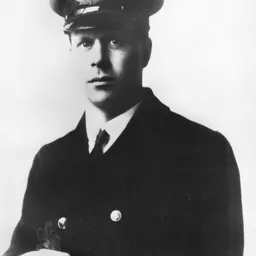
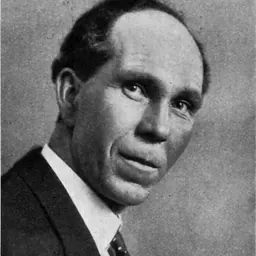
Contemporaries
People whose lives overlapped Eugene Houdry's


Frequently asked questions
Who was Eugene Houdry?
American mechanical engineer (1892-1962)
When was Eugene Houdry born?
Eugene Houdry was born on 18 April 1892 in Domont.
When did Eugene Houdry die?
Eugene Houdry died on 18 July 1962 in Darby.
What was Eugene Houdry's occupation?
Eugene Houdry was an engineer, inventor and businessperson.
What was Eugene Houdry known for?
Eugene Houdry was known for Catalytic cracking.
What nationality was Eugene Houdry?
Eugene Houdry was French and American.
Sources & further reading
Cite this page
APA: Biography.guide. (2026). Eugene Houdry. https://biography.guide/eugene-houdry/
MLA: "Eugene Houdry." Biography.guide, https://biography.guide/eugene-houdry/.
Chicago: "Eugene Houdry." Biography.guide. https://biography.guide/eugene-houdry/.
Data last updated: 2026-09-22 · Spot an error? Report a correction.
Portrait: Wikimedia Commons · author & licence
Page generated 2026-09-27 05:01 UTC