
About Eugène Henri Alexandre Chigot
Lived 1860 – 1923 (aged 62). Eugène Henri Alexandre Chigot was a French painter.
Eugène Henri Alexandre Chigot (; 22 November 1860 – 14 July 1923) was a French post-impressionist painter. A pupil of his father, the military painter Alphonse Chigot, in 1881 he entered the internationally renowned École des Beaux-Arts in Paris where he was exposed to the ideas of the realist movement of the Barbizon School and to Impressionism. He settled in Étaples in the Pas-de-Calais in an artists’ colony, later returning to Paris where he became a founder of the Salon d’Automne. An official military painter he painted a series of canvases in Calais and Nieuwpoort recording the destruction caused by the First World War. Chigot's reputation was built on his maritime and landscape paintings that arose from his affinity to Flanders and the Pas-de-Calais. He recorded the lives of the people of Flanders placing them within a landscape of soft opalescent light. As a result of his experiences as a Great War artist his later paintings show traces of expressionism and a more vibrant pallette. He was also a nocturne painter who travelled extensively within France, Italy and Spain. Eugène attended the Collège et Lycée Notre Dame des Dunes in Dunkerque where he met and befriended Henri Le Sidaner, who was to become a lifelong friend and supporter. His initial art training was as a pupil with his father Alphonse who operated an atelier in Valenciennes. His father was not initially supportive of his son becoming a full-time artist but acquiesced to his son's wishes upon the intervention of his artist colleague Alfred Philippe Roll (1846–1919), a former pupil of Léon Bonnat. In 1880, Chigot joined the atelier of Alexandre Cabanel and from 1881 until 1886 he attended the prestigious École des Beaux-Arts, where he studied under Bonnat, , and Cabanel. The latter's influence on the young Chigot was considerable. Although Cabanel mainly painted in an academic style that was dismissed derisively as L'art pompier (literally ‘Fireman art’) by some critics, he was a skilled painter with a deep knowledge of nineteenth-century French art, in particular impressionism and the naturalism of the Barbizon School from which Jean-Baptiste-Camille Corot and Charles-François Daubigny were significant influences on Chigot. Chigot's interests in the use of colour, softness of form and in atmospheric weather were formed under Cabanel's tutelage.
The Colonie artistique d'Étaples
Following his pupillage in Paris, Chigot searched for an appropriate environment from where he could paint. Initially he travelled to the south of France and to Italy. At this stage in his career Chigot favoured ‘En plein air’ painting, a theory credited to Pierre-Henri de Valenciennes (1750–1819) that he expounded in a treatise entitled Reflections and Advice to a Student on Painting, Particularly on Landscape (1800) developing the concept of landscape portraiture by which the artist paints directly onto canvas in situ within the landscape. It enabled the artist to better capture the changing details of weather and light. where they established an artists’ workshop and regular exhibitions that would eventually develop into a school of art, called the Villa des Roses. Étaples had a tradition of en plein air painting established by Charles-François Daubigny (1817–1878), who retreated there from the outbreak of the Paris Commune in 1871, and by the local Deauville painter Eugène Boudin (1824–1898). In the period until the start of World War I in 1914 the area attracted numerous artists from abroad particularly the United States, Australia and the British Isles.
Chigot lived in the area for most of the next twenty years initially at the villa attached to his studio in Étaples. In 1892, he decided he decided to organize a painting exhibition under the patronage of Léon Bourgeois, Minister of Public Instruction and Fine Arts. It was held from the first Sunday in August to October 10in at the new town hall in Étaples. The union produced a son Paul Louis, born in 1906, who was become an eminent decorated surgeon; and a daughter, Mathilde. The Chigots moved again in 1902 to the western Flanders town of Gravelines at the mouth of the river Aa where he built a chalet by the sea in which to paint. Perceived as a reaction against the conservative policies of the official Paris Salon, the new exhibition was an immediate success showcasing developments and innovations in early-20th-century art. The Salon d’Automne from its inception received strong support from artists across the artistic spectrum including some of the most established artists in France that included: Paul Cézanne, Édouard Vuillard and Auguste Rodin who featured works at the inaugural exhibition. At the 1905 exhibition Chigot exhibited three canvases featuring the Flanders landscape: Le Soir à Vormouth, Place morte, Jardin en Flanders. The salon also witnessed the birth of Fauvism in 1905 and of Cubism in 1910.
The febrile artistic atmosphere of the later Belle Époque undoubtedly affected Eugène Chigot, who was based in Paris from 1908. Whilst Chigot could not be seen as a radical painter it is possible to see a second period in his work from 1905 to 1923 Then in 1897 he was commissioned by President Felix Faure to capture the moment when Faure left France to meet the Russian Tzar and sign the Franco-Russian Alliance. In 1913 Chigot's large canvas Pax was donated by the French government to hang in the newly founded Permanent Court of Arbitration at the Peace Palace in The Hague.
The disruption to French cultural life of the Great War was severe and within a short period many artists were struggling financially. In response, art critic Louis Vauxcelles organised an Exposition at George Petit's Gallery in Paris, to which Chigot contributed a painting, with the profits going to the relief of artists. At the Exposition La Triennial in 1916 he contributes four paintings : La rue fleurie à Menton, Solitude au Grand Trianon, Printemps en Flandre, la Mortola Italie. On a tangible level the war had a deleterious effect on Chigot. His father Alphonse, was behind enemy lines after the fall of Valenciennes to the Germany army. As a consequence, Chigot was unable to visit his father during his final illness in October 1917. In the previous month he had moved his family to Dieppe to keep them away from the front-line.
In 1917, in his capacity as an official government artist, Chigot was approached to join the French forces at Calais where he helped organise a morale boosting exhibition of Great War art. : Chigot was an official war painter appointed by the French Ministry of Marine, recording the destruction of WWI in Calais and Nieuwpoort. He recorded war damaged Calais, in a series of drawings and paintings, some of which have been lost. One major canvas Le Port de Calais (1917) has survived and shows a group of, heroically posed dockers, purposefully repairing the destroyed dock in Calais. At Nieuport on the River Yser, he witnessed first hand the effects of the bombardment on the town and created a series of stark drawings and paintings of the destruction.
Eugène Chigot died in Paris on 14 July 1923. His body was returned to Valenciennes and buried beside other members of his family at the Saint-Roch cemetery (Cimetière Saint-Roch).
Public collections (selected)
Examples of Chigot's work can be found at : Musée d'Orsay, Musée de France d'Opale Sud, Musée Antoine Vivenel, Musée du Touquet-Paris-Plage, Palais des Beaux-Arts de Lille Petit Palais, Musée Carnavalet, Musée de Nantes, and Indianapolis Museum of Art.
Chigot has been the subject of several posthumous exhibitions (selected): at the Musée Galliera in 1954, at the Hôtel de Ville de Calais in 1960, the Salon d' Automne, Paris in 1960, the Kaplan Gallery, London in 1964 and in le Touquet at the Musée du Touquet in 2008. On the centenary of his death in 2023 the Maison du Port départemental d'Etaples-sur-mer and the Musée de la marine d'Etaples-sur-mer organized the exhibition "Eugène Chigot, Peintre de la Côte d'Opale" commemorating his work in the local area.
The Association des Amis d' Eugène Chigot in Touquet maintains his legacy.
Don’t just read it —
keep it.
Full-length biographies made to live with: read them, listen on the way to work, watch them tonight.
- E-book
- Audio
- Video
Instant download · yours to keep · every purchase keeps this site free
Important facts
People in Eugène Henri Alexandre Chigot's life
Named in this biography and alive at the same time

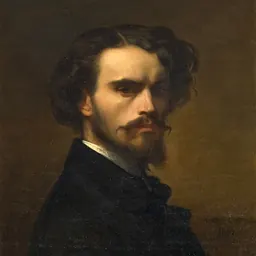
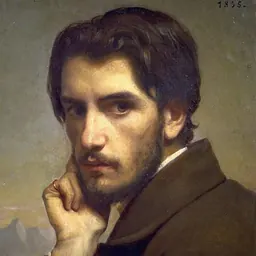

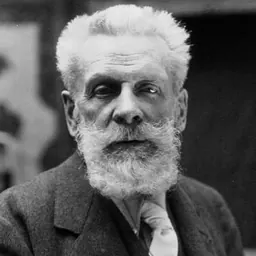

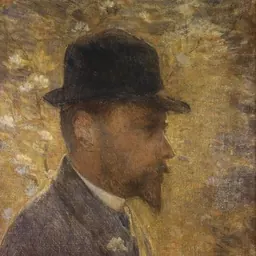

Related people
Same field, nearest in time
Contemporaries
People whose lives overlapped Eugène Henri Alexandre Chigot's


Frequently asked questions
Who was Eugène Henri Alexandre Chigot?
French painter (1860-1923)
When was Eugène Henri Alexandre Chigot born?
Eugène Henri Alexandre Chigot was born on 22 November 1860 in Valenciennes.
When did Eugène Henri Alexandre Chigot die?
Eugène Henri Alexandre Chigot died on 14 July 1923 in 16th arrondissement of Paris.
What was Eugène Henri Alexandre Chigot's occupation?
Eugène Henri Alexandre Chigot was a painter.
What nationality was Eugène Henri Alexandre Chigot?
Eugène Henri Alexandre Chigot was French.
Sources & further reading
· Wikipedia: Eugène Henri Alexandre Chigot
Cite this page
APA: Biography.guide. (2026). Eugène Henri Alexandre Chigot. https://biography.guide/eugene-henri-alexandre-chigot/
MLA: "Eugène Henri Alexandre Chigot." Biography.guide, https://biography.guide/eugene-henri-alexandre-chigot/.
Chicago: "Eugène Henri Alexandre Chigot." Biography.guide. https://biography.guide/eugene-henri-alexandre-chigot/.
Data last updated: 2026-09-20 · Spot an error? Report a correction.
Page generated 2026-09-27 05:28 UTC