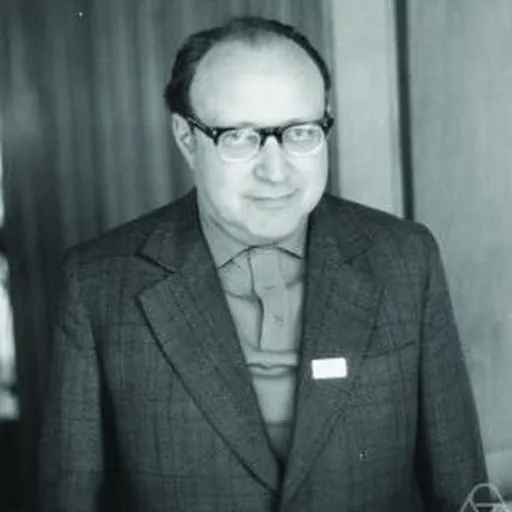
About Eugene Dynkin
Lived 1924 – 2014 (aged 90). Eugene Dynkin was a Russian and American mathematician and university teacher.
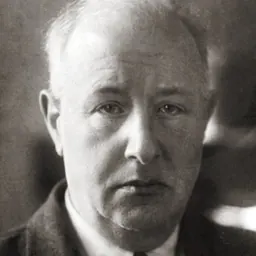
Eugene Borisovich Dynkin (; 11 May 1924 – 14 November 2014) was a Soviet and American mathematician. living in Leningrad until 1935, when his family was exiled to Kazakhstan. Two years later, when Dynkin was 13, his father disappeared in the Gulag. In 1977, he became a professor at Cornell University.
Death Dynkin died at the Cayuga Medical Center in Ithaca, New York, aged 90. Dynkin was an atheist.
Mathematical work
Dynkin is considered to be a rare example of a mathematician who made fundamental contributions to two very distinct areas of mathematics: algebra and probability theory. The algebraic period of Dynkin's mathematical work was between 1944 and 1954, though even during this time a probabilistic theme was noticeable. Indeed, Dynkin's first publication was in 1945, jointly with N. A. Dmitriev, solved a problem on the eigenvalues of stochastic matrices. This problem was raised at Kolmogorov's seminar on Markov chains, while both Dynkin and Dmitriev were undergraduates. Of Dynkin's 1947 paper "Structure of semisimple Lie algebras", Bertram Kostant wrote:
Dynkin's 1952 influential paper "Semisimple subalgebras of semisimple Lie algebras", contained large tables and lists, and studied the subalgebras of the exceptional Lie algebras.
Probability theory Dynkin is considered one of the founders of the modern theory of Markov processes. The results obtained by Dynkin and other participants of his seminar at Moscow University were summarized in two books. The first of these, "Theory of Markov Processes", was published in 1959, and laid the foundations of the theory.
Dynkin's one-hour talk at the 1962 International Congress of Mathematicians in Stockholm, was delivered by Kolmogorov, since prior to his emigration, Dynkin was never permitted to travel to the West. This talk was titled "Markov processes and problems in analysis".
Prizes and awards Prize of the Moscow Mathematical Society, 1951 Institute of Mathematical Statistics, Fellow, 1962 American Academy of Arts and Sciences, Fellow, 1978 National Academy of Sciences of the USA, Member, 1985 American Mathematical Society, Leroy P. Steele Prize for Total Mathematical Work, 1993 Moscow Mathematical Society, Honorary Member, 1995 Doctor Honoris Causa of the Pierre and Marie Curie University (Paris 6), 1997 Doctor of Science (honoris causa) of the University of Warwick, 2003. Doctor Honoris Causa of the Independent Moscow University (Russia), 2003 Fellow of the American Mathematical Society, 2012
Publications
Don’t just read it —
keep it.
Full-length biographies made to live with: read them, listen on the way to work, watch them tonight.
- E-book
- Audio
- Video
Instant download · yours to keep · every purchase keeps this site free
Important facts
People in Eugene Dynkin's life
Named in this biography and alive at the same time

Related people
Same field, nearest in time

Contemporaries
People whose lives overlapped Eugene Dynkin's


Frequently asked questions
Who was Eugene Dynkin?
Russian mathematician (1924-2014)
When was Eugene Dynkin born?
Eugene Dynkin was born on 11 May 1924 in Saint Petersburg.
When did Eugene Dynkin die?
Eugene Dynkin died on 14 November 2014 in Ithaca.
What was Eugene Dynkin's occupation?
Eugene Dynkin was a mathematician and university teacher.
What nationality was Eugene Dynkin?
Eugene Dynkin was Russian and American.
Sources & further reading
Cite this page
APA: Biography.guide. (2026). Eugene Dynkin. https://biography.guide/eugene-dynkin/
MLA: "Eugene Dynkin." Biography.guide, https://biography.guide/eugene-dynkin/.
Chicago: "Eugene Dynkin." Biography.guide. https://biography.guide/eugene-dynkin/.
Data last updated: 2026-09-20 · Spot an error? Report a correction.
Page generated 2026-09-27 05:10 UTC