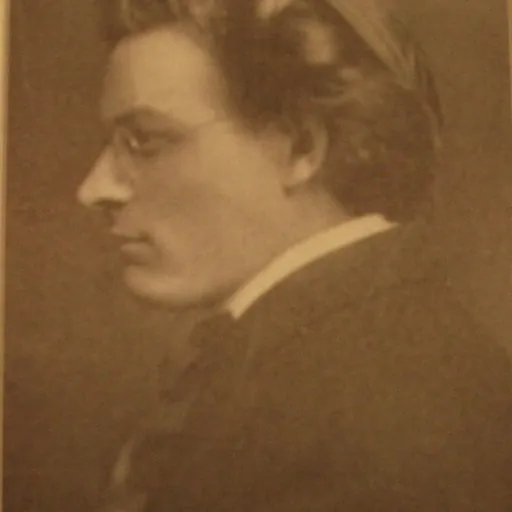
About Eugen Haile
Lived 1873 – 1933 (aged 60). Eugen Haile was a composer.
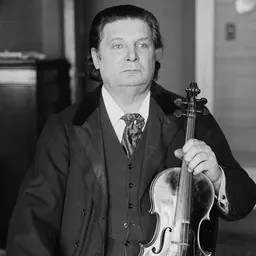
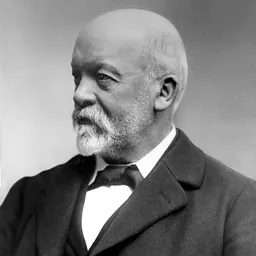
Composer Eugen Haile from an article in The Musical Courier, 1911.
Eugen Haile (February 21, 1873 – August 14, 1933) was a German-American composer, singer, and accompanist, primarily known for his songs. In his lifetime, it was claimed that he was one of the "truly inspired melodists, a lineal descendent of the great lyricists, Schubert, Schumann, Franz and Brahms."
Biography
Early life Haile was born in Ulm, "on the fringe of the Black Forest".
During his childhood Haile liked the zither, and also played the flute, which he learned from "an old town musician ... The boy preferred to play by ear and in the open; or to improvise an obbligato to the deep bass of an old shoemaker friend whose singing of chorals he enjoyed." He loved "emotional spontenaity" and folksong, and had a "preference for simple sentiments simply and sincerely expressed". and got married. His wife was a contralto,
Around 1905, Haile began work on a second opera, called Viola d'Amore. They became active in the musical life of the city. In November, 1907, the singer Theodore Van Yorx gave a recital of Haile's songs at Mendelssohn Hall in New York City, accompanied by the composer at the piano. The program consisted of readings by Van Yorx from Haile's autobiography, interspersed with songs.
Van Yorx frequently performed Haile's songs. The reviewer of the November 1907 concert said, "Van Yorx has sung these songs in over a dozen cities in the country". Singer Ludwig Hess also performed Haile's songs in the original German, in several recitals, singing "Teufelslied," "Der fahrende Musikant," and "Es vegnet". Many of Haile's songs were published in Germany shortly thereafter by Friedrich Hofmeister Musikverlag (see list of compositions, below).
The Hailes spent mid to late 1911 at "Blythewood, Barrytown," New York. In the January 9th recital, Haile seems to have introduced a new, more declamatory and more modern compositional style. A reviewer said, "The translation of the sentiment of the poems into tonal utterances is his aim ... To the lover of melody, these songs offer little". (See "Compositional style and compositions" section for longer quote.) In the recital on January 29, they performed his latest more conservatively styled songs; the audience's favorite was "König Elf". A reviewer from Musical America said that it "has great emotional power, especially the final picture of tragedy." Another song, "Verrat", was described as having a "quaint melody".
Illness and later career Some time in 1912 or early 1913, Haile became almost entirely paralyzed, and was forced to stop all composing. A Eugen Haile Society was formed in New York in 1914 to organize further performances of his music,
In 1916, while still unable to walk, Haile composed a musical setting to a play. The show premiered on August 21, 1916. In the score, Haile combined spoken words with pitch inflections, in the manner of Sprechstimme.
There does not seem to be any evidence that Haile ever finished his opera Viola d'Amore.
On May 8, 1917, another benefit concert was given for Haile. There were three singers and accompanists performing, some from the Metropolitan Opera:
After the benefit, the National Society of Music published an article about Haile in their bulletin, that said, "Whatever may be Eugen Haile's ultimate place in music, one thing is certain: that he will always be recognized as one of the truly inspired melodists, a lineal descendent of the great lyricists, Schubert, Schumann, Franz and Brahms".
Haile lived to see an opera of his produced, Harold's Dream, performed in Woodstock, New York on June 30, 1933. The opera's plot is a fantasy, and was called "the Prelude to the romantic opera Harald",
Compositional style and compositions
Compositional style
A reviewer of the November 1907 concert of Haile's works described his compositional style thus: "That Haile has real poetic genius and a facility in writing tender, dainty and delightful little songs, full of melody and feeling, there is no doubt."
In an interview in 1915, Haile said that contemporary music was too intellectual. He described his own philosophy of music by quoting the idealistic French author Romain Rolland and holistic music educator Francois Dalcroze (sic, Émile Jaques-Dalcroze?), sharing their philosophies, adapted to his own field of music. ), saying, "In his very limitation, he proves himself a master". and a good-sized manuscript of a cantata entitled Peace, both works available in his collection at the New York Public Library for the Performing Arts.
His instrumental works include a sonata for violin and piano and several other chamber pieces, also available in Haile's papers at the NYPL.
In 1924, H. W. Gray Co. published a book of children's songs by Haile, entitled A Riddle Book with Melodies. "Der Eidechs" (The Lizard; poem by Heinrich von Reder; comical ) Leipzig: Verlag von Friedrich Hofmeister, c1915 "Es ist ein dunkles Auge" (poem by Gustav Kastropp; for medium voice; written at age 15, his earliest song published), Op.7, No.1. Leipzig: Verlag von Friedrich Hofmeister, n.d. "Es regnet" (poem by A. Petöfi) Leipzig: Verlag von Friedrich Hofmeister, c1911 "Der fahrende Musikant" (poem by S. Pfau) Leipzig: Verlag von Friedrich Hofmeister, c1911 "Ein Freund ging nach Amerika" (My friend's gone to America; poem by Peter Rosegger; in German and English) Leipzig: Verlag von Friedrich Hofmeister, c1914 "Frühlings Nahen" (poem by E. Degen; for soprano) New York: Luckhardt & Belder, c1905; Leipzig: Verlag von Friedrich Hofmeister, n.d. "Frühlings Narretei" (Spring's foolery; text by Carl Busse, shows "elfish merriment" ) New York: Luckhardt & Belder, c1906 "Gleich und Gleich" (For each other; poem by Goethe; "tender and sincerely expressive" ) Leipzig: Verlag von Friedrich Hofmeister, c1906 "Im Zitternden Mondlicht" (In the moonlight; "dreamy...with its haunting melody" ) New York: Lugkhardt & Belder, c1906, 1908 "Kein Echo" (No echo; set"to words by Dingelstedt, is a superb example [of] reflecting a sympathetic poem's spirit with that truthfulness which make for genuine unity of words and music" ) Stuttgart: Verlag der Ebner'schen Hof-Musikalienhandlung, n.d. "Meine Seele" (My soul) Publisher's proof, n.d. "Soldaten kommen" (Soldiers are coming)Stuttgart: Verlag der Ebner'schen Hof-Musikalienhandlung, n.d. "Suomis Sang Horch wie hehr Akorde schallen" (Suomi's Song), Op.10, No.1. (for baritone; text after a Swedish poem; called "a glorification of the Finnish language...[it] has a striking and original quality, with a strong undercurrent of sadness" ) Stuttgart: Verlag der Ebner'schen Hof-Musikalienhandlung, n.d. "Der Todesengel singt" (The Angel of Death sings) Stuttgart: Verlag der Ebner'schen Hof-Musikalienhandlung, n.d. "Über den Bergen" (Over the hills; text by Carl Busse; shows a "dirgeful mournfulness"; "tender and sincerely expressive" ) Leipzig: Verlag von Friedrich Hofmeister, c1906 "Verlungene Weise" (Lost melody) Leipzig: Verlag von Friedrich Hofmeister, c1915 "Vöglein im Birkenbaum aus König Elfs Lieder" (The Elf King) Stuttgart: Verlag der Ebner'schen Hof-Musikalienhandlung, n.d.; New York: Luckhardt & Belder, c1906 "Waldeinsamkeit" (In the woods; text by E. Buek) New York: Luckhardt & Belder, c1907 "Weisse Wolken" (White clouds) Leipzig: Verlag von Friedrich Hofmeister, c1914
Selective list of unpublished solo songs "Fitzebutze" ("a jolly little child's play song") "Teufelslied" (Devil's song) "Vaters Wiebenlied" (Father's lullaby; "a striking specimen [of Haile's humorous songs] is Richard Dehmel's grotesque parody of the conventional cradle song, as attempted by an impatient...father" ) "Verrat" "Wenn Dich Dein Heiland frägt" (If thy Saviour asks; poem by Julius Stum; "profoundly impressive in its simple fervor" )
Published duets "Reigen" "Ring, Ring, Ringelein" "Verspatung" (text from Des Knaben Wunderhorn)
Stage works Harald der Geiger (opera) Viola d'Amore (opera) The Happy Ending (musical setting for a play), premiered New York City, August 21, 1916 Harold's Dream (opera), performed in Woodstock, New York on June 30, 1933
Don’t just read it —
keep it.
Full-length biographies made to live with: read them, listen on the way to work, watch them tonight.
- E-book
- Audio
- Video
Instant download · yours to keep · every purchase keeps this site free
Important facts
People in Eugen Haile's life
Named in this biography and alive at the same time




Related people
Same field, nearest in time

Contemporaries
People whose lives overlapped Eugen Haile's


Frequently asked questions
Who was Eugen Haile?
German-American composer, singer, and accompanist (1873-1933)
When was Eugen Haile born?
Eugen Haile was born on 21 February 1873 in Ulm.
When did Eugen Haile die?
Eugen Haile died on 14 August 1933 in Woodstock.
What was Eugen Haile's occupation?
Eugen Haile was a composer.
Sources & further reading
Cite this page
APA: Biography.guide. (2026). Eugen Haile. https://biography.guide/eugen-haile/
MLA: "Eugen Haile." Biography.guide, https://biography.guide/eugen-haile/.
Chicago: "Eugen Haile." Biography.guide. https://biography.guide/eugen-haile/.
Data last updated: 2026-09-23 · Spot an error? Report a correction.
Portrait: Wikimedia Commons · author & licence
Page generated 2026-09-27 05:07 UTC