
Ettore Petrolini
Italian actor, playwright, novelist, screenwriter, and songwriter
About Ettore Petrolini
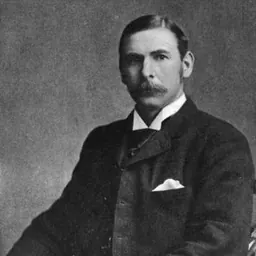
Lived 1884 – 1936 (aged 52). Ettore Petrolini was an Italian actor, playwright, writer, screenwriter and composer.
Ettore Petrolini (13 January 1884 – 29 June 1936) was an Italian stage and film actor, playwright, screenwriter and novelist. He is considered one of the most important figures of avanspettacolo, vaudeville and revue. He was noted for his numerous caricature sketches, and was the "inventor of a revolutionary and anticonformist way of performing". Petrolini is also remembered for having created the "futurista" character Fortunello. His contribution to the history of Italian theater is now widely acknowledged, especially with regard to his influence on 20th century comedy. His iconic character Gastone became a byword in Italian for a certain type of stagey snob. His satirical caricature of the Roman Emperor Nero (created in 1917 and later the subject of a 1930 film) was widely perceived as a parody of Benito Mussolini, although it may itself have influenced the mannerisms of the Fascist dictator.
Early years Born in Rome on 13 January 1884,#tag:ref|Petrolini habitually took two years off his real age and claimed he was born in 1886. Later, he performed in small, provincial theaters and in some cafés chantants with the stage name Ettore Loris.
Career In 1903, Petrolini began performing in Rome at variety theaters and café-chantants, where he provided parodies of renowned nineteenth-century actors, silent movie and opera divas, rhetorical addresses, and even of the variety theater itself. Ines, who was at the time only 15 years old, was hired as a singer by the Gambrinus theater in Rome, along with her sister Tina. In May 1907 in Genoa, Ettore and Ines were invited by the impresario Charles Séguin to tour South America. They performed in theaters and cafes in Argentina, Uruguay and Brazil, enjoying great success everywhere and becoming a household name in the capitals.
Back from a successful tour in South America, Petrolini was hired in 1910 by Giuseppe Jovinelli for his theater in Piazza Guglielmo Pepe that had opened in 1909 with a performance by Raffaele Viviani. It was a great success and, after two seasons at the Teatro Jovinelli, the "Sala Umberto" company signed an exclusive three-year contract with him. In 1915, he formed his stage company, the Compagnia dei grandi spettacoli di varietà Petrolini, with whom he staged the revue Zero minus zero, that led to the debut of one of Petrolini's most famous characters, Fortunello, which was based upon a cartoon character. In the 1920s, he also met Elma Criner, who became his companion and later his wife. In 1930, with the advent of sound films, Petrolini returned to the cinema as a protagonist of Nerone by Alessandro Blasetti, and also featuring Criner in the part of Poppea. The film featured some of Petrolini's most famous interpretations: Gastone, Nerone, Pulcinella. The same year he starred in Cortile by Carlo Campogalliani, based on the play of the same name by Fausto Maria Martini. Cortile was released the following year in a double bill with Il Medico per forza, Campogalliania and Petronelli's spoof version of Molière's farce Le Médecin malgré lui. In ''Scenarios July 1934 issue, Petrolini has 94 close-ups, in a variety of poses, expressions, and emotional interpretations.
In addition to films, he continued to make many short versions of stage plays. Petrolini's work as a playwright became richer and more complex over the years: from the first macchiette (i.e. comic musical monologues caricaturing stock characters), to the successful one-act plays Amori de notte and Romani de Roma to the late comedies such as Gastone, Il padiglione delle meraviglie, Benedetto fra le donne ("Blessed among women"), and Chicchignola. In these last two works, Petrolinian drama reached its peak, as irreverence gave way to more mature depictions, both bitter and compassionate, of human weakness. Now famous, Petrolini left Italy for a series of tours abroad, first to Cairo and the Italian colonies of Tripolitania and Cyrenaica, and then, in 1934, to London, Berlin, and Paris.
Imitation and parody Petrolini is considered one of the most influential figures in Italian avanspettacolo, vaudeville and revue. According to the Encyclopædia Britannica, he was the "inventor of a revolutionary and anticonformist way of performing". He was famous for his many caricature sketches, and he developed a repertoire of caricatural characters of proven success, as in Oh Margherita!, a parody portrayal of Faust (1907). His characters included Giggi er bullo (a parody of the leading character in a play by Gastone Monaldi) and Sor Capanna (a cantastorie inspired by Pietro Capanna, whom Petrolini called "my master" ). Petrolini wrote: "Imitation is not art because if it were there would be art even in monkeys and parrots. The art is to deform." A characteristic of his art was the continuous reworking of the characters he created, giving them the profile and texture of real comedy characters. This was the case of Gastone, the subject of a skit titled "Il bell'Arturo" in the 1915 revue Venite a sentire, The song quickly came to symbolize a way of life that was felt to be characteristically Roman – it was later recorded by many well known Roman artists, such as Alvaro Amici, Gigi Proietti, Gabriella Ferri and, most prominently perhaps, Nino Manfredi, who had a major commercial success with it.
Personal life
In 1923, Petrolini was initiated into Freemasonry.
Petrolini's sympathies for, and impertinences towards, the Fascist regime were complex. Petrolini was admired and befriended by Mussolini, even though his Nerone caricature was widely perceived as a parody of the dictator. As noted by the critic Oreste Del Buono, the Nerone characterfirst created by Petrolini in 1917may actually have influenced Mussolini's own mannerisms.
Forced to quit the stage in 1935 following a severe attack of angina pectoris, he died aged 52, in Rome, on 29 June 1936. #tag:ref|When the priest presented the oil for the extreme unction, Petrolini is said to have exclaimed "Now I really am fried!" (i.e. "done for").
Legacy
Petrolini influenced future generations of Italian comic actors, including Alberto Sordi, Carlo Verdone and Gigi Proietti. In 1960, a film version of Gastone was released, starring Alberto Sordi.
Theatrical works Source: Archivio Petrolini at the Biblioteca e Museo teatrale del Burcardo, Rome.
Impersonations and parodies
L'Amante dei fiori Amleto [con Libero Bovio] L'antico romano Archimede Baciami, baciami Il bell'Arturo La Caccavella Canzone guappa Cirano Il conte d'Acquafresca Il Cuoco Il Danzadero Divorzio al parmiggiano La Domatrice Faust (Oh Margherita!) Fortunello Giggi er bullo Isabella e Beniamino Ma l'amor mio non muore Maria Stuarda Napoleone Paggio Fernando I piedi Il poeta Il prestigiatore I Salamini Er Sor Capanna Stornelli maltusiani Ti à piaciato? Il Turco
Reviews
1915: Venite a sentire con G. Carini 1915: Zero meno zero con Luciano Folgore 1916: Dove andremo a finire? con G. Carini 1916: Acqua salata (o Senza sugo) con T. Masini 1916: Favorischino
Plays
1917: Nerone 1917: Romani de Roma 1917: Amori de notte 1918: Radioscopia con Francesco Cangiullo 1918: Cento de 'sti giorni con Checco Durante 1918: 47 morto che parla 192.: Donnaiuolo 1923: Farsa di Pulcinella 1924: Gastone - Bologna, 14 aprile 1924 1924: Il padiglione delle meraviglie 1927: Benedetto fra le donne 1931: Chicchignola 1934-1935: Il metropolitano - mai rappresentata
Adaptations of other authors
Agro di limone da Lumie di Sicilia di Luigi Pirandello L'amante legittimo di Cipriano Giachetti Ambasciatori di Lucio D'Ambra L'avvocato Bonafede da Congedo di Renato Simoni Il barone di Corbò di Luigi Antonelli Il cantastorie di Ferrante Alvaro De Torres e Alberto Simeoni Il castigamatti di Giulio Svetoni Cometa di Yambo La coppa incantata da La coupe enchantée di Jean de la Fontaine, traduzione di E. Corradi Coraggio di Augusto Novelli Cortile di Fausto Maria Martini È arrivato l'accordatore di Paola Riccora Elogio del furto di D. Signorini Il fondo d'oro di Galeazzo Ciano La fortuna di Cecè di Athos Setti I fratelli Castiglioni di Alberto Colantuoni Garofano di Ugo Ojetti Ghetanaccio di Augusto Jandolo Giovacchino Belli di Augusto Jandolo Giovanni Arce da Le esperienze di Giovanni Arce filosofo di Pier Maria Rosso di San Secondo Un guasto nell'ascensore by André Mouëzy-Éon L'Illusionista da L'Illusioniste di Sacha Guitry Io non sono io di Toddi La regina ha mangiato la foglia di Gildo Passini Ma non lo nominare di Arnaldo Fraccaroli Maritiamo la suocera di Colorno Il medico per forza da Le médecin malgré lui di Molière Mezzo milione di Alfredo Testoni Mi uccido di Paola Riccora Mille lire di Salvator Gotta Mustafà di Armando Discepolo e Rafael J. De Rosa Ottobrata di Giovanni Cesare Pascucci e Augusto Topai I pantaloncini di G. Nancy Patalocco di Ugo Romagnoli Peppe er pollo di Augusto Novelli Per la porta di Felyne Ossip Pinelli di Ettore Veo Rifiuto... io di Corrado D'Errico Scarfarotto di Gino Rocca Lo sfratto di Enrico Serretta Teodoro è stanco di Max Nel Toccalafrusta di Ugo Chiarelli I tre di Dino Falconi La trovata di Paolino di Renzo Martinelli Tutti in cantina di Eugène Labiche Tutto si accomoda di Enrico Serretta Uno degli onesti di Roberto Bracco Un uomo onesto di Piero Ottolini Zeffirino di Gian Capo Zio prete di Giovanni Tonelli
Selected filmography Nerone (1930) The Doctor in Spite of Himself (1931) Courtyard (1931)
Notes and references NotesReferences'''
Don’t just read it —
keep it.
Full-length biographies made to live with: read them, listen on the way to work, watch them tonight.
- E-book
- Audio
- Video
Instant download · yours to keep · every purchase keeps this site free
Important facts
People in Ettore Petrolini's life
Named in this biography and alive at the same time




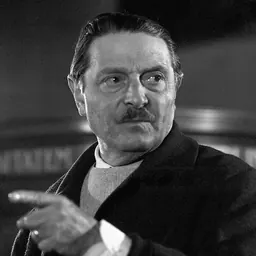
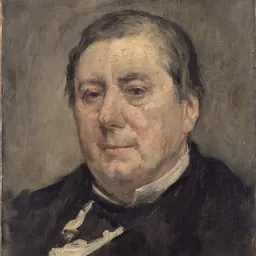
Related people
Same field, nearest in time

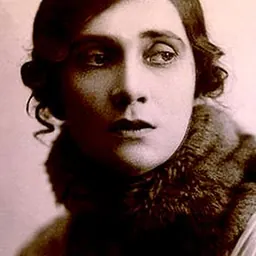
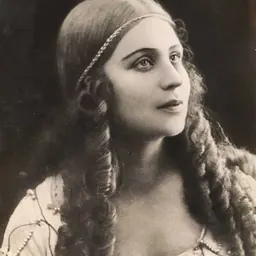
Contemporaries
People whose lives overlapped Ettore Petrolini's

Frequently asked questions
Who was Ettore Petrolini?
Italian actor, playwright, novelist, screenwriter, and songwriter (1884–1936)
When was Ettore Petrolini born?
Ettore Petrolini was born on 13 January 1884 in Rome.
When did Ettore Petrolini die?
Ettore Petrolini died on 29 June 1936 in Rome.
What was Ettore Petrolini's occupation?
Ettore Petrolini was an actor, playwright, writer, screenwriter and composer.
What nationality was Ettore Petrolini?
Ettore Petrolini was Italian.
Sources & further reading
Cite this page
APA: Biography.guide. (2026). Ettore Petrolini. https://biography.guide/ettore-petrolini/
MLA: "Ettore Petrolini." Biography.guide, https://biography.guide/ettore-petrolini/.
Chicago: "Ettore Petrolini." Biography.guide. https://biography.guide/ettore-petrolini/.
Data last updated: 2026-09-25 · Spot an error? Report a correction.
Page generated 2026-09-27 05:11 UTC