
About Ettore Ovazza
Lived 1892 – 1943 (aged 51). Ettore Ovazza was an Italian journalist and banker, known for Italian fascism.
Ettore Ovazza (21 March 1892 – 11 October 1943) was an Italian banker. He was an early financier of Benito Mussolini, whom he was a personal friend of, and a strong supporter of Italian fascism. He founded the anti-Zionist journal La nostra bandiera (Our Flag). Believing that his position would be restored after the war, Ovazza stayed on after the Germans occupied Italy during World War II. Together with his wife and children, shortly after the fall of Fascism and Mussolini's government, he was killed near the Swiss border by SS troops in 1943.
Early life and family One out of three sons, he was born in a wealthy and influential Jewish family of bankers, resident in Turin, Italy. His father and his brothers voluntarily enlisted to fight in World War I. While following Jewish traditions, such as celebrating Passover, the family was well integrated into Italian high society. His father served as the leader of Turin Jewish community.
World War I After graduated in Law, Ovazza moved to Germany aspiring to a diplomatic career. At the outbreak of the Great War in 1914, he volunteered and trained as an officer, only to suffer the humiliating defeat in the Battle of Caporetto. His patriotic letters from the front were published in 1928, and received general praise. After the war, the city of Turin was affected by the turmoil of the Biennio Rosso (Two Red Years) with repeated strikes, lockouts and violent demonstrations. The Ovazza family was alarmed by these developments. He later described the encounter thusly: "On hearing my affirmation of the unshakeable loyalty of Italian Jews to the Fatherland, His Excellency Mussolini looks me straight in the eye and says with a voice that penetrates straight to my heart: 'I have never doubted it'. When Il Duce bids us farewell with a Roman salute, I feel an urge to embrace him, as a fascist, as an Italian, but I can't; and approaching him at his desk I say: 'Excellency, I would like to shake your hand'. It is not a fascist gesture, but it is a cry from the heart ... Such is The Man that Providence has given to Italy." He wrote an anguished letter to Mussolini in which he expressed his pain. He stated: "Was it all a dream we nurtured? I can't believe it. I cannot consider changing religion, because it would be a betrayal – and we are fascists. And so? I turn to You – DUCE – so that in this period, so important for our revolution, you do not exclude that healthy Italian part from the destiny of our Nation." Their bodies were burned in a boiler, or in a wood stove, in Intra, Italy.
Legacy His grandnephew, Alain Elkann, wrote a fictionalized version of his life. His great-grandnephew is John Elkann, Alain Elkann's son.
Works E. Ovazza, Il diritto internazionale e la conflagrazione bellica. La proprietà privata. Turin: Tipografia Baravalle e Falconieri, 1915. L. Perigozzo, O bionda creatura (canto e piano), text of E. Ovazza. Turin: Perosino, 1915. E. Ovazza, L'uomo e i fantocci. Verità in tre momenti. Milan: Modernissima, 1921. E. Ovazza, Ghirlande (liriche). Milano: Modernissima, 1922. E. Ovazza, In margine alla storia. Riflessi della guerra e del dopoguerra (1914-1924), preface by V. Buronzo. Turin: Casanova, 1925. L. Perigozzo, Quattro impressioni, text of E. Ovazza. Bologna: Bongiovanni, 1925. E. Ovazza, Diario per mio figlio. Turin: Sten, 1928. E. Ovazza, Lettere dal campo (1917-1919), with explanatory notes, preface by D.M. Tuninetti. Turin: Casanova, 1932. E. Ovazza, Politica fascista. Turin: Sten, 1933. E. Ovazza, Sionismo bifronte. Rome: Pinciana, 1935. E. Ovazza, L'Inghilterra e il mandato in Palestina, preface by A. Pozzi, Rome: Pinciana, 1936. E. Ovazza, Sita (poemetto indiano), woodcut by B. Bramanti. Florence: Rinascimento del Libro, 1937. E. Ovazza, Il problema ebraico. Risposta a Paolo Orano. Rome: Pinciana, 1938. E. Ovazza, Guerra senza sangue (Da Versaglia a Monaco). Rome: Pinciana, 1939.
Don’t just read it —
keep it.
Full-length biographies made to live with: read them, listen on the way to work, watch them tonight.
- E-book
- Audio
- Video
Instant download · yours to keep · every purchase keeps this site free
Important facts
People in Ettore Ovazza's life
Named in this biography and alive at the same time



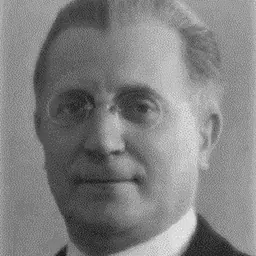
Related people
Same field, nearest in time

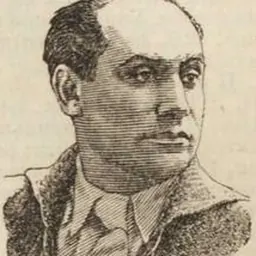
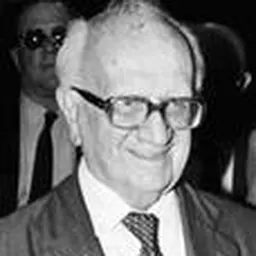

Contemporaries
People whose lives overlapped Ettore Ovazza's
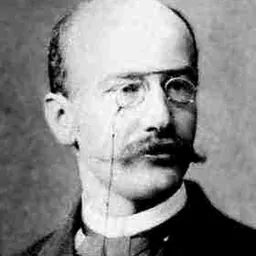
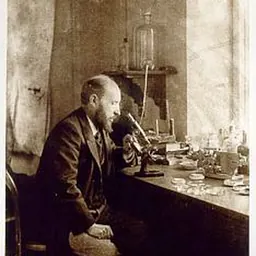

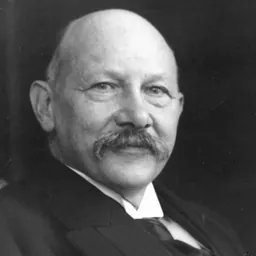
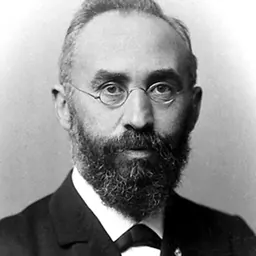
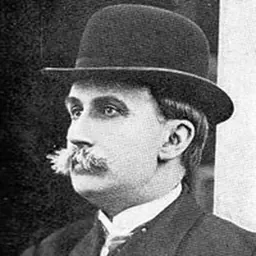
Frequently asked questions
Who was Ettore Ovazza?
Italian banker (1892–1943)
When was Ettore Ovazza born?
Ettore Ovazza was born on 21 March 1892 in Turin.
When did Ettore Ovazza die?
Ettore Ovazza died on 11 October 1943 in Verbania.
What was Ettore Ovazza's occupation?
Ettore Ovazza was a journalist and banker.
What was Ettore Ovazza known for?
Ettore Ovazza was known for Italian fascism.
What nationality was Ettore Ovazza?
Ettore Ovazza was Italian.
Sources & further reading
Cite this page
APA: Biography.guide. (2026). Ettore Ovazza. https://biography.guide/ettore-ovazza/
MLA: "Ettore Ovazza." Biography.guide, https://biography.guide/ettore-ovazza/.
Chicago: "Ettore Ovazza." Biography.guide. https://biography.guide/ettore-ovazza/.
Data last updated: 2026-09-22 · Spot an error? Report a correction.
Page generated 2026-09-27 05:18 UTC