
About Étienne Soulange-Bodin
Lived 1774 – 1846 (aged 72). Étienne Soulange-Bodin was a French botanist, diplomat, politician and agronomist.
Étienne Soulange-Bodin (1774–1846) was the French biologist botanist and army officer who is commemorated by his hybrid magnolia, Magnolia × soulangeana. Though he is otherwise scarcely remembered today, he played a major role in the organization of professional horticulture in France, 1815–1845.
Born at Tours (Indre-et-Loire), he initially followed a course in medicine and grounded himself in the still closely related field of botany. In 1796, he served for a year as secretary to the French embassy to Constantinople, and then fulfilled several administrative functions upon his return to France. In 1807, he was nominated Intendant in the cabinet of advisors to prince Eugène de Beauharnais, viceroy of Italy, whom he followed in his diplomatic campaigns. Napoleon conferred upon him the cross of the Légion d'honneur and that of the Iron Cross.
In 1814, Mr. Soulange-Bodin retired to France after the first exile of Napoleon. His Beauharnais service subsequently recommended him for superintendence of the gardens at Empress Josephine's Malmaison. He purchased the 70 hectare château de Fromont at Ris-Orangis (Essonne), where he laid out what was virtually a botanical garden, which gained him the breadth of horticultural experience that informed his publications. He planted an arboretum of exotic trees and amassed a collection of brooms, which were at the time little employed in horticulture. He then assembled every new vegetable he could find, raising the quality of the gardens to the highest level set by the English at Kew. and organised the first of the floral expositions at the Louvre (1832).
He died at the Château de Fromont in 1846.
Among his publications are his Notice sur une nouvelle espèce de magnolia (Paris, 1826), which brought M. x soulangeana to wide attention, a Discours sur l'importance de l'horticulture (Paris, 1826), his annual catalogues of the plants at Fromont, published from 1822, the editing of the Annales de l'institut royal horticole de Fromont (Paris, 1829–1834), a Catalogue des dahlias nains d'origine anglaise (Paris, 1831) and a Rapport sur le reboisement des montagnes (Paris, 1842), recommending afforestation of high slopes too steep for effective agriculture.
Don’t just read it —
keep it.
Full-length biographies made to live with: read them, listen on the way to work, watch them tonight.
- E-book
- Audio
- Video
Instant download · yours to keep · every purchase keeps this site free
Important facts
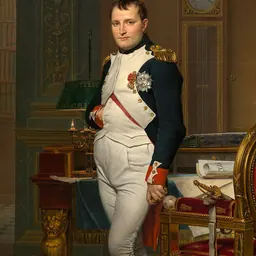
People in Étienne Soulange-Bodin's life
Named in this biography and alive at the same time

Related people
Same field, nearest in time




Contemporaries
People whose lives overlapped Étienne Soulange-Bodin's


Frequently asked questions
Who was Étienne Soulange-Bodin?
French agronomist (1774-1846)
When was Étienne Soulange-Bodin born?
Étienne Soulange-Bodin was born on 6 June 1774 in Montrichard.
When did Étienne Soulange-Bodin die?
Étienne Soulange-Bodin died on 23 July 1846 in Town hall of Ris-Orangis.
What was Étienne Soulange-Bodin's occupation?
Étienne Soulange-Bodin was a botanist, diplomat, politician and agronomist.
What nationality was Étienne Soulange-Bodin?
Étienne Soulange-Bodin was French.
Sources & further reading
· Wikipedia: Étienne Soulange-Bodin
· DBpedia: Étienne Soulange-Bodin
Cite this page
APA: Biography.guide. (2026). Étienne Soulange-Bodin. https://biography.guide/etienne-soulange-bodin/
MLA: "Étienne Soulange-Bodin." Biography.guide, https://biography.guide/etienne-soulange-bodin/.
Chicago: "Étienne Soulange-Bodin." Biography.guide. https://biography.guide/etienne-soulange-bodin/.
Data last updated: 2026-09-20 · Spot an error? Report a correction.
Page generated 2026-09-27 04:59 UTC