
About Ethelbert Watts
Lived 1846 – 1919 (aged 73). Ethelbert Watts was a diplomat.
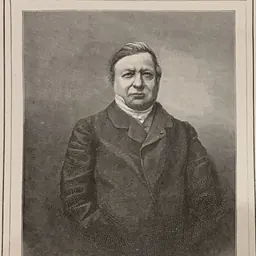
Ethelbert Watts (February 25, 1846 – July 13, 1919) was a United States diplomat for over twenty-four years, who played important roles in the Spanish–American War, Russo-Japanese War, and World War I.
Early life Watts was born in Philadelphia on February 25, 1846. He was the second son of United States Minister to Austria Henry Miller Watts and the former Anna Maria Schoenberger. He was the nephew of Frederick Watts, who was President Ulysses S. Grant's Commissioner of Agriculture (and the first president of the board of trustees of what is now Penn State University). He was a great-grandson of Revolutionary War brigadier-general Frederick Watts, and also of lieutenant colonel Henry Miller (1751–1824), who led colonial army units in the siege of Boston and the engagements of Long Island, White Plains, Trenton, Princeton, Brandywine, Germantown and Monmouth. Only seventeen years old, his service was limited to the 32nd Regiment Emergency Militia Infantry, which existed from June 26 to August 1, 1863, and performed duties in the Department of the Susquehanna until Lee was driven from the Commonwealth after the Battle of Gettysburg.
Career After graduating from Penn he studied at the Royal Saxon School of Mines, Freiberg, Saxony.
In March 1896 (at age fifty), Watts entered the foreign service of the United States. President Grover Cleveland appointed him to his first post, at Horgen, Switzerland.
Spanish–American War The next year Watts was appointed vice and deputy consul-general at Cairo, Egypt, where he was in charge during the Spanish–American War. While there he was instrumental in preventing the Spanish fleet, under Admiral Camara, from coaling at Port Said, before hurrying through the Suez Canal to attack Admiral Dewey's fleet at Manila Bay. Watts dissuaded Evelyn Baring, 1st Earl of Cromer, the British counsel-general in Egypt, from permitting Cámara to coal around Egypt from Spanish colliers, while at the same time acquiring a lien over coal available in Suez from other sources. The Spanish fleet's inability to obtain coal in Egypt resulted in the fleet being ordered back to Spain. and from there went to Prague, Bohemia.
Russo-Japanese war While at Prague he accepted the position of consul-general at St. Petersburg, which was then the capital of the Russian Empire and its largest city. He served there from 1903 to 1907, a turbulent period that included the Russo-Japanese War and the Revolution of 1905. In recognition of his services in protecting Japanese interests in Russia during that war, he was decorated by the Emperor of Japan with the Order of the Rising Sun and with that of the Sacred Treasure. World War I raged during the last two and one-half years of that period, when the German Empire occupied Brussels and much of Belgium. Both before and after the German occupation, Mr. Watts was instrumental in protecting the interests of American citizens, as well as representing and caring for British and Japanese interests and those of other belligerents. but Watts managed to survive because, at the time of the explosion, he was late for work.
Personal life In 1871, Watts wed Emily Pepper, daughter of Dr. William Pepper, Sr. and sister of Dr. William Pepper, Jr. of Philadelphia. They had four children:
Ethel Constance Watts (1872–1964), who married Francis Chambers Harris in 1895. After his death in 1904, she married Victor Clark Mellen, a son of William Proctor Mellen, in 1906. William Carleton Watts (1880–1956), who became a U.S. Navy Rear Admiral. Ethelbert Watts, Jr. (1902–1966), who became an intelligence officer during World War II and military liaison officer during the Cold War.
In May, 1918, he was appointed consul-general at Hamilton, Bermuda. His health began to fail while at this post. He died July 13, 1919, in Philadelphia.
Don’t just read it —
keep it.
Full-length biographies made to live with: read them, listen on the way to work, watch them tonight.
- E-book
- Audio
- Video
Instant download · yours to keep · every purchase keeps this site free
Important facts
People in Ethelbert Watts's life
Named in this biography and alive at the same time



Related people
Same field, nearest in time

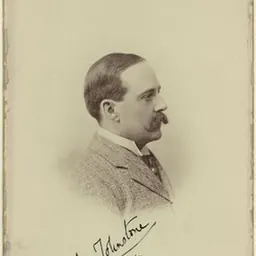
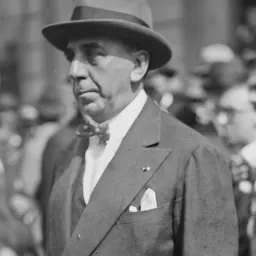
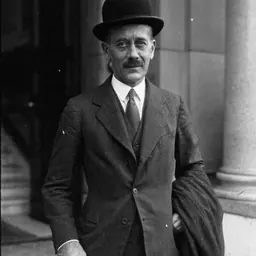
Contemporaries
People whose lives overlapped Ethelbert Watts's
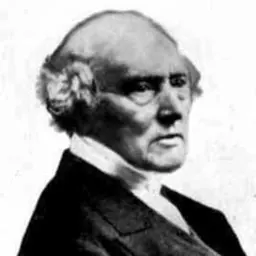




Frequently asked questions
Who was Ethelbert Watts?
American diplomat
When was Ethelbert Watts born?
Ethelbert Watts was born on 25 February 1846.
When did Ethelbert Watts die?
Ethelbert Watts died on 13 July 1919.
What was Ethelbert Watts's occupation?
Ethelbert Watts was a diplomat.
Sources & further reading
Cite this page
APA: Biography.guide. (2026). Ethelbert Watts. https://biography.guide/ethelbert-watts/
MLA: "Ethelbert Watts." Biography.guide, https://biography.guide/ethelbert-watts/.
Chicago: "Ethelbert Watts." Biography.guide. https://biography.guide/ethelbert-watts/.
Data last updated: 2026-09-20 · Spot an error? Report a correction.
Page generated 2026-09-27 05:29 UTC