
About William Carleton
Lived 1794 – 1869 (aged 74). William Carleton was a British writer and journalist.
William Carleton (4 March 1794, Prolusk (often spelt as Prillisk as on his gravestone), Clogher, County Tyrone – 30 January 1869, Sandford Road, Ranelagh, Dublin
Childhood Carleton's father was a Roman Catholic tenant farmer, who supported fourteen children on as many acres, and young Carleton passed his early life among scenes similar to those he later described in his books. Carleton was steeped in folklore from an early age. His father, who had an extraordinary memory (he knew the bible by heart) and as a native Irish speaker, a thorough acquaintance with Irish folklore, told stories by the fireside. His mother, a noted singer, sang in Irish. ) that Carleton's conversion to Anglicanism may have been a pragmatic move, as it would have been difficult for an aspiring young Catholic author to receive the patronage necessary to achieve success in early 19th-century Ireland.
However, Donnelly's arguments fail when compared to Carleton's own statements in an 1826 letter to the Home Secretary, Sir Robert Peel. Carleton urged Peel to violently suppress Daniel O'Connell's activism for Catholic Emancipation, and claimed to have proof of O'Connell's involvement in fomenting anti-Protestant and anti-Landlord violence, while also accusing every Roman Catholic priest and schoolmaster of the same crimes.
Shortly afterwards, Carleton befriended a Church of Ireland minister named Caesar Otway. According to W. B. Yeats, Reverend Otway was an, "anti-papal controversialist," who encouraged Carleton to write stories to "highlight...the corrupt practices of an ignorant clergy."
Frank O'Connor said that Carleton debased his talents by taking sides in Ireland's religious divide. O'Connor admits, however, that Carleton could not win either way. In Victorian era Ireland, Protestant readers were demanding stories which unconditionally demonised Catholicism and its adherents, while Catholic readers, "wanted to read nothing about themselves that was not treacle." As a result, Carleton's writings were invariably, "rent asunder by faction-fighters who wished him to write from one distorted standpoint or the other."
Influence Carleton figures as a precursor of the Celtic revival.
Don’t just read it —
keep it.
Full-length biographies made to live with: read them, listen on the way to work, watch them tonight.
- E-book
- Audio
- Video
Instant download · yours to keep · every purchase keeps this site free
Important facts
People in William Carleton's life
Named in this biography and alive at the same time
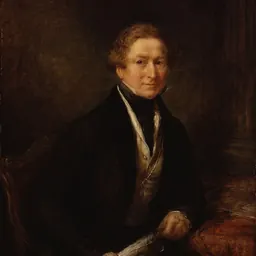
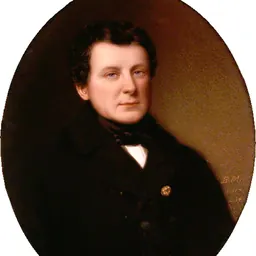


Related people
Same field, nearest in time

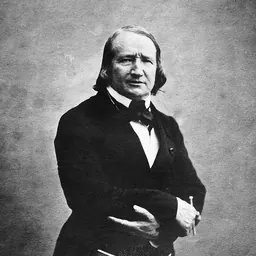

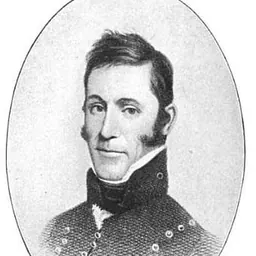
Contemporaries
People whose lives overlapped William Carleton's





Frequently asked questions
Who was William Carleton?
Irish writer (1794–1869)
When was William Carleton born?
William Carleton was born on 20 February 1794 in Clogher.
When did William Carleton die?
William Carleton died on 30 January 1869 in Dublin.
What was William Carleton's occupation?
William Carleton was a writer and journalist.
What nationality was William Carleton?
William Carleton was British.
Sources & further reading
Cite this page
APA: Biography.guide. (2026). William Carleton. https://biography.guide/william-carleton/
MLA: "William Carleton." Biography.guide, https://biography.guide/william-carleton/.
Chicago: "William Carleton." Biography.guide. https://biography.guide/william-carleton/.
Data last updated: 2026-09-27 · Spot an error? Report a correction.
Page generated 2026-09-27 05:16 UTC