
About Esther Popel
Lived 1896 – 1958 (aged 61). Esther Popel was an American writer, poet, educator and orator.
Esther B. Popel (July 16, 1896 – January 28, 1958; also known as Esther Popel Shaw) was an African-American poet of the Harlem Renaissance, an activist, and an educator. She wrote and edited for magazines such as The Crisis, the Journal of Negro Education, and Opportunity.
Early life and education Esther Popel was born on July 16, 1896, to Joseph Gibbs (a mailman) and Helen King Anderson Popel in Harrisburg, Pennsylvania. She had an elder sister, Helen, and a younger brother, Samuel. Shaw graduated from Central High School in Harrisburg in 1915 and went on to Dickinson College in the fall. She was the first African-American woman to enroll at the college and also the first to graduate. Popel chose to pursue the Latin Scientific curriculum, which emphasized Latin and modern languages such as French, German, and Spanish. Upon graduating, Popel received Dickinson's top academic prize, the John Patton Memorial Prize for Excellent Scholarship, and she was inaugurated as a member of Phi Beta Kappa.
On April 11, 1925, Popel married chemist William Andrew Shaw; their daughter, Esther Patricia, was born on June 1, 1926. While most of her poetry was published under her maiden name, she later wrote reviews and other articles under her married name of Esther Popel Shaw.
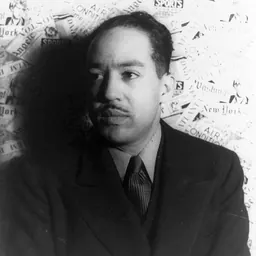
Career as poet and writer Historians recognize Popel as an activist and a poet of the Harlem Renaissance. In 1915, while a senior in high school, she self-published her first book of poetry, Thoughtless Thinks by a Thinkless Thaughter. Nineteen years later, she privately published an anthology of lyrical and political poems entitled A Forest Pool and dedicated it to the memory of her mother, who had recently died. Although these were her only two books, she also published poems in a number of magazines of the era and numbered among her friends and admirers such poets as Langston Hughes, Marita Bonner, and Georgia Douglas Johnson; Popel was a member of the latter's Saturday Nighters literary salon in Washington. She wrote one of her most recognized poems, "Flag Salute," in response to the highly publicized October 18, 1933 lynching of an African-American man named George Armwood on Maryland's Eastern Shore. Her poem juxtaposes this historical event with quotations from the Pledge of Allegiance. Other of her most recognizable poems include "Blasphemy-American Style," "October Prayer," "Night Comes Walking," and "Little Gray Leaves."
Popel Shaw served on the editorial board for the Negro History Bulletin, which was a publication of the Association for the Study of African American Life and History established by the historian Carter G. Woodson. When Woodson died in 1950, Popel Shaw was named among the individuals who would carry on his legacy. In addition to her contribution to the Bulletin, Popel Shaw regularly published book reviews in the Journal of Negro History and the Journal of Negro Education. In her writings in these publications she voiced her opinions about race relations in the United States. She also wrote a half dozen plays for high school students.
Selected works "Credo" (Opportunity, January 1925) "Kinship" (Opportunity, January 1925) "Theft" (Opportunity, April 1925) "Little Grey Leaves" (Opportunity, September 1925) "Night Comes Walking" (Journal of Negro Life, August 1929) "Bagatelle" (Opportunity, November 1931) "October Prayer" (Opportunity, October 1933) "Reach Down, Sweet Grass" (Opportunity, April 1934) "Flag Salute" (The Crisis, August 1934) "Blasphemy American Style" (Opportunity, December 1934) A Forest Pool (Modernistic Press, 1934) "The Fort Pillow Massacre" (Negro History Bulletin, 1944)
Don’t just read it —
keep it.
Full-length biographies made to live with: read them, listen on the way to work, watch them tonight.
- E-book
- Audio
- Video
Instant download · yours to keep · every purchase keeps this site free
Important facts
People in Esther Popel's life
Named in this biography and alive at the same time





Related people
Same field, nearest in time




Contemporaries
People whose lives overlapped Esther Popel's




Frequently asked questions
Who was Esther Popel?
African-American poet
When was Esther Popel born?
Esther Popel was born on 16 July 1896 in Harrisburg.
When did Esther Popel die?
Esther Popel died on 28 January 1958 in Washington, D.C..
What was Esther Popel's occupation?
Esther Popel was a writer, poet, educator and orator.
What nationality was Esther Popel?
Esther Popel was American.
Sources & further reading
Cite this page
APA: Biography.guide. (2026). Esther Popel. https://biography.guide/esther-popel/
MLA: "Esther Popel." Biography.guide, https://biography.guide/esther-popel/.
Chicago: "Esther Popel." Biography.guide. https://biography.guide/esther-popel/.
Data last updated: 2026-09-26 · Spot an error? Report a correction.
Page generated 2026-09-27 05:15 UTC