
About Georgia Douglas Johnson
Lived 1877 – 1966 (aged 88). Georgia Douglas Johnson was an American poet, composer, civil rights advocate, writer, playwright and suffragist.
Georgia Blanche Douglas Camp Johnson, better known as Georgia Douglas Johnson (September 10, 1880 – May 15, 1966), was an American poet and playwright. She was one of the earliest female African-American playwrights, (her mother's last name is listed in other sources as Jackson). Both parents were of mixed ancestry, with her mother having African-American and Native American heritage, and her father of African-American and English heritage. Douglas and Johnson had two sons: Henry Lincoln Johnson, Jr., and Peter Douglas Johnson (d. 1957). In 1910, they moved to Washington, DC, as her husband had been appointed as Recorder of Deeds for the District of Columbia, a political patronage position under Republican President William Howard Taft. While the city had an active cultural life among the elite people of color, it was far from the Harlem literary center of New York, to which Douglas became attracted.
Douglas' marital life was affected by her writing ambition, for her husband was not supportive of her literary passion, insisting that she devote more time to becoming a homemaker than on publishing poetry. She later dedicated two poems to him, "The Heart of a Woman" (1918) and "Bronze" (1922), which were praised for their literary quality.
Career
After the Johnson family moved to Washington, D.C., in 1910,
Her poems were published in several issues of The Crisis, the journal of the NAACP that was founded and edited by W. E. B. Du Bois. "Calling Dreams" was published in January 1920, "Treasure" in July 1922, and "To Your Eyes" in November 1924.
During the 1920s, Douglas Johnson traveled extensively to give poetry readings. In 1925, her husband died, and she was widowed at the age of 45. She had to rear their two teenage sons by herself. For years she struggled to support them financially, sometimes taking the clerical jobs generally available to women.
But as a gesture to her late husband's loyalty and political service, Republican President Calvin Coolidge appointed Douglas Johnson as the Commissioner of Conciliation, a political appointee position within the Department of Labor. In 1934, during the Democratic administration of Franklin D. Roosevelt, she lost this political appointee job. She returned to supporting herself with temporary clerical work.
Johnson's literary success resulted in her becoming the first African-American woman to get national notice for her poetry since Frances Ellen Watkins Harper. In 1962 she published her last poetry collection, Share My World.
The Heart of a Woman Johnson was well recognized for her poems collected in The Heart of a Woman (1918). She explores themes for women such as isolation, loneliness, pain, love and the role of being a woman during this time. Other poems in this collection consist of motherly concerns.
Bronze Johnson's collection published as Bronze had a popular theme of racial issues; she continued to explore motherhood and being a woman of color. In the foreword of Bronze she said: "Those who know what it means to be a colored woman in 1922– know it not so much in fact as in feeling ..."
Plays Johnson was a well-known figure in the national black theatre movement and was an important "cultural sponsor" in the early twentieth century, assembling and inspiring the intellectuals and artists who generated the next group of black theatre and rising education (16). Plumes is a folk drama that relates the dilemma of Charity, the main character, whose baby daughter is dying. She has saved up money for the doctor, but also she and her confidante - Tilde - don't believe the medical care would be successful. She has in mind an extravagant funeral for her daughter instead - with plumes, hacks, and other fancy trimmings. Before Charity makes a decision, her daughter dies.
Johnson was one of the only women whose work was published in Alain Locke's anthology Plays of Negro Life: A Source-Book of Native American Drama. Although several of her plays are lost, Johnson's typescripts for 10 of her plays are in collections in academic institutions. Johnson was also a member of the Writers League Against Lynching, which included Countée Cullen, James Weldon Johnson, Jessie Fauset, and Alain Locke. The organization sought a federal anti-lynching bill. Georgia Douglas Johnson's house at 1461 S Street NW would later become known as the S Street Salon. The salon was a meeting place for writers in Washington, D.C., during the Harlem Renaissance. Johnson's S Street Salon helped to nurture and sustain creativity by providing a place for African-American artists to meet, socialize, discuss their work, and exchange ideas. According to Akasha Gloria Hull, Johnson's role in creating a place for black artists to nurture their creativity made the movement a national one because she worked outside of Harlem and therefore made a trust for intercity connections.
Johnson called her home the "Half Way House" for friends traveling, and a place where they "could freely discuss politics and personal opinions" and where those with no money and no place to stay would be welcome. They became known as the "Saturday Nighters."
Weekly column
Between 1926 and 1932, she wrote short stories, started a letter club, and published a weekly newspaper column called "Homely Philosophy".
The column was published in 20 different newspapers, including the New York News, Chicago Defender, Philadelphia Tribune, and Pittsburgh Courier and ran from 1926 to 1932. Some of the topics she wrote on were considered inspirational and spiritual for her audience, such as "Hunch", "Magnetic Personality", and "The Blessing of Work." Some of her work was known to help people cope with the hardships of the Great Depression.
Legacy and honors Throughout her life, Johnson wrote 200 poems, 28 plays and 31 short stories. In 1962, she published her last poetry book, entitled Share My World, the poems in which reflect on love towards all people and forgiveness.
In 1965, Atlanta University presented Douglas with an honorary doctorate of literature, praising her as a "sensitive singer of sad songs; faithful interpreter of the feminine heart of a Negro with its joys, sorrows, limitations and frustrations of racial oppression in a male-dominated world; dreamer of broken dreams...".
When she died in Washington, D.C., in 1966, one of her sister playwrights and a former participant of the S Street Salon, sat by her bedside "stroking her hand and repeating the words, 'Poet Georgia Douglas Johnson.
Major works Poems The Heart of a Woman (1918) Bronze (1922) An Autumn Love Cycle (1928) Share My World (1962) The Ordeal Plays A Sunday Morning in the South (1925) Blue Blood (1926) Paupaulekejo (1926) Plumes (1927) Safe (c. 1929) Blue-Eyed Black Boy (c. 1930) Starting Point (1930s) William and Ellen Craft (1935) Frederick Douglass (1935) And Yet They Paused (1938) A Bill to Be Passed (1938)
Don’t just read it —
keep it.
Full-length biographies made to live with: read them, listen on the way to work, watch them tonight.
- E-book
- Audio
- Video
Instant download · yours to keep · every purchase keeps this site free
Important facts
Family & relationships
People in Georgia Douglas Johnson's life
Named in this biography and alive at the same time



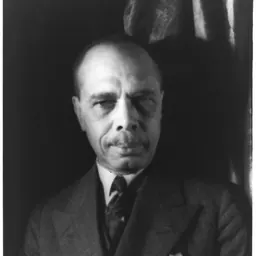



Related people
Same field, nearest in time
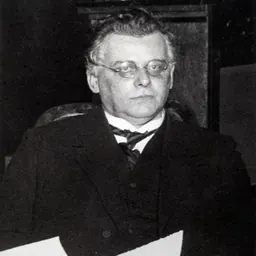
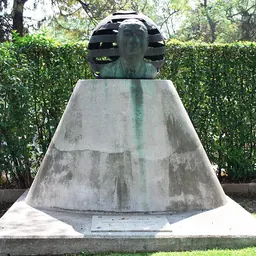
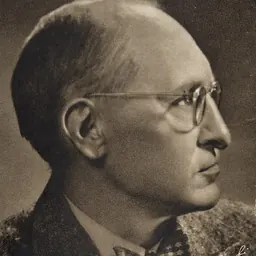
Contemporaries
People whose lives overlapped Georgia Douglas Johnson's



Frequently asked questions
Who was Georgia Douglas Johnson?
American poet and playwright
When was Georgia Douglas Johnson born?
Georgia Douglas Johnson was born on 10 September 1877 in Atlanta.
When did Georgia Douglas Johnson die?
Georgia Douglas Johnson died on 14 May 1966 in Washington, D.C..
What was Georgia Douglas Johnson's occupation?
Georgia Douglas Johnson was a poet, composer, civil rights advocate, writer, playwright and suffragist.
What nationality was Georgia Douglas Johnson?
Georgia Douglas Johnson was American.
Sources & further reading
· Wikipedia: Georgia Douglas Johnson
· DBpedia: Georgia Douglas Johnson
Cite this page
APA: Biography.guide. (2026). Georgia Douglas Johnson. https://biography.guide/georgia-douglas-johnson/
MLA: "Georgia Douglas Johnson." Biography.guide, https://biography.guide/georgia-douglas-johnson/.
Chicago: "Georgia Douglas Johnson." Biography.guide. https://biography.guide/georgia-douglas-johnson/.
Data last updated: 2026-09-25 · Spot an error? Report a correction.
Page generated 2026-09-27 05:12 UTC