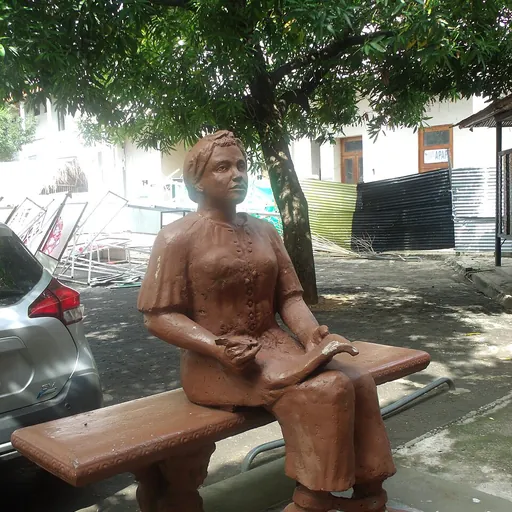
About Esperança Garcia
Born 1701. Esperança Garcia was a Brazilian lawyer and writer.
Esperança Garcia (born ) was an enslaved Afro-Brazilian and likely Creole woman in Brazil who is considered to have written the first earliest known slave petition in Brazil. On 6 September 1770, she sent a petition to free herself from slavery to the then-president of the province of São José do Piauí, Captaincy of Maranhão (now the current day state of Piauí), Gonçalo Pereira Botelho de Castro. In the petition, she denounced the abuse and maltreatment of her and her son by the overseer of Fazenda Algodões.
Biography
Early life Garcia was born on a plantation called Fazenda Algodões, owned by the Jesuits in what is now the town of Nazaré do Piauí. While there is no existing documentation of her birth or death date, she is believed to have been born at around 1751. She was also likely Creole. It was on this Jesuit plantation where she learned how to read and write. She had asked, among other things, to return to Fazenda Algodões to have her daughter baptized there.
She fled a little after the petition was sent, reappearing in a list of forcibly enslaved people at Fazenda Algodões. The list, dated 1778, showed that she married Ignácio, who was of Angolan origin, and had 2 children.
Legacy In 1979, Esperanca’s letter was rediscovered, and she became an icon for the black movement in Piauí, a state in Brazil. Her letter is also considered an important work to the origins of Afro-Brazilian women's literature. In the state of Piauí, the day she sent the letter, 6 September, is commemorated as Black Consciousness Day in the state.
A biography about her was written by author Jarid Arraes as part of her 2015 cordel collection and book Heroínas Negras Brasileiras em 15 cordéis.
In 2017, the Zumbi dos Palmares Memorial, a space dedicated to Black culture in the state capital of Teresina, was renovated and renamed the Esperança Garcia Memorial.
In 2019, she was inducted into the Book of Steel at the Pantheon of the Fatherland, which commemorates and honors national heroes. The legislation to do so was put forth by federal deputy Margarete Coelho of Piauí.
In 2019 as well, the Estação Primeira de Mangueira samba school in Rio de Janeiro made an homage to Garcia's memory in their 2019 song "História pra Ninar Gente Grande". She was honored again by the samba school in 2023.
Many organizations founded by Afro-Brazilian women in Piauí bear Garcia’s name.
Don’t just read it —
keep it.
Full-length biographies made to live with: read them, listen on the way to work, watch them tonight.
- E-book
- Audio
- Video
Instant download · yours to keep · every purchase keeps this site free
Important facts
Related people
Same field, nearest in time

Frequently asked questions
Who was Esperança Garcia?
Brazilian lawyer
When was Esperança Garcia born?
Esperança Garcia was born in 1701 in Piauí.
What was Esperança Garcia's occupation?
Esperança Garcia was a lawyer and writer.
What nationality was Esperança Garcia?
Esperança Garcia was Brazilian.
Sources & further reading
Cite this page
APA: Biography.guide. (2026). Esperança Garcia. https://biography.guide/esperanca-garcia/
MLA: "Esperança Garcia." Biography.guide, https://biography.guide/esperanca-garcia/.
Chicago: "Esperança Garcia." Biography.guide. https://biography.guide/esperanca-garcia/.
Data last updated: 2026-09-24 · Spot an error? Report a correction.
Portrait: Wikimedia Commons · author & licence
Page generated 2026-09-27 05:09 UTC