
About Erskine Mayer
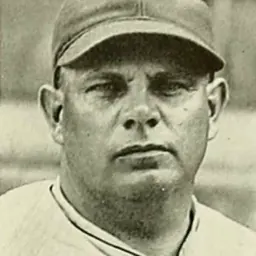
Lived 1889 – 1957 (aged 68). Erskine Mayer was an American baseball player.
Jacob Erskine Mayer (born James Erskine Mayer, January 16, 1889 – March 10, 1957) was an American professional baseball player who played for three different Major League Baseball teams during the 1910s. In his eight-year career, Mayer played for the Philadelphia Phillies, the Pittsburgh Pirates, and the Chicago White Sox.
A right-handed pitcher, Mayer's repertoire of pitches included a curveball which he threw from a sidearm angle. As a result of his curveball, then Brooklyn Dodgers manager Wilbert Robinson called Mayer "Eelskine" because the pitch was "so slippery."
Mayer won 20 games in a single season in both and . He appeared in the 1915 World Series as a member of the Phillies and in the 1919 World Series as a member of the White Sox, a series noted for the Black Sox Scandal.
He was 91–70 in his career, with a 2.96 ERA. He was one of the all-time best Jewish pitchers in major league history through 2010, 3rd career-wise in ERA (behind only Barney Pelty and Sandy Koufax), 7th in wins, and 10th in strikeouts (482).
Early life Mayer was born in Atlanta, Georgia, and was Jewish. His paternal grandparents were Jews who immigrated to the US from Germany, and his father Isaac was a concert pianist and music teacher, and composed an opera in Hebrew.
1914 was the first of Mayer's back-to-back 20 win seasons, as he won 21 games, 7th-most in the National League. That year, Honus Wagner became the second member of the 3,000 hit club when he hit a double off Mayer. Wagner is the only player to get his 3,000th career hit off a pitcher who won 20 games that same season.
1915 was a successful year both for Mayer and for the Phillies. Mayer recorded 21 wins (3rd in the National League), 20 complete games, a .583 won-loss percentage (10th in the league), 114 strikeouts (9th in the league), and a 2.36 earned run average. Woodrow Wilson, then President of the United States, attended the game, the first time a United States President attended a World Series game.
Mayer won seven games, but lost seven as well. was a better year for him. Mayer won 11 games against only six losses, had a .647 win–loss percentage (6th in the league), and had a 2.76 earned run average. In , Mayer won seven games in 13 appearances for the Phillies. However, he was traded to the Pittsburgh Pirates for Elmer Jacobs in July, 1918. In 15 appearances for the Pirates, Mayer went 9–3 with a 2.26 earned run average. He finished with a combined record of 16–7 (his 16 wins were 7th in the National League) with a 2.65 earned run average and 18 complete games, and his .696 win–loss percentage was third-best in the league, as on defense he tied for the lead league among pitchers with a perfect fielding percentage.
Mayer started the 1919 season with the Pirates; however, in August of that year, the Chicago White Sox selected him off waivers. In exchange, the Pirates received $2,500 ($ today). Mayer appeared in six regular season games for the White Sox and also pitched one inning in game 5 of the 1919 World Series. It was the final appearance of his major league career. When he retired after the season, he had won 91 games, 12 of them by shutout, with a 2.96 earned run average while pitching 93 complete games.
Mayer was a better than average hitting pitcher, posting a .185 batting average (84-for-453) with 39 runs, 2 home runs, 28 RBI and 28 bases on balls. Defensively, he recorded a .967 fielding percentage.
In , Mayer played in one game for the minor league Atlanta Crackers of the Southern Association. He retired shortly thereafter. Three years later, in , he briefly served as an umpire in the South Georgia League.
He was one of the all-time best Jewish pitchers in major league history through 2010, 3rd in career ERA (behind only Barney Pelty and Sandy Koufax), 7th in wins (91; directly behind Barney Pelty), and 10th in strikeouts (482; directly behind Scott Schoeneweis).
Post-professional life After retiring from professional sports, Mayer moved to Los Angeles. While there, he opened a cigar store. On March 10, 1957, he died of a heart attack. He was buried in Forest Lawn Memorial Park Cemetery in nearby Glendale, California.
Don’t just read it —
keep it.
Full-length biographies made to live with: read them, listen on the way to work, watch them tonight.
- E-book
- Audio
- Video
Instant download · yours to keep · every purchase keeps this site free
Important facts
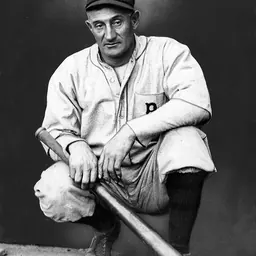
People in Erskine Mayer's life
Named in this biography and alive at the same time




Related people
Same field, nearest in time


Contemporaries
People whose lives overlapped Erskine Mayer's




Frequently asked questions
Who was Erskine Mayer?
American baseball player
When was Erskine Mayer born?
Erskine Mayer was born on 16 January 1889 in Atlanta.
When did Erskine Mayer die?
Erskine Mayer died on 10 March 1957 in Los Angeles, California.
What was Erskine Mayer's occupation?
Erskine Mayer was a baseball player.
What nationality was Erskine Mayer?
Erskine Mayer was American.
Sources & further reading
Cite this page
APA: Biography.guide. (2026). Erskine Mayer. https://biography.guide/erskine-mayer/
MLA: "Erskine Mayer." Biography.guide, https://biography.guide/erskine-mayer/.
Chicago: "Erskine Mayer." Biography.guide. https://biography.guide/erskine-mayer/.
Data last updated: 2026-09-20 · Spot an error? Report a correction.
Page generated 2026-09-27 05:31 UTC