
Erol Gelenbe
Turkish-French computer scientist (born 1945)
About Erol Gelenbe
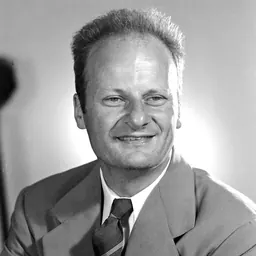
Born 1945. Erol Gelenbe is a French and Turkish computer scientist, engineer, researcher, academic and university teacher, known for G-networks and Random neural network.
Sami Erol Gelenbe (born 22 August 1945, Istanbul) is a Turkish and French computer scientist, electronic engineer and applied mathematician, known for inventing the Random neural network and his pioneering work in computer system and network performance. His academic career spans several prestigious institutions and roles, including currently as Professor at the Institute of Theoretical and Applied Informatics of the Polish Academy of Sciences since 2017, and visitor positions at King's College London and the I3S Laboratory (CNRS, University of Côte d'Azur.
A Fellow of several national academies and Foreign Fellow of the Indian National Science Academy, Gelenbe chairs the Informatics Section of Academia Europaea since 2023. Previous professorial tenures include the University of Liège (1974–79), University Paris-Saclay (1979–1986), University Paris Descartes (1986–1993), NJIT (1991–93), Duke University (1993–1998), the University of Central Florida (1998–2003), and Imperial College (2003–2020), where he served as the Dennis Gabor Professor and Head of Intelligent Systems and Networks.
Biography Erol Gelenbe is the son of Maria Sacchet Gelenbe and Yusuf Âli Gelenbe, a descendant of the 18th-century Ottoman mathematician Gelenbevi Ismail Efendi and nephew of the Ottoman Sheyhulislam Mehmet Cemaleddin Efendi. Erol graduated from TED Ankara Koleji and the Middle East Technical University, Ankara, where he won the K.K. Clarke Research Award for his undergraduate thesis on "partial flux switching magnetic memory systems". Awarded a Fulbright Fellowship, he completed a master's degree and Ph.D. at the Polytechnic University on "Stochastic automata with structural restrictions" under Prof. Edward J. Smith.
Career Immediately after his PhD from the Polytechnic Institute of Brooklyn (now the New York University Tandon School of Engineering), he joined the University of Michigan in 1970 as an assistant professor. He was granted a leave of absence from the University of Michigan in 1972, and joined INRIA, France, where he founded the Modeling and Performance Evaluation of Computer Systems research group, and was also a visiting associate professor at Paris 13 University. He was elected to a Chair (full professorship) in Computer Science at the University of Liège (Belgium) and appointed in 1973, joining Professor Danny Ribbens with whom he remained a life-long friend. He also continued as a research director (Directeur Scientifique) at INRIA and was awarded a Doctorat d'État ès Sciences Mathématiques (November 1973) from Sorbonne University, with a thesis on "Modèlisation des systèmes informatiques", under Professor Jacques-Louis Lions. He moved to the Paris-Sud 11 University in 1979, co-founded the Laboratoire de Recherche en Informatique and its Ph.D. Program, before joining Paris Descartes University in 1986 as founding director of the Ecole des Hautes Etudes en Informatique.
Gelenbe was appointed New Jersey State Endowed Chair Professor at the New Jersey Institute of Technology (1991–1993). He joined Duke University in 1993 and was appointed Nello L. Teer Chair Professor and Chair of Electrical and Computer Engineering. In 1998 he moved to the University of Central Florida to create the School of Electrical Engineering and Computer Science and the Harris Corporation Engineering Centre. In 2003 he was offered the Dennis Gabor Chair at Imperial College London as Head of Intelligent Systems and Networks. After Brexit, he became Professor at IITIS-PAN of the Polish Academy of Sciences in 2017, and is a Foreign Fellow of the Polish Science Academy since 2013. He retired from Imperial College in 2019 to continue as Professor at the Institute of Theoretical and Applied Informatics of the Polish Academy of Sciences, Coordinator or Principal Investigator of EU H2020 Research and Innovation Project SerIoT (2017–2021) on the security of the Internet of Things, the EU H2020 Research and Innovation Programmes SDK4ED (2018–2020) and IoTAC (2020–2023), the EU Horizon Project DOSS (2023–2026) and the Marie-Curie Project SAILING (2026-2029). He served as SAPEA Advisor on Cybersecurity for the EU High Level Group (2017), Member of the Fake-News Study Group of the All-European Academies (ALLEA, 2020–2021), leader of the Science Communication (Diffusion des Sciences) Study Group (2020–21) of the Belgian Royal Academy of Sciences, Arts and Letters, and Study Group leader on "From Research to Innovation in Europe" (2022) of the Association of European Academies of Applied Sciences and Engineering.
Research
Performance evaluation and queueing theory Gelenbe's early research focused on the mathematical analysis of computer systems, communication networks, and distributed computing. Beginning in the late 1960s, he developed stochastic models for operating systems, memory management, virtual memory, checkpointing, software reliability, and packet-switching networks. His work contributed to the development of computer system performance evaluation by introducing analytical models for resource allocation, fault tolerance, response time, and system availability.
During the 1970s and 1980s, he expanded this research to queueing theory and stochastic networks, publishing work on diffusion approximations, distributed databases, synchronization, parallel processing, manufacturing systems, and communication protocols. His research established mathematical methods for analyzing complex computer and communication systems under uncertainty.
Random Neural Networks and G-networks In 1989, Gelenbe introduced the Random Neural Network (RNN), a probabilistic neural network model in which neurons exchange excitatory and inhibitory signals while admitting an exact product-form equilibrium solution. The model combines concepts from queueing theory, probability, and neural computation and has been applied to machine learning, pattern recognition, image processing, computer vision, optimization, signal processing, robotics, medical diagnosis, and wireless communications.
He also developed G-networks, a class of queueing networks that extends classical queueing theory by incorporating positive and negative customers, triggers, resets, and other signalling mechanisms. G-networks provide analytical solutions for systems involving interacting processes and have been applied to communication networks, cloud computing, manufacturing, biological systems, and energy management.
Computer networks and adaptive systems From the 1990s onward, Gelenbe's research increasingly focused on communication networks and distributed systems. He developed the Cognitive Packet Network (CPN), an adaptive routing architecture that uses reinforcement learning to select network paths according to quality-of-service objectives such as delay, reliability, security, and energy consumption. His subsequent work examined self-aware and autonomic networks capable of adapting to changing network conditions without centralized control.
His research has also addressed quality-of-service management, bandwidth allocation, congestion control, wireless sensor networks, cloud computing, Internet of Things (IoT) systems, and software-defined networking, with particular emphasis on balancing performance, reliability, and energy efficiency.
Energy-aware computing, cybersecurity and interdisciplinary applications In later years, Gelenbe's research expanded to energy-efficient computing and cyber-physical systems. He introduced Energy Packet Networks, a stochastic modelling framework for analysing energy flow in computing systems, with applications to energy harvesting, cloud computing, and sustainable network design.
His work has also examined cybersecurity, including adaptive defence mechanisms, denial-of-service attacks, malware propagation, software reliability, and resilient communication networks. Beyond computer networking, he has published research in computational biology, gene regulatory networks , emergency evacuation modelling , autonomous search , disaster response , and intelligent transportation systems
Awards and honours Honours Cross of Officer of the Order of Merit of the Republic of Poland (Polish: Krzyż Oficerski Orderu Zasługi Rzeczpospolitej Polskiej), awarded by decree of the President of Poland dated 12 January 2024, and conferred on 10 June 2024. Commander of the Order of the Crown (Belgium), by Royal Decree of 28 October 2022 Commander of the Ordre National du Mérite, France, 2019 (awarded Knighthood in 1993) Knight of the Légion d'Honneur (France), 2014, France's most senior civilian or military honor that dates from the Napoleonic period. Knight Commander in the Order of the Star of Italy, or "Grande Ufficiale dell'Ordine della Stella d'Italia", 2007, an honor awarded for eminent services to culture, including science. Commander of the Order of Merit of the Republic of Italy (or Commendatore dell'Ordine al Merito della Repubblica Italiana), 2005, Italy's most senior honour. Knight of the Ordre des Palmes Académiques, 2003, France's oldest civilian honor dating to the Napoleonic period, awarded to those who have made distinguished contributions to education.
National Academy Fellowships Fellow of the International Core Academy of Sciences and Humanities, 2026 Foreign Fellow of the Indian National Science Academy, 2025 Honorary Fellow of the Islamic World Academy of Sciences, 2022 Foreign Fellow of the Académie Royale de Belgique, 2015. Foreign Fellow of the Polish Academy of Sciences, 2013. Full Member of the Science Academy Society of Turkey, 2012 Honorary Fellow of the Hungarian Academy of Sciences, 2010 Fellow of the National Academy of Technologies of France or Académie des technologies, 2008 Member of Academia Europaea, 2005
Fellowships in Professional Societies Fellow of the Institute of Electrical and Electronics Engineers (IEEE), New York City, 1986 Fellow of the Association for Computing Machinery (ACM), New York City, 2002 IFIP Fellow, 2020 Fellow of the International Academy of Artificial Intelligence Sciences (formerly named the Asia Pacific Artificial Intelligence Association), 2022 Fellow (Academician) of the International Artificial Intelligence Industry Alliance (AIIA), 2023
Honorary Doctorates (Honoris Causa) Doctor Honoris Causa, the Hungarian Academy of Sciences, 2010 Doctor Honoris Causa, University of Liège, 2006, Belgium Doctor Honoris Causa, Boğaziçi University, Istanbul, 2004 Doctor Honoris Causa, University of Rome Tor Vergata "in Ars Computandi", Italy, 1996
Awards IEEE TCSC Award for Excellence 2025 (IEEE Technical Committee on Scalable Computing): Given to a single individual annually for significant and sustained contributions to scalable computing and outstanding leadership within the TCSC community) Mustafa Prize, 2017 In Memoriam Dennis Gabor Award, NOVOFER Foundation, Budapest, 2013 Institution of Engineering and Technology Oliver Lodge Medal, London, 2010 Imperial College, Rector's Research Award, 2008 ACM SIGMETRICS Life-Time Achievement Award, describes him "as the single individual who, over a span of 30 years, has made the greatest overall contribution to the field of Computer System and Network Performance Evaluation", 2008 France Telecom Prize, one of the Grands Prix of the French Academy of Sciences, 1996 METU Parlar Foundation Science Award, Ankara, 1994 International Federation for Information Processing (IFIP) Silver Core Award, 1980
Selected bibliography E. Gelenbe "On languages defined by linear probabilistic automata", Information and Control, 16(5):487–501, July 1970. E. Gelenbe "A realizable model for stochastic sequential machines", IEEE Trans. Comput. C-20, pp. 199–204, 1971. E. Gelenbe "On approximate computer system models", Journal of the ACM 22 (2): 261–269 (April 1975).
E. Gelenbe and I. Mitrani "Analysis and synthesis of computer systems", Academic Press (June 1980), 239 pp.,. E. Gelenbe "On the optimum checkpoint interval", Journal of the ACM, 26(2):259–270, April 1979.
E. Gelenbe "Product-Form queueing networks with negative and positive customers", Journal of Applied Probability, Vol. 28 (3): 656–663 (Sep. 1991). E. Gelenbe, Mao, Z.H., Li, Y.D. "Function approximation with spiked random networks", IEEE Trans. on Neural Networks, 10 (1): 3–9, 1999. E. Gelenbe and G. Pujolle "Introduction to Queueing Networks", John Wiley & Sons, Inc. New York City, 1987 and 2000. E. Gelenbe, R. Lent and Z. Xu "Design and performance of a cognitive packet network", Performance Evaluation, 46, (2–3): 155–176, October 2001. E. Gelenbe and Hussain K.F. "Learning in the multiple class random neural network, " IEEE Transactions on Neural Networks, 13(6): 1257–1267, 2002. E. Gelenbe, Gellman, R. M. Lent, P. Liu and Pu Su "Autonomous smart routing for network QoS", Proc. International Conference on Autonomic Computing: 232–239, , 17–18 May 2004.
E. Gelenbe "Steady-state solution of probabilistic gene regulatory networks", Physical Review E, 76(1), 031903 (2007). E. Gelenbe "A Diffusion Model for Packet Travel Time in a Random Multi-Hop Medium", ACM Trans. on Sensor Networks, 3 (2), Article 10, June 2007. E. Gelenbe "Dealing with software viruses: a biological paradigm", Information Security Technical Reports 12: 242–250, Elsevier Science, 2007. E. Gelenbe, G. Sakellari and M. d'Arienzo "Admission of QoS aware users in a smart network", ACM Trans. on Autonomous and Adaptive Systems, 3(1), TAAS-07-0003, 2008. E. Gelenbe "Network of interacting synthetic molecules in equilibrium" Proc. Royal Society A 464:2219–2228, 2008. E. Gelenbe and I. Mitrani "Analysis and Synthesis of Computer Systems" World Scientific, Imperial College Press, Singapore and London, 2009. E. Gelenbe "Analysis of single and networked auctions", ACM Trans. on Internet Technology, 9 (2), 2009. E. Gelenbe "Steps toward self-aware networks", Communications ACM, 52 (7):66–75, July 2009. A. Berl, E. Gelenbe, M. Di Girolamo, G. Giuliani, H. De Meer, M. Quan Dang, and K. Pentikousis "Energy-efficient cloud computing", Comp. J. 53 (7): 1045–1051, 2010. E. Gelenbe "Search in unknown random environments", Phys. Rev. E 82: 061112, 2010.
O. H. Abdelrahman and E. Gelenbe. "Time and energy in team-based search", Phys. Rev. E, 87(3):032125, March 2013. Y. M. Kadioglu and E. Gelenbe. "Product-form solution for cascade networks with intermittent energy," IEEE Systems Journal 13 (1): 918–927 (2018) E. Gelenbe, P Campegiani, T Czachórski, SK Katsikas, I Komnios, et al. "Security in Computer and Information Sciences: First International ISCIS Security Workshop 2018, Euro-CYBERSEC 2018, London, UK, February 26–27, 2018, Revised Selected Papers", Lecture Notes, Vol. CCIS 821, Springer, Berlin (2018)
E. Gelenbe and Y. M. Kadioglu. "Energy life-time of wireless nodes with network attacks and mitigation," 2018 ICC: IEEE International Conf. on Comms. Workshops (ICC), IEEEXpress, (2018) W. Serrano and E. Gelenbe. "The Random Neural Network in a neurocomputing application for Web search," Neurocomputing 280: 123–132 (2018) M. G. Siavvas and E. Gelenbe. "Optimum checkpoints for programs with loops," Simul. Model. Pract. Theory 97: 101951 (2019) Y. M. Kadioglu and Gelenbe. "Product-Form Solution for Cascade Networks With Intermittent Energy," IEEE Systems Journal 13(1): 918-927 (2019) E. Gelenbe and Y. Zhang. "Performance Optimization With Energy Packets," IEEE Systems Journal 13(4): 3770-3780 (2019) J. Du, E. Gelenbe, C. Jiang, H. Zhang, Y. Ren and H. V. Poor. "Peer Prediction-Based Trustworthiness Evaluation and Trustworthy Service Rating in Social Networks," IEEE Trans. Information Forensics and Security 14(6): 1582-1594 (2019)
W. Serrano, E. Gelenbe and Y. Yin. "The Random Neural Network with Deep Learning Clusters in Smart Search," Neurocomputing 396: 394-405 (2020)
Y. Ma, E. Gelenbe, K. Liu "IoT Performance for Maritime Passenger Evacuation," 2024 IEEE 10th World Forum on the IoT, PP. 1–6, 2024 J. Bergquist, E. Gelenbe, K. Sigman, "On an Adaptive-Quasi-Deterministic Transmission Policy Queueing Model," IEEE Computer Society, MASCOTS 2024, pp. 1–7, 024
G. S. Kuaban, T. Czachórski, E. Gelenbe, P. Czekalski, "Energy performance of Internet of Things (IoT) networks for pipeline monitoring," The 20th International Wireless Communications and Mobile Computing, IEEEXplore, 2024 M. Nakip, E. Gelenbe, "Online Self-Supervised Deep Learning for Intrusion Detection Systems," IEEE Transactions on Information Forensics and Security 19, pp. 5668–5683, 2024
Tang, Y.; Liu, J.; Lan, Yan, Z.; Gelenbe, Erol. "Security of LLM-based Agents Regarding Attacks, Defenses, and Applications: A Comprehensive Survey". Information Fusion, Part C vol. 127, 103941, 2026. doi:10.1016/j.inffus.2025.10
Don’t just read it —
keep it.
Full-length biographies made to live with: read them, listen on the way to work, watch them tonight.
- E-book
- Audio
- Video
Instant download · yours to keep · every purchase keeps this site free
Important facts
People in Erol Gelenbe's life
Named in this biography and alive at the same time

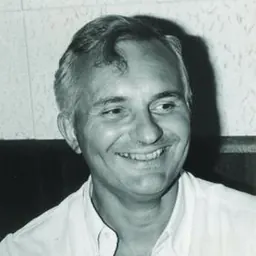




Related people
Same field, nearest in time


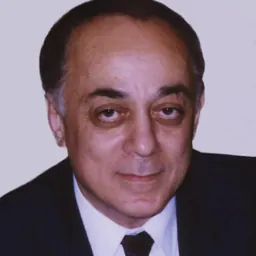
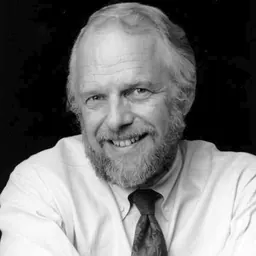


Contemporaries
People whose lives overlapped Erol Gelenbe's



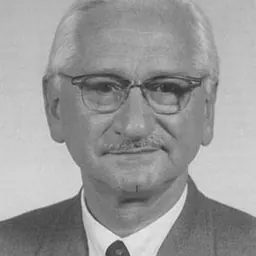
Frequently asked questions
Who is Erol Gelenbe?
Turkish-French computer scientist (born 1945)
When was Erol Gelenbe born?
Erol Gelenbe was born on 22 August 1945 in Istanbul.
What is Erol Gelenbe's occupation?
Erol Gelenbe is a computer scientist, engineer, researcher, academic and university teacher.
What is Erol Gelenbe known for?
Erol Gelenbe is known for G-networks and Random neural network.
What nationality is Erol Gelenbe?
Erol Gelenbe is French and Turkish.
Sources & further reading
Cite this page
APA: Biography.guide. (2026). Erol Gelenbe. https://biography.guide/erol-gelenbe/
MLA: "Erol Gelenbe." Biography.guide, https://biography.guide/erol-gelenbe/.
Chicago: "Erol Gelenbe." Biography.guide. https://biography.guide/erol-gelenbe/.
Data last updated: 2026-09-20 · Spot an error? Report a correction.
Page generated 2026-09-27 05:28 UTC