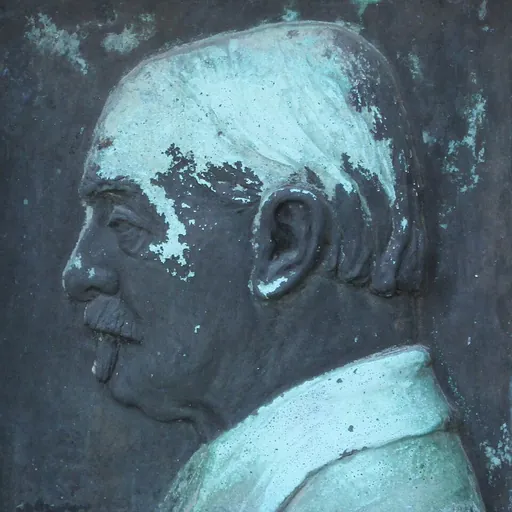
About Ernst Naumann
Lived 1832 – 1910 (aged 78). Ernst Naumann was a German conductor, musicologist, composer, editor, university teacher and music arranger.
Carl Ernst Naumann (15 August 183215 December 1910) was a German organist, composer, conductor, editor, arranger and musicologist. He is best known now as an arranger and editor of the music of J.S. Bach, Mozart and Mendelssohn. He was a friend of Schumann and Brahms, and conducted the first performance of the latter's Alto Rhapsody in 1870.
Biography Carl (or Karl) Ernst Naumann was born in Freiberg in Saxony in 1832, the son of mineralogist Carl Friedrich Naumann. He was a cousin of Emil Naumann (1827–1888) and grandson of Johann Gottlieb Naumann (1741–1801), both composers.
Ernst Naumann studied the organ with (1789–1864) and composition with Moritz Hauptmann and Ernst Richter.
Naumann was friendly with Brahms and Schumann. The similarity of Brahms’s music to that of late Beethoven was first noted in a letter from Albert Dietrich to Ernst Naumann on 5 November 1853. Naumann was one of the people Dietrich wrote to in March 1854, following Schumann's suicide attempt in late February.
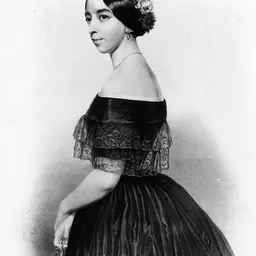
On 3 March 1870, with the Akademischer Gesangverein of Jena, Naumann conducted the first public performance of Brahms's Alto Rhapsody, with Pauline Viardot as soloist.
He died in 1910 in Jena, aged 78.
Compositions Naumann wrote in no large forms such as symphonies or operas, but confined himself to chamber music and vocal music. His original compositions include: Sonata in G minor for viola and piano, Op. 1 (1854) 4 Stücke (4 Pieces) for violin and piano, Op. 2 (c.1859) 5 Lieder von Joseph von Eichendorff for voice and piano, Op. 3 (c.1860); words by Joseph von Eichendorff Morgen: „Fliegt der erste Morgenstrahl“ Nachtwanderer: „Ich wand're durch die stille Nacht“ Erinnerung: „Die fernen Heimathöhen“ Wehmut: „Ich irr' in Tal und Hainen“ „Grün war die Weide, der Himmel blau“ Three Fantasiestücke (3 Fantasy Pieces) for cello (or viola) and piano, Op. 4 (1861) Three Fantasiestücke (3 Fantasy Pieces) for viola (or violin) and piano, Op. 5 (1861) String Quintet No. 2 in E major for 2 violins, 2 violas and cello, Op. 13 (published 1880) Salvum fac regem for male chorus a cappella, Op. 14 3 Lieder for voice and piano, Op. 15 (1879); words by Julius Altmann Abendwolke: „Gold'ne Wolk in stiller Höh'“ Trauer: „Ich kann kein Lied jetzt singen“ Strandlied: „Fahr' ich hin mit leichtem Kahn“ Pastorale for chamber orchestra, Op. 16 (flute, 2 oboes, 2 clarinets in B-flat, 2 bassoons, 2 horns in F, 2 violins, viola, cello, bass) String Trio in D major, Op. 12; Dresdner Streichtrio
Don’t just read it —
keep it.
Full-length biographies made to live with: read them, listen on the way to work, watch them tonight.
- E-book
- Audio
- Video
Instant download · yours to keep · every purchase keeps this site free
Important facts
People in Ernst Naumann's life
Named in this biography and alive at the same time



Related people
Same field, nearest in time


Contemporaries
People whose lives overlapped Ernst Naumann's


Frequently asked questions
Who was Ernst Naumann?
German musician (1832-1910)
When was Ernst Naumann born?
Ernst Naumann was born on 15 August 1832 in Freiberg.
When did Ernst Naumann die?
Ernst Naumann died on 15 December 1910 in Jena.
What was Ernst Naumann's occupation?
Ernst Naumann was a conductor, musicologist, composer, editor, university teacher and music arranger.
What nationality was Ernst Naumann?
Ernst Naumann was German.
Sources & further reading
Cite this page
APA: Biography.guide. (2026). Ernst Naumann. https://biography.guide/ernst-naumann/
MLA: "Ernst Naumann." Biography.guide, https://biography.guide/ernst-naumann/.
Chicago: "Ernst Naumann." Biography.guide. https://biography.guide/ernst-naumann/.
Data last updated: 2026-09-23 · Spot an error? Report a correction.
Portrait: Wikimedia Commons · author & licence
Page generated 2026-09-27 05:05 UTC