
About Ernst Lohagen
Lived 1897 – 1971 (aged 74). Ernst Lohagen was a German politician.
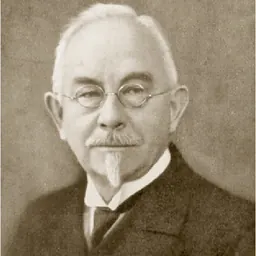
Ernst Lohagen (12 May 1897 - 2 November 1971) was a German communist politician, revolutionary and journalist. He was a member of the Reichstag from 1930 to 1932 and the Volkskammer from 1946 to 1952, although under the Marxist-Leninist power structure applied in East Germany it was his membership of the Central Committee of the Socialist Unity Party of Germany from 1946 to 1952 that was of greater significance.
He suffered a fall from grace in February 1952 and never recovered his former political influence.
A record of political activism meant that he spent most of the twelve Nazi years in state detention: Lohagen's wife was murdered in Auschwitz.
Life Provenance and early years Ernst Lohagen was born in Elberfeld in the heart of the intensively industrialised Ruhr region. His father worked as a weaver, his mother as a leather worker. He attended school locally and then took work as an errand boy. After that, between 1911 and 1915, he was employed as a support worker and then as a packer in Elbersfeld.
He joined the Young Socialists ("Sozialistische Arbeiter-Jugend" / SAJ) in 1911 Meanwhile, back in Kassel, in the middle of 1931, he was removed from all his party functions locally. Party comrades never found out why: his relationships within the party in Berlin and nationally were apparently unaffected. Ernst Lohagen remained in investigative custody till 1938. He remained locked up till April 1945 when the US army released him from the concentration camp at Lengefeld. where he succeeded Wilhelm Koenen as leader of the SED parliamentary group on 4 February 1949.
Nationally Ernst Lohagen was a member of the party Central Committee, the real fulcrum of political power in the country, from 1950 The attack was quickly and robustly refuted in Neues Deutschland, the party's mass circulation daily newspaper for the region becoming known as East Germany. The rebuttal appeared in the edition of 24 February 1949 under the headline "Gegen eine politische Verleumdung" ("Against a political defamation"). At the same time the Party Executive ("Partei Vorstand") took the opportunity to praise Lohagen's illegal (at the time) political work and blameless conduct during the Nazi years.
The fall As a Central Committee member Lohagen was notable for the vigour with which he imposed "Stalinisation" in his own Saxony fiefdom. Stalinisation was the order of the day, and he was particularly savage in his attacks on the aging "right-wing" communist, Arthur Lieberasch, It was therefore more than surprising that on 21 December 1951 Lohagen was himself heavily and sharply criticised in an article that appeared under the dry but damning headline "Comrade Lohagen suppressed self-criticism" (""Genosse Lohagen unterdrückt die Selbstkritik") in the Tägliche Rundschau, a newspaper published for East Germany between 1945 and 1955 by the ever present Soviet Red army bureaucracy.
Various sources indicate that Ernst Lohagen was one of a number of casual scapegoats caught up in a long running top level power struggle, but that did nothing to ameliorate his position at the time. Although he accepted in print that "the criticism in the Täglichen Rundschau [was] a lesson and a help [for him]" ("die Kritik der "Täglichen Rundschau" eine Lehre und Hilfe für mich"), a number of further savage attacks against him appeared in the state controlled press. He tried again on 21 February 1952, accepting that his self-criticism to date had been "false and insufficient" ("falsch und unzulänglich") and accepting that he had made a succession of errors ("Kette von Fehlern") on account of a personality defect identified as "Selbstherrlichkeit". Not withstanding these renewed protestations of subordination, on 23 February 1952 Ernst Lohagen was excluded from the party Central Committee. Then, on 11 March 1952 Walter Ulbricht, give his opinion that "the business with Comrade Lohagen is not concluded" ("Die Sache mit dem Verhalten des Genossen Lohagen ist nicht abgeschlossen"). There is a suggestion that it was precisely because of his own hardline record of Stalinisation in Saxony that Comrade Lohagen's ordeal continued. In May 1952 he received a formal rebuke for "damage to the party and conduct unworthy of a leading official" ("parteischädigenden und eines führenden Funktionärs unwürdigen Verhaltens"). In June 1952 he was removed from the party regional leadership in Saxony and required, with immediate effect, to resign his seat in the national parliament ("Volkskammer"). That, reportedly, was announced as a three-year appointment. However, in January 1953 he was appointed to head up the Finance and Control department in the district of Potsdam, a position he retained till September 1955. Then from 1955 till 1958 he served as chairman of the district council for Pritzwalk.
In May 1957 Ernst Lohagen celebrated his sixtieth birthday and in June 1957 the National Party Control Commission ("Zentrale Parteikontrollkommission") cancelled or expunged his penalties. There were no more public sector jobs for the "Labour veteran" ("Arbeiterveteran"), but he did work on an unpaid basis for the Marxism–Leninism Institute for some years starting in 1961.
Ernst Lohagen died at Bad Saarow, a health spa to the east of Berlin, on 2 November 1971. His body was buried in the "Grove of Honour" in the Southern Cemetery at Leipzig.
Awards and honours 1967 Banner of Labor date unknown Patriotic Order of Merit in gold
Personal: Paula Lohagen Ernst Lohagen was married to Paula Niewöhner (1897–1942). The marriage was childless. The date of the marriage is unknown, but it is likely that it took place in or after 1926 which is when Paula moved to Kassel.
Paula Lohagen was born into a politically aware (Social Democrat) family on 17 January 1897 in Herford, a midsized town a short distance to the north of Bielefeld. She joined the Young Socialists when she was 14 and the Communist party in 1920. She played an important part in creating the Communist youth organisation in the Ruhr district. From 1926 she lived in Kassel where she was a member of the party regional leadership team ("Bezirksleitung") for Hesse-Waldeck. During the Weimar years she was arrested on several occasions because she spoke out on the dangers of Fascism. She remained in Kassel after the Nazis took power at the start of 1933, and played a leading role in organising anti-Fascist actions by Communists in the region. After the Communist Party was banned she worked in a resistance group and organised illegal political activity, which she undertook together with workers at the Henschel factory, which was an important production centre for railway locomotives and trucks. She held regular meetings with Henschel workers' at the former sports hall of the plant sports club.
In 1935 Ernst and Paula Lohagen were living in Kassel at "Gartenstraße 27" ("Garden Street 27"). They were both arrested by Gestapo officers in June 1935. She was sentenced to a three-year jail term which she served at Ziegenhain. From there she was transferred to Ravensbrück concentration camp. It is not known at what point she was transferred again, this time to Auschwitz. Her last communication came from Auschwitz shortly before Christmas 1942. It was a card which she sent to her parents, living by this point in Bielefeld. It included a mildly reassuring message: "You must not worry on my account, here it's ... so far so good..." ("Meinetwegen dürft ihr euch keine Sorgen machen, mir geht es so weit noch gut…") Nothing further was heard of Paula Lohagen. It is believed that she was murdered soon after writing that message.
Don’t just read it —
keep it.
Full-length biographies made to live with: read them, listen on the way to work, watch them tonight.
- E-book
- Audio
- Video
Instant download · yours to keep · every purchase keeps this site free
Important facts
People in Ernst Lohagen's life
Named in this biography and alive at the same time

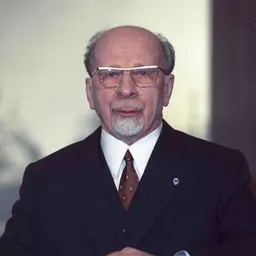
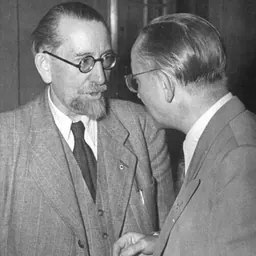

Related people
Same field, nearest in time





Contemporaries
People whose lives overlapped Ernst Lohagen's

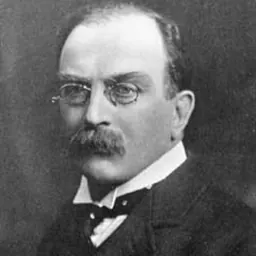
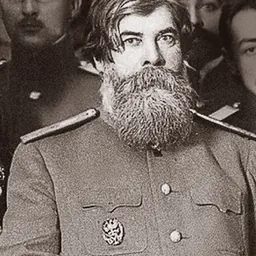

Frequently asked questions
Who was Ernst Lohagen?
German politician (1897-1971)
When was Ernst Lohagen born?
Ernst Lohagen was born on 12 May 1897 in Elberfeld.
When did Ernst Lohagen die?
Ernst Lohagen died on 2 November 1971 in Bad Saarow.
What was Ernst Lohagen's occupation?
Ernst Lohagen was a politician.
What nationality was Ernst Lohagen?
Ernst Lohagen was German.
Sources & further reading
Cite this page
APA: Biography.guide. (2026). Ernst Lohagen. https://biography.guide/ernst-lohagen/
MLA: "Ernst Lohagen." Biography.guide, https://biography.guide/ernst-lohagen/.
Chicago: "Ernst Lohagen." Biography.guide. https://biography.guide/ernst-lohagen/.
Data last updated: 2026-09-22 · Spot an error? Report a correction.
Page generated 2026-09-27 05:34 UTC