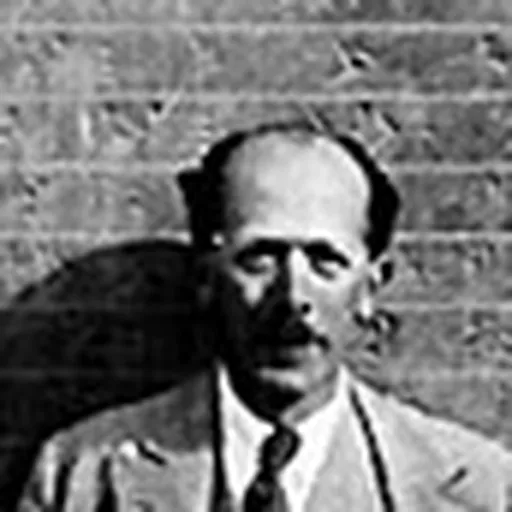
About Ernst Herzfeld
Lived 1879 – 1948 (aged 68). Ernst Herzfeld was a German and American anthropologist, art historian, archaeologist, university teacher, architect and orientalist.
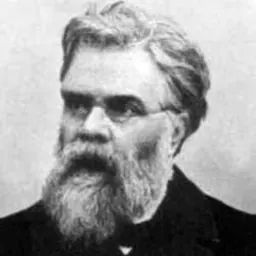
Ernst Emil Herzfeld (23 July 1879 – 20 January 1948) was a German archaeologist and Iranologist.
Life Herzfeld was born in Celle, Province of Hanover. He studied architecture in Munich and Berlin, while also taking classes in Assyriology, ancient history and art history.
From 1903 to 1905 he was assistant to Walter Andrae in the acclaimed excavations of Assur, and later traveled widely in Iraq and Iran at the beginning of the twentieth century. He surveyed and documented many historical sites in Turkey, Syria, Persia (later Iran) and most importantly in Iraq (e.g. Baghdad, Ctesiphon). At Samarra he carried out the first excavations of an Islamic period site in 1911–13.
After military service during World War I Herzfeld was appointed full professor of "Landes- und Altertumskunde des Orients" (approximately: Studies of the Ancient and modern Near East) in Berlin in 1920. This was the first professorship for Near/Middle Eastern archaeology in the world. From 1923 to 1925 he started explorations in Persia and described many of the country's most important ruins for the first time. In 1925 he moved to Tehran and stayed there most of the time until 1934. He was instrumental in creating a Persian law of antiquities and excavated in the Achaemenid capitals Pasargadae and Persepolis.
He left Iran at the end of 1934 for a year in London but never returned. In 1935 he was forced to leave his position in Germany because of his Jewish descent and became a faculty member of Princeton's Institute for Advanced Study from 1936 to 1944. He died in Basel, Switzerland in 1948.
Archives The bulk of the Ernst Herzfeld Papers are housed in the archives of the Freer Gallery of Art and the Arthur M. Sackler Gallery, Smithsonian Institution, in Washington, DC. The material, some 30,000 documents include his field notebooks, photographs, drawings and object inventories from his excavations at Samarra, Persepolis, Pasargadae and elsewhere in Iran, Iraq, Turkey and Syria. Other Herzfeld research materials, notes, photographs and drawings are at the Metropolitan Museum of Art, in the Departments of Islamic Art and Ancient Near Eastern art.
Literary works Iranische Felsreliefs, 1910 Archäologische Reise im Euphrat- und Tigris-Gebiet, 4 Vols., 1911–1920 (together with Friedrich Sarre) Paikuli, 2 Vols., 1924 Die Ausgrabungen von Samarra, 5 Vols., 1923–1930 Archäeologische Mitteilungen aus Iran (Berlin: Reimer, 1929–30) Archaeological History of Iran, Schweich Lectures for 1934 (London: Milford, 1934) Altpersische Inschriften, 1938 Iran in the ancient East, 1940 Zoroaster and his World, 2 Vols., 1947
Don’t just read it —
keep it.
Full-length biographies made to live with: read them, listen on the way to work, watch them tonight.
- E-book
- Audio
- Video
Instant download · yours to keep · every purchase keeps this site free
Important facts
People in Ernst Herzfeld's life
Named in this biography and alive at the same time


Related people
Same field, nearest in time



Contemporaries
People whose lives overlapped Ernst Herzfeld's


Frequently asked questions
Who was Ernst Herzfeld?
German archaeologist (1879–1948)
When was Ernst Herzfeld born?
Ernst Herzfeld was born on 23 July 1879 in Celle.
When did Ernst Herzfeld die?
Ernst Herzfeld died on 20 January 1948 in Basel.
What was Ernst Herzfeld's occupation?
Ernst Herzfeld was an anthropologist, art historian, archaeologist, university teacher, architect and orientalist.
What nationality was Ernst Herzfeld?
Ernst Herzfeld was German and American.
Sources & further reading
Cite this page
APA: Biography.guide. (2026). Ernst Herzfeld. https://biography.guide/ernst-herzfeld/
MLA: "Ernst Herzfeld." Biography.guide, https://biography.guide/ernst-herzfeld/.
Chicago: "Ernst Herzfeld." Biography.guide. https://biography.guide/ernst-herzfeld/.
Data last updated: 2026-09-21 · Spot an error? Report a correction.
Portrait: Wikimedia Commons · author & licence
Page generated 2026-09-27 04:59 UTC