
About Ernst August Wagner
Lived 1874 – 1938 (aged 63). Ernst August Wagner was a pedagogue, spree killer and teacher.
Ernst August Wagner (22 September 1874 – 27 April 1938) was a German teacher and mass murderer. On 4 September 1913, Wagner fatally stabbed his wife and four children in Degerloch. He subsequently travelled to where he fatally shot nine people and wounded eleven others, before he was beaten unconscious by intervening villagers and left for dead.
Wagner cited his fear of being exposed as a zoophiliac as the primary motive. Despite widespread public calls for the death penalty, a team of psychiatrists, including Robert Gaupp, successfully argued that Wagner was not guilty by reason of insanity, the first such instance in Württemberg. He was brought to an asylum in Winnenden, where Wagner wrote several plays and dramas, none of which were ever performed. He died there of tuberculosis in 1938.
The case was of immediate interest due to Wagner's troubled personal life, marked by mental illness and familial issues, which was seen as having heavily contributed to the murders. Wagner's psychological profiling through Gaupp during his 25-year confinement at the asylum became one of his most prominent clinical patient studies. Wagner's case gained renewed attention in the 1990s within German academic spaces as an early example of a mass shooting and perceptions of societal collapse in the late German Empire.
Early life and family
Ernst August Wagner was born on 22 September 1874 in near Ludwigsburg as the ninth of ten children to Luise Christiane Roth (also spelled Louise; 1838–1902) and Jakob Friedrich Wagner (1832–1876). Most of Wagner's siblings died early and by 1913, only two sisters and one brother remained.
His maternal family was from (now part of Ludwigsburg), while his paternal family was from (now part of Steinheim an der Murr).
Wagner attended the local one-room Volksschule in Egolsheim, located in church, graduating basic schooling in spring 1888, being considered the school's best student throughout his attendance. He also served as a sacristan and calcant at St. Katharina, having his confirmation in his last school year. He had his one-year preparatory seminar in Ludwigsburg, learning to play violin and piano for mandatory worship service. Following a medical checkup, which attested full health, he was cleared for training at the private preparatory school in Nürtingen for his aspirant exam. He completed his teacher studies in 1894 at the State Seminar for Didactics and Teacher Education Esslingen. Wagner was an assistant teacher in Renningen, Böblingen, Röthenbach, and for one academic year each, then in Gerstetten and Oberreinbach between 1898 and 1899, and finally at Mittelschule I in Stuttgart, between 1899 and 1900. Between 1900 and 1901, Wagner was a , a form of substitute teacher, in , Plieningen, and Oberweiler. In the following years, his wife bore four more children, concluding in July 1909 with Rudolph Alfred. Wagner was said to have been unhappy about the births of his children and complained about the financial stress of feeding his family; he was seemingly indifferent to the interruption of his birthday in 1909 by infant Rudolph's death.
1913 murders
Family murders
In the early morning hours of 4 September 1913, Wagner killed his wife Anna in their bedroom. According to Wagner's later testimony, he had memory gaps of the night's events, but believed that after going to sleep at around 21:00 the previous day, he awoke at least once to see if Anna was still asleep. He again got up at about 5 a.m. and retrieved a blackjack and dagger, which he may have hid under his pillow in advance. Wagner repeatedly hit Anna in the head and once he believed she was unconscious, he stabbed her numerous times in her throat and chest, cutting her carotid arteries and hitting her heart and lungs. Afterwards he successively entered the bedrooms of his two sons, Robert and Richard, and his daughters, Klara and Elsa, and stabbed each of them in their throat and chest. and leaving behind 35 pfennig as payment.
He cycled towards Stuttgart Hauptbahnhof,
Spree shooting
Wagner reached the hills near Mühlhausen at about 11 p.m. His bicycle and the small revolver were later found hidden in a corn field. Wagner set out to cut the telephone lines to the village with a file, but as the poles looked too high to him and due to heavy rain that had set in by that time, he dropped that part of his plan. In Mühlhausen, where he set fire to four barns, targeting that of his family in-law, Wagner was having difficulty reloading his now empty weapons when his feet became entangled with the long string of the shoelaces he tied his guns to, due to which he ended up tripping, thus allowing two civilian men, Wilhelm Bürle and Christian Müller, The transport happened under strong security due to concerns that local residents might lynch Wagner if he stayed. He excluded himself from this group as Wagner considered himself a "good person" if one were to "factor out sexuality". also claiming that he had acted due to a coming doomsday event.
Asylum Wagner was interned at Landesheilanstalt Winnental (now ). He wrote a 300-page autobiography, in which Wagner claimed to have also planned to hijack a train for Ludwigsburg, with a stop in his hometown of Egolsheim to kill his brother's family, in order to break into the Ludwigsburg Palace to kill himself by self-immolation on the bed of Duchess Olga of Württemberg.
Having previously written plays under a pseudonym since 1904, Wagner continued writing verse drama until 1922. In 1918, he unsuccessfully submitted plays to the Staatstheater Stuttgart, the University of Tübingen, several newspapers, and the Schillerpreis literary competition, arguing that performing his work alone would be an honour for each institution. Knowledge of the plays remained limited to the asylum, which kept the scripts and advertisements Wagner printed at the asylum workshop, but Wagner nevertheless accused other writers of plagiarizing his work, at one point printing an antisemitic poster against Franz Werfel. By 1925, Wagner openly told his psychiatrists that he blamed Jews for all his problems.
In 1918, shortly before the end of World War I, Wagner wrote a letter to the government, requesting release to enlist in the Reichswehr and train as a machine gunner for deployment to the frontlines. The following year, Wagner wrote to his sister that he was certain that Germany would have won the war had he commanded the military. In 1930, with the rise of the Nazi Party, Wagner began calling himself "the first National Socialist in Winnental" in support and while he attempted to join the party via letter application, he received no responses. In 1938, Wagner told staff that he had actually killed his children due to his belief in eugenics in line with the Nazi government's racial hygiene policies, claiming they had inherited his disposition to bestiality. The murders were subject to sensationalist press reports across Europe. Wagner was seen in a unique light compared to other mass murderers, who typically had prior criminal histories or otherwise negative reputations, as those who examined him described Wagner as mild-mannered and polite. Despite the initial extensive coverage, reports ceased almost entirely within two weeks. Kientsch stated that he encountered Wagner and tried to hide in a stable before Wagner found and shot him. Immediately after, Kientsch struck Wagner with his sabre, causing him two jump backwards and run away, hitting a fire truck and falling. Bürle claimed that he first hid in a stable after seeing Wagner heading in his direction. After Wagner killed Bauer and Müller, Wagner turned around and fired another five or six shots at an unseen target. After realising that Wagner was a stranger and acted alone, Bürle jumped on Wagner's back and hit him twice in the head with a hoe before falling off. Afterwards, Kientsch arrived and attacked Wagner, causing Wagner to tangle his feet in his shoelaces and fall at the spot.
The house where Wagner killed his family remained open for rent, though it remained unused for several months before a diaconia worker moved in. As of 2019, the building was still in use.
Don’t just read it —
keep it.
Full-length biographies made to live with: read them, listen on the way to work, watch them tonight.
- E-book
- Audio
- Video
Instant download · yours to keep · every purchase keeps this site free
Important facts
People in Ernst August Wagner's life
Named in this biography and alive at the same time




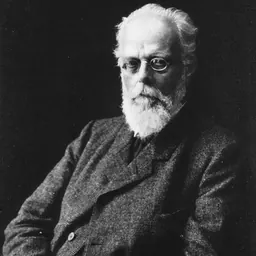
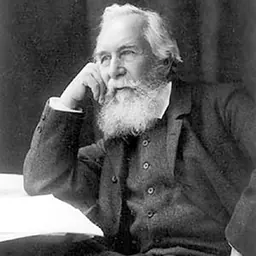
Related people
Same field, nearest in time


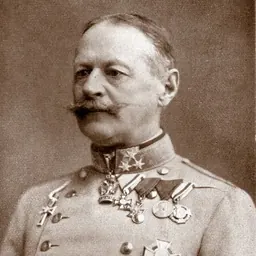
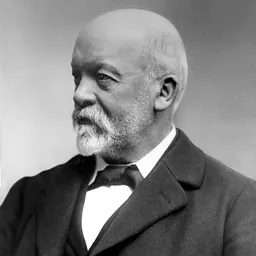
Contemporaries
People whose lives overlapped Ernst August Wagner's


Frequently asked questions
Who was Ernst August Wagner?
German spree killer (1874–1938)
When was Ernst August Wagner born?
Ernst August Wagner was born on 22 September 1874 in Eglosheim.
When did Ernst August Wagner die?
Ernst August Wagner died on 27 April 1938 in Winnenden.
What was Ernst August Wagner's occupation?
Ernst August Wagner was a pedagogue, spree killer and teacher.
What nationality was Ernst August Wagner?
Ernst August Wagner's recorded nationality: German Reich.
Sources & further reading
· Wikipedia: Ernst August Wagner
· DBpedia: Ernst August Wagner
Cite this page
APA: Biography.guide. (2026). Ernst August Wagner. https://biography.guide/ernst-august-wagner/
MLA: "Ernst August Wagner." Biography.guide, https://biography.guide/ernst-august-wagner/.
Chicago: "Ernst August Wagner." Biography.guide. https://biography.guide/ernst-august-wagner/.
Data last updated: 2026-09-20 · Spot an error? Report a correction.
Page generated 2026-09-27 05:24 UTC