
About Ernest Trumpp
Lived 1828 – 1885 (aged 57). Ernest Trumpp was a German linguist, writer, christian minister, orientalist, indologist and parson.
Ernest Trumpp (13 March 1828 – 5 April 1885), also spelt as Ernst Trumpp, was a German Christian missionary sponsored by the Ecclesiastical Mission Society. He was also German professor of Oriental Languages at the Ludwig-Maximilians-Universität München and a philologist. With an intent to convert the populace of western un-divided India to Christianity, he was seconded and sent to the Sindh and Punjab region (British India). He first came to India in the 1850s and published scholarly work on the Sindhi and other western subcontinental languages. He also worked to translate the Sikh scriptures to help Christian missionaries to understand Sikhs and thereby aid their conversion.
He authored the first Sindhi grammar entitled Sindhi Alphabet and Grammar. He also published Grammar of Pashto, or language of the Afghans, compared with the Iranian and North Indian idioms.
One of his controversial works was based on an 8-year study of the Sikh scriptures, where he attempted to philologically analyze and translate a significant portion of the Guru Granth Sahib into English in the 1870s. Trumpp was limited in his knowledge of sub-continent languages to a few that he had studied, while the Granth Sahib was composed using multiple languages of the South Asia region. His Sikh translation, especially its preface, was rejected by Sikh leadership.
Biography
Trumpp was born on 13 March 1828 at Ilsfeld in Wurtemberg Province (now Baden-Württemberg) in Germany. He became the Regius Professor of Oriental Languages at the Ludwig-Maximilians-Universität München and member of Royal Bavarian Academy of Sciences.
Work Photograph of the German missionary and linguist Dr. Ernst Trumpp, ca.1860's–80's While at Karachi, he translated the Book of Common Prayer into the Persian language in 1858. In 1866 he edited and published Shah Jo Risalo, a poetic compendium of Shah Abdul Latif Bhittai. He published the first Sindhi grammar entitled Sindhi Alphabet and Grammar in 1872.
He published Grammar of the Pushtoo, or language of the Afghans, compared with the Iranian and North Indian idioms in 1873. He sought the help of local Nirmala Sikhs as he considered them more literate than other Sikh preachers. Nirmala Sikhs were students of Sanskrit who followed the Vedic traditions and their interpretations of Adi Granth were based on Vedic literature. However, after his initial effort, he stated that Sikh scriptures were not worth translating in full, because "the same few ideas, he thought, being endlessly repeated". He found that the Sikh granthis who recited the text in the early 1870s lacked comprehension and its sense of meaning. Trumpp never made any attempts to have a meaningful dialogue with Sikh scholars of the time such as Kahn Singh Nabha, who has penned the Mahan Kosh, a dictionary of words used in the Granth Sahib. According to Tony Ballantyne, Ernest Trumpp's insensitive approach such as treating the Sikh scripture as a mere book and blowing cigar smoke over its pages while studying the text, did not endear him to the Sikh granthis who worshipped it as an embodiment of the Guru.
Trumpp said that Sikhism was "a reform movement in spirit", but "completely failed to achieve anything of real religious significance". According to the Sikh historian Trilochan Singh, Trumpp's colonial era study and remarks were "extremely vulgar attacks" on Sikhism that did not appreciate the Sikh history, culture and religion and it reflected in the lack of a scientific-analytical method in his approach. His criticism reflected the bias of his missionary agenda, which assumed that ancient Christian scriptures were coherent, had the right answers, and that all other religions must be held in contempt. Trumpp's introduction to his translations of Adi Granth reveal that he had a contempt for the scripture and its theology, states the Sikhism scholar J. S. Grewal. Criticism of Trumpp's translation was also, in part, due to discussions only with Nirmala Sikhs and not with mainstream Sikh scholars. According to Arvind-Pal Mandair, Trumpp's shortcoming was due to how he framed the Sikh religion as having to prove itself according to Western understandings.
Other Sikh texts In the course of his research, it seems he had discovered the first known manuscript of the Puratan Janamsakhis (also spelt Janam-sakhi), the earliest known biography of Guru Nanak, at the India office Library, London. Trumpp found these manuscripts among the manuscripts forwarded to him from the India office's Library in 1872 with a note saying "in hope that some of them may be useful in the project entrusted to you." He translated Puratan and Bala Janamsakhis, the lives of the later [Sikh] gurus, including an account of their teachings.
He also penned some essays on The Life of Nanak according to the Janam Sakhis, Sketch of the Life of the other Sikh Gurus, Sketch of the Religion of the Sikhs, On the Composition of the Granth, and On the Language and the Metres used in the Granth.
Publications Afghânistan und die Afghânen. In: Allgemeine Zeitung 1878. Grammar of the Sindhi Language. A Sindhi Reading-Book in the Sanscrit and Arabic Character. Grammar of the Pastō Or Language of the Afghāns, Compared with the Īrānian and North-Indian Idiom. Dictionary of Bengali Language 2 Vols. The Ādi Granth: Or, the Holy Scriptures of the Sikhs. Kampf Adams. Die Religion der Sikhs. Das Taufbuch der Aethiopischen Kirche: Aetiopisch und Deutsch. Einleitung in das Studium der Arabischen Grammatiker.
Don’t just read it —
keep it.
Full-length biographies made to live with: read them, listen on the way to work, watch them tonight.
- E-book
- Audio
- Video
Instant download · yours to keep · every purchase keeps this site free
Important facts
People in Ernest Trumpp's life
Named in this biography and alive at the same time

Related people
Same field, nearest in time

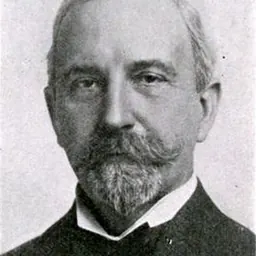

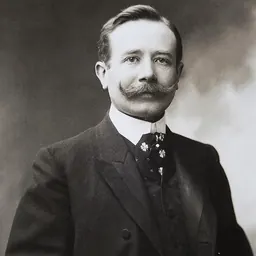
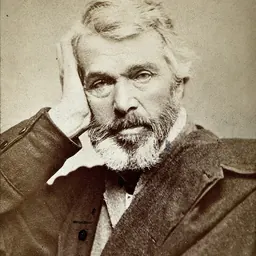
Contemporaries
People whose lives overlapped Ernest Trumpp's




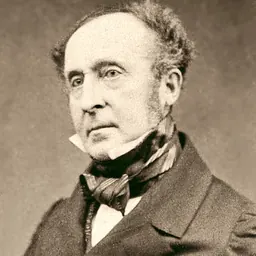
Frequently asked questions
Who was Ernest Trumpp?
German missionary
When was Ernest Trumpp born?
Ernest Trumpp was born on 13 March 1828 in Ilsfeld.
When did Ernest Trumpp die?
Ernest Trumpp died on 5 April 1885 in Munich.
What was Ernest Trumpp's occupation?
Ernest Trumpp was a linguist, writer, christian minister, orientalist, indologist and parson.
What nationality was Ernest Trumpp?
Ernest Trumpp was German.
Sources & further reading
Cite this page
APA: Biography.guide. (2026). Ernest Trumpp. https://biography.guide/ernest-trumpp/
MLA: "Ernest Trumpp." Biography.guide, https://biography.guide/ernest-trumpp/.
Chicago: "Ernest Trumpp." Biography.guide. https://biography.guide/ernest-trumpp/.
Data last updated: 2026-09-25 · Spot an error? Report a correction.
Page generated 2026-09-27 05:09 UTC