
About Ernest Irving
Lived 1878 – 1953 (aged 74). Ernest Irving was a British composer.
Kelville Ernest Irving (6 November 1878 – 24 October 1953) was an English music director, conductor and composer, primarily remembered as a theatre musician in London between the wars, and for his key contributions to British film music as music director at Ealing Studios from the 1930s to the 1950s.
Early life Irving was born in Godalming, Surrey, and from the age of seven sang in the choir at Godalming Parish Church. He attended Charterhouse School. Other than that he was self-taught, and began his career applying for music director jobs advertised in The Stage. His first professional job conducting an orchestra was for the musical burlesque Villiano the Vicious at the Theatre Royal, Maidenhead in 1895. He then spent the next two decades learning his trade by touring with productions (of variable quality) all around the UK - in his own words conducting "third rate opera and second-rate musical comedy". The tours included some organised by the theatre manager George Edwardes. He was a great admirer of O'Neill's work, and once compared a performance of Mary Rose without his music to "a dance by a fairy with a wooden leg."
London theatre From the end of the First World War until the late 1940s, Irving became a permanent fixture of the London theatre scene, conducting, directing and often composing the music for operettas, musical plays and serious drama at most of the London theatres. The following year he conducted Polly (sequel to The Beggar's Opera) with music restored by Frederic Austin. This began a lasting friendship between Irving and Austin.
In 1928 he was contracted by Charles Cochran to direct the music for This Year of Grace by Noël Coward, which ran for ten months at the London Pavilion. Another Cochran production followed, Cole Porter's Wake Up and Dream, which ran for 263 performances at the same theatre. He conducted The Immortal Hour for Sir Barry Jackson in 1933 at the Queen's Theatre. The score Irving provided for The Two Bouquets (1936), a comedy by Herbert Farjeon, was based on Victorian melodies selected by Eleanor Farjeon. There were two more collaborations with the Farjeons: An Elephant in Arcady (1939), and The Glass Slipper (1944), the latter with music for the dance interludes by Clifton Parker.
Irving was also the musical director of J. B. Priestley's then experimental play Johnson Over Jordan, which opened at the New Theatre on 22 February 1939, directed by Basil Dean and with Ralph Richardson in the title role. It soon transferred to the Saville Theatre for a relatively successful run after some extensive re-writing. The production used original music by the young Benjamin Britten, some of it orchestrated by Irving.
Irving conducted two Mozart operas (The Marriage of Figaro and Così fan tutte) at the Regent's Park Open Air Theatre in 1938 with the Chanticleer Opera Company. During the war he became musical director for the Entertainments National Service Association (ENSA). He was music director for the International Ballet company in 1945 (Her Majesty's and Princes), 1946 (Coliseum) 1947 (Adelphi), and 1948 (London Casino). Irving often worked with Thomas Beecham. But like his younger counterparts Muir Mathieson at Denham and Hubert Clifford at London Film Studios (who both worked closely with film producer and director Alexander Korda) Irving also brought in some of the best known composers of the day to provide music - including John Addison, William Alwyn, Georges Auric, Benjamin Frankel, John Ireland, Gordon Jacob, Alan Rawsthorne, Ralph Vaughan Williams and William Walton. In this he had the backing of the studio's head of production Michael Balcon, who encouraged Irving to engage serious composers routinely and to use large orchestral forces and unusual scoring.
Irving secured John Ireland for The Overlanders (1946), his only film score. He orchestrated the scores written by Lord Berners for two films: The Halfway House (1943) and Nicholas Nickleby (1947). He asked Vaughan Williams to compose the music for three films, The Loves of Joanna Godden (1947), Scott of the Antarctic (1948) and Bitter Springs (1950), helping to fit the scores to the films. Vaughan Williams dedicated his Sinfonia Antartica (including music from Scott of the Antarctic) to Irving in 1953. Rawsthorne's First Quartet (1939) and Walton's Second Quartet (1947) are also dedicated to him. He died at his home (4 The Lawn, Ealing Green), aged 74.
As music director
Selected filmography
Don’t just read it —
keep it.
Full-length biographies made to live with: read them, listen on the way to work, watch them tonight.
- E-book
- Audio
- Video
Instant download · yours to keep · every purchase keeps this site free
Important facts
People in Ernest Irving's life
Named in this biography and alive at the same time




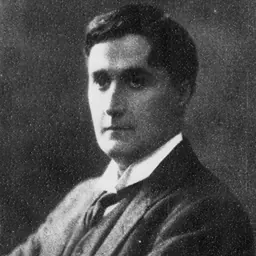
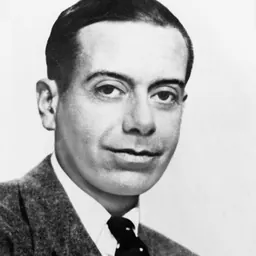
Related people
Same field, nearest in time
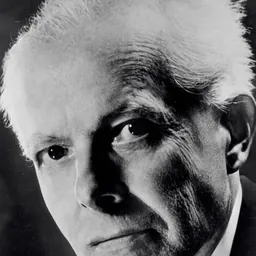



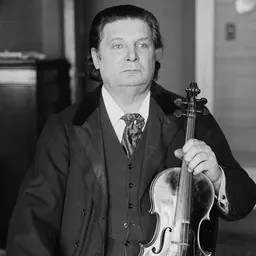

Contemporaries
People whose lives overlapped Ernest Irving's



Frequently asked questions
Who was Ernest Irving?
British composer and conductor (1878-1953)
When was Ernest Irving born?
Ernest Irving was born on 6 November 1878 in Godalming.
When did Ernest Irving die?
Ernest Irving died on 24 October 1953 in Ealing.
What was Ernest Irving's occupation?
Ernest Irving was a composer.
What nationality was Ernest Irving?
Ernest Irving was British.
Sources & further reading
Cite this page
APA: Biography.guide. (2026). Ernest Irving. https://biography.guide/ernest-irving/
MLA: "Ernest Irving." Biography.guide, https://biography.guide/ernest-irving/.
Chicago: "Ernest Irving." Biography.guide. https://biography.guide/ernest-irving/.
Data last updated: 2026-09-20 · Spot an error? Report a correction.
Page generated 2026-09-27 05:25 UTC