
About Ernest de Bunsen
Lived 1819 – 1903 (aged 83–84). Ernest de Bunsen was a German writer.
Ernst Christian Ludwig von Bunsen or Ernest de Bunsen (1819 in Rome – 1903 in London) was an Anglo-German writer whose speculative works proposing common origins of Buddhism, Essene Judaism and Christianity were later taken up as part of racist Aryan mythology. He was father of Maurice de Bunsen and grandfather of Mary de Bunsen, World War Two Air Transport Auxiliary pilot and author.
Life Bunsen was born in Rome where his father Christian von Bunsen was serving as a Prussian diplomat to the Vatican. His mother was Frances Waddington (1791-1876), sister of Lady Llanover. His father was the patron both of the mainstream orientalist Max Müller and of the strongly antisemitic orientalist Paul de Lagarde.
Ernest was educated at Berlin in a school for cadets and served in the Prussian Guards. He married Elizabeth Gurney, daughter of Samuel Gurney, the banker in 1845 and moved to London.
Bunsen's writings identified Brahmans as "pure Aryans." According to Bunsen the account of Genesis was to be read that Adam was the first Aryan, and the serpent in Eden the first Semite. Bunsen's theory that the "doctrine of the Angel-Messiah in Buddhism," as he called it, was transmitted first to the Essenes and then to Christianity fared little better in Britain than the theories of the British officer in India, Arthur Lillie, who converted to Buddhism and became the author of a number of texts on religion (and croquet).
His residence was at Abbey Lodge, a house bought for him and his wife in 1849 by his father-in-law in Hanover Terrace overlooking Regent′s Park, in Westminster.
Family de Bunsen married on 5 August 1845 Elizabeth Gurney (1817–1903), daughter of Samuel Gurney and niece of Elizabeth Fry. She died at Abbey Lodge on 19 January 1903, in her 86th year. Their eldest son, Fritz, died in 1870; they had a second son, Sir Maurice de Bunsen. There were also two daughters, Hilda de Bunsen, wife of Baron Deichmann, and Marie de Bunsen.
Selected works Die Einheit der Religionen im Zusammenhange mit den Völkerwanderungen der Urzeit und der Geheimlehre (Berlin, 1870). Plejaden und der Thierkreis (Berlin, 1879). The Angel-Messiah of Buddhists, Essenes and Christians (London, 1880). Islam, Or True Christianity (London, 1889).
Don’t just read it —
keep it.
Full-length biographies made to live with: read them, listen on the way to work, watch them tonight.
- E-book
- Audio
- Video
Instant download · yours to keep · every purchase keeps this site free
Important facts
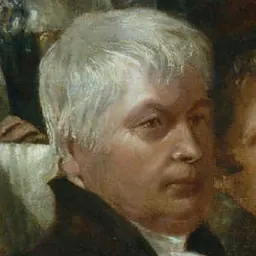
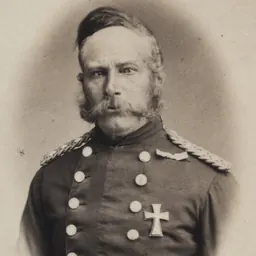
People in Ernest de Bunsen's life
Named in this biography and alive at the same time




Related people
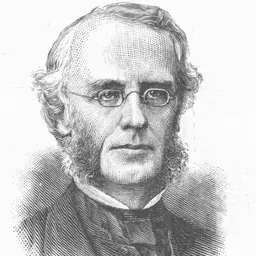
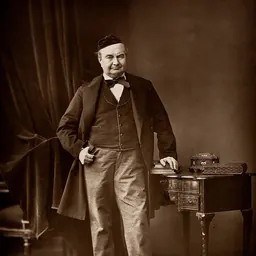
Same field, nearest in time
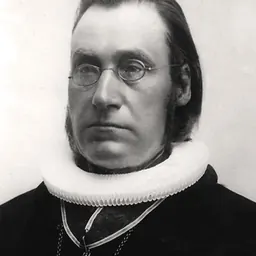
Contemporaries
People whose lives overlapped Ernest de Bunsen's


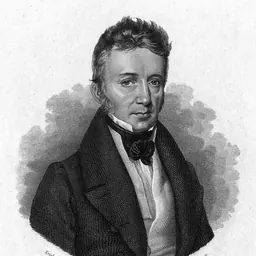


Frequently asked questions
Who was Ernest de Bunsen?
writer
When was Ernest de Bunsen born?
Ernest de Bunsen was born in 1819.
When did Ernest de Bunsen die?
Ernest de Bunsen died in 1903.
What was Ernest de Bunsen's occupation?
Ernest de Bunsen was a writer.
What nationality was Ernest de Bunsen?
Ernest de Bunsen was German.
Sources & further reading
Cite this page
APA: Biography.guide. (2026). Ernest de Bunsen. https://biography.guide/ernest-de-bunsen/
MLA: "Ernest de Bunsen." Biography.guide, https://biography.guide/ernest-de-bunsen/.
Chicago: "Ernest de Bunsen." Biography.guide. https://biography.guide/ernest-de-bunsen/.
Data last updated: 2026-09-20 · Spot an error? Report a correction.
Page generated 2026-09-27 05:08 UTC