
About Erich Traub
Lived 1906 – 1985 (aged 78). Erich Traub was a German biologist, veterinarian, university teacher and virologist, known for Foot-and-mouth disease.
Erich Traub (27 June 1906 – 18 May 1985) was a German veterinarian, scientist and virologist who specialized in foot-and-mouth disease, Rinderpest and Newcastle disease. Traub was a member of the National Socialist Motor Corps (NSKK), a Nazi motorist corps, from 1938 to 1942. He worked directly for Heinrich Himmler, head of the Schutzstaffel (SS), as the lab chief of the Nazis' leading bio-weapons facility on Riems Island under the direction of Kurt Blome.
Both Traub and Blome were rescued from the Soviet zone of Germany after World War II and taken to the United States in 1949 under the auspices of the United States government program Operation Paperclip, meant to rescue the scientific knowledge in Germany, and protect it from the Soviet Union.
Since the early XXIst century, Traub has been a common target of false and disproven conspiracy theories centred about his claimed role in the development or modification of the Lyme disease, despite Lyme disease having been present in human populations for thousands of years.
Career
Early career and war During the 1930s, he studied on a fellowship at the Rockefeller Institute for Medical Research in Princeton, New Jersey mentored by Richard Shope, performing research on vaccines and viruses, including pseudorabies virus and lymphocytic choriomeningitis virus (LCM). During his stay in the United States, Traub and his wife were listed as members of the German American Bund, a pro-Nazi German-American club thirty miles west of Plum Island in Yaphank, Long Island, from 1934 to 1935.
Traub worked at the University of Giessen, Germany, from 1938 to 1942. Traub was a member of the Nazi NSKK, a motorist corps, from 1938 to 1942. The NSKK was declared a condemned, not a criminal organization at the Nuremberg trials.
On orders from Himmler and Blome, the Deputy Reich Health Leader and head of the German biological warfare program, Traub worked on weaponizing foot-and-mouth disease virus, which has been reported to have been dispersed by aircraft onto cattle and reindeer in Russia. In 1944, Blome sent Traub to pick up a strain of Rinderpest virus in Turkey; upon his return, this strain proved inactive (nonvirulent) and therefore plans for a Rinderpest product were shelved. In July 1948, the British evacuated Erich Traub from Riems Island as a "high priority Intelligence target" since it was now in the Soviet Zone and they feared that Traub was assisting in their biological warfare program. Traub denied this, however, claiming that his only interest was foot-and-mouth disease in animals.
Traub was brought to the United States in 1949 under the auspices of the United States government program Operation Paperclip, meant to exploit scientific knowledge in Germany, and deny it to the Soviet Union. Two years later, he published a paper for the Navy on the mechanisms of immunity in chickens to Newcastle and the possible role of cellular factors. Also in 1953, he published another paper for the Navy with Worth I. Capps on the foot-and-mouth disease virus and methods for rapid adaptation.
Traub served as an expert on foot-and-mouth disease for the FAO of the UN in Bogotá, Colombia, from 1951 to 1952, in Tehran, Iran, from 1963 to 1967, and in Ankara, Turkey, from 1969 to 1971.
Return to Germany
After working on biological research for the U.S. Navy from 1949 to 1953, Traub returned to Germany and founded a new branch of the Loeffler Institut in Tübingen, and headed it from 1953 to 1963. In 1960, Traub resigned as Tübingen's director due to the scandal related to accusations of financial embezzlement. He continued with limited lab research for three more years, but then ended his career at Tübingen. Annie Jacobsen reports that Traub's FBI file says he joined Iran's Razi Vaccine and Serum Research Institute "in the mid-1960s".
He retired from the West German civil service in 1971. In 1972, on the occasion of the 500th anniversary of LMU Munich, Traub received an honorary doctorate degree in Veterinary Medicine for his achievements in basic and applied Virology (basic research on LCM; definition and diagnosis of type strains of FMD and their variants; development of adsorbate vaccines against fowl plague, Teschen disease of swine, and erysipelas of swine).
On 18 May 1985, Traub died in his sleep in West Germany. He was seventy-eight years old.
Traub visited the Plum Island Animal Disease Center (PIADC) in New York on at least three occasions in the 1950s. The Plum Island facility, operated by the Department of Agriculture, conducted research on foot-and-mouth disease (FMD) of cattle, one of Traub's areas of expertise.
Fort Terry on Plum Island was part of the U.S. biological warfare program in 1944–46, working on veterinary testing in connection with the weaponization of brucellosis. After the war, research on biological weapons continued at Pine Bluff in Arkansas and Fort Detrick, Maryland, while officially at least Plum Island was transferred to the U.S. Department of Agriculture. From 1949, Plum Island also conducted work on biological weapons against animals and livestock, such as foot-and-mouth disease, Rinderpest, Newcastle disease, African swine fever and plague and malaria in birds. Traub's research work from the Second World War onward involved at least the first three of these (all dangerous only to non-human animal species).
Don’t just read it —
keep it.
Full-length biographies made to live with: read them, listen on the way to work, watch them tonight.
- E-book
- Audio
- Video
Instant download · yours to keep · every purchase keeps this site free
Important facts
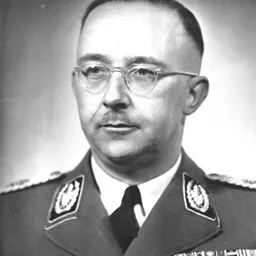
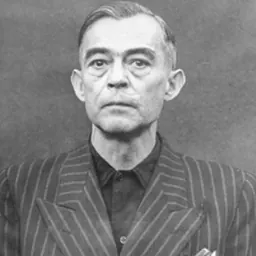
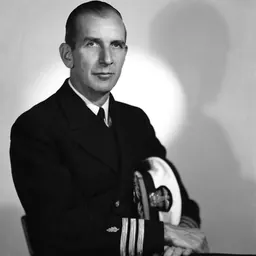
People in Erich Traub's life
Named in this biography and alive at the same time

Related people
Same field, nearest in time


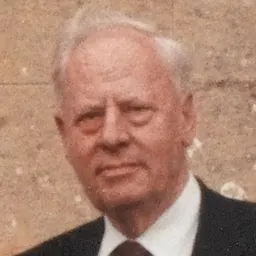

Contemporaries
People whose lives overlapped Erich Traub's
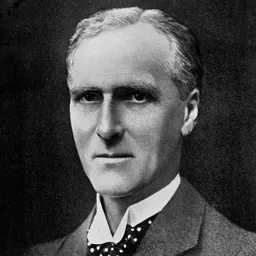
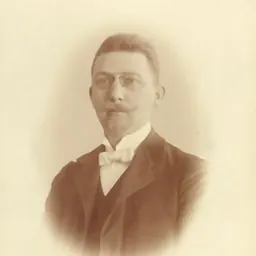
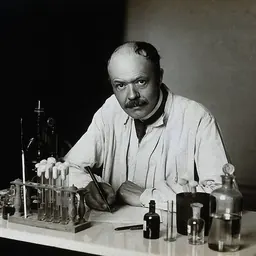
Frequently asked questions
Who was Erich Traub?
German biologist (1906–1985)
When was Erich Traub born?
Erich Traub was born on 27 June 1906 in Rudersberg.
When did Erich Traub die?
Erich Traub died on 18 May 1985 in Rosenheim.
What was Erich Traub's occupation?
Erich Traub was a biologist, veterinarian, university teacher and virologist.
What was Erich Traub known for?
Erich Traub was known for Foot-and-mouth disease.
What nationality was Erich Traub?
Erich Traub was German.
Sources & further reading
Cite this page
APA: Biography.guide. (2026). Erich Traub. https://biography.guide/erich-traub/
MLA: "Erich Traub." Biography.guide, https://biography.guide/erich-traub/.
Chicago: "Erich Traub." Biography.guide. https://biography.guide/erich-traub/.
Data last updated: 2026-09-20 · Spot an error? Report a correction.
Page generated 2026-09-27 05:07 UTC