
Erich Dieckmann
German furniture designer for interior design and seating furniture
About Erich Dieckmann
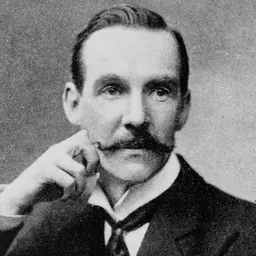
Lived 1896 – 1944 (aged 47–48). Erich Dieckmann was a designer and furniture designer.
Erich Dieckmann (5November 18968November 1944) was a German carpenter, furniture designer, architect and university lecturer. Alongside Marcel Breuer, he is considered the most important furniture designer of the Bauhaus in Weimar and Dessau.
He primarily developed furniture (cabinets, tables, and seating furniture), initially made of wood in geometric shapes with rectangular frames and standardized designs, which enabled cost-effective production. Later, he also designed some organic seating furniture as well as carpet designs, clocks, furnishing and color concepts for functional interiors. His life and work fell into oblivion.
School, World War I, and education The seriously wounded Erich Dieckmann (center), decorated with the Iron Cross, with one of his two older brothers, also seriously wounded, and his father Hermann (1859–1924), seated, ca. 1917
After attending school in Bad Bentheim, Erich Dieckmann went to the Realgymnasium in Goslar, graduating in 1913 with the "Einjährige" (intermediate secondary school leaving certificate). At the age of 16, he went to sea as a cabin boy on the sailing ship Jonny for about a year to learn the seafaring trade, traveling to countries such as Russia, Great Britain, Spain, and Africa. After the outbreak of the First World War in August 1914, like many enthusiastic and patriotic Germans, he voluntarily enlisted in the war navy at the age of 17 and volunteered for service, but due to a lack of demand, he was drafted into the Imperial Army and, after the Battle of the Marne, was assigned to the Reserve Jäger Battalion No. 23 in Goslar (I. Res. Jäg. 23, in the Green Corps), which was subordinate to the 51st Reserve Division and its subdivision, the 101st Reserve Infantry Brigade. The Reserve Jäger Battalion No. 23 was sent to the Western Front. In the fall of 1914, Dieckmann took part in the First Battle of Flanders, and in 1915 he was involved in the capture of Langemarck north of Ypres. His left forearm was shattered there by a Canadian explosive shell. His forearm and left hand were painstakingly reconstructed with implants using the methods available at the time, which meant that Dieckmann spent almost two years in military hospitals, most recently in Göttingen. Due to his permanent physical disability, he was certified as having a 50% "restriction on earning capacity",
After completing his preliminary architecture degree, he began studying painting and drawing in Dresden, but was dissatisfied with the program. The interior design represents Dieckmann's first independently executed work. Marcel Breuer particularly praised the simplicity of the functional construction of Dieckmann's design for the bed, which consisted solely of square blocks, and "the monumental beauty of the clarity, which fully satisfies our aesthetic demands even without inorganic decoration and ornamentation." The furniture designed by Breuer and Dieckmann was simple in form, functional, appropriate to the materials used, and suitable for industrial production. In doing so, he developed an educationally and psychologically motivated concept of order and color for the rooms and furniture. According to Walter Passarge, this left a "colorful and formally coherent impression" that stood "beyond the disputes and trends of the day."
Around 1926, Dieckmann became acquainted with Bauhaus patron (German merchant and entrepreneur, art collector of expressionist works, supporter of contemporary artists) and, from September 1927 to Christmas 1932, redesigned the entire interior of his Villa Sonnenhaus in Lichtenfels, Upper Franconia. Otto Bamberg's commission is therefore considered the most important and extensive of the Bauhaus. The correspondence relating to this commission has been preserved almost in its entirety.
Participation in the Werbund exhibitions In 1927, Dieckmann designed his standard furniture for a model apartment in the block designed by Mies van der Rohe in the Weissenhof Estate in Stuttgart. In the same year, Dieckmann participated with his designs in the exhibition Der Stuhl (The Chair) in Stuttgart, organized by Adolf Gustav Schneck, and designed school furniture (chairs, tables, and cabinets) for Peter Petersen's progressive university school in Jena. Petersen praised Dieckmann's furniture in his publications. In 1928, Dieckmann furnished several rooms of a model apartment designed by Otto Voelckers with standard furniture, which was shown during the exhibition Heim und Technik (Home and Technology) in Munich. Dieckmann was also present at the Bauen und Wohnen (Building and Living) exhibition in Berlin for the new housing estate on Fischtalgrund by Heinrich Tessenow – directly adjacent to the GEHAG housing estate "Onkel Toms Hütte" with buildings by Hugo Häring, Otto Rudolf Salvisberg, and Bruno Taut. For the Werkbundexhibition Wohnen und Werkraum (Living and Working Space) in Breslau in 1931, Dieckmann furnished a large hall, which was to be divided according to residential functions, with furniture samples.
In 1929, Dieckmann gave a series of lectures on the development of modern furniture at the chambers of crafts in Gera, Meiningen, and Weimar. Otto Bartning applied for Dieckmann to be awarded the academic title of professor. However, as the National Socialists were already in the process of transforming the university in the Thuringian parliament at that time, this application was not granted. Democratically minded members of the teaching staff were gradually removed and replaced by National Socialist sympathizers. Otto Bartning, who withdrew from Weimar in March 1930 after his four-year contract expired, For Dieckmann, the rise of National Socialism meant a profoundly negative turning point in his work, as it did for the Bauhaus as a whole. He was criticized by the renowned Vossische Zeitung newspaper and by his wife Katharina, who wrote a courageous newspaper article against the tenor of an infamous introductory speech by Schultze-Naumburg.
Halle (Saale) 1931 to 1936 Dieckmann subsequently opened his own studio for furniture making and interior design in the summer of 1931 and initially worked as a freelancer, including for the company D. Bamberger in Lichtenfels, Otto Bamberger, the tubular steel factory Cebaso in Ohrdruf, the Dusco-Werke in Coburg, the Korbmacher-Verein e.G.m.b.H. in Tannroda, the Scheidemantel company in Weimar, Thonet, and the Weimar Bau- und Wohnungskunst G.m.b.H.
In 1931, Dieckmann and his wife Katharina published a remarkable illustrated book entitled Möbelbau in Holz, Rohr und Stahl (Furniture Design in Wood, Bamboo, and Steel), which featured many of his designs.
Teaching at Burg Giebichenstein From May 4, 1931, Dieckmann spent two and a half years as artistic director of the carpentry workshop at the Workshops of the City of Halle (Saale), the Burg Giebichenstein University of Art and Design, under Gerhard Marcks. His application, submitted in 1925 to Paul Thiersch, had been rejected at the time because a master's examination was required as a teaching qualification. Now, however, he was asked to submit his application documents directly. In 1932, he was commissioned to redesign the lecture hall of the medical clinic in Halle (Saale) with rows of chairs and lecterns made of tubular steel and wood.
Phase of unemployment 1933 to 1936 The seizure of power by the National Socialists at the end of January 1933 brought Dieckmann's creative work to an end. Since 1920, ethnic nationalist forces in Weimar had been opposing the Bauhaus, initially with a smear campaign intensified by a local press that was not well disposed toward the Bauhaus. He hoped that this step would secure his professional career and thus also his family. Instead, he was dismissed again on August 31 by the mayor of Halle, Johannes Weidemann (NSDAP), and the carpentry department of the School of Arts and Crafts was dissolved, officially due to cost-cutting measures, but in reality for cultural-political and ideological reasons. Dieckmann's Bauhaus past worked against him.
Berlin 1938 to 1944 In 1938, he moved with his family to Berlin,
Artistic representation
The Christian-inspired painting Der Töpfer und sein Schutzengel (The Potter and His Guardian Angel) by Bauhaus talent Johannes Driesch from 1929 depicts Erich Dieckmann symbolically as a potter (material and form designer).
Erich Dieckmann as a Painter and Commercial Artist (Selection)
Buildings as an architect in Kleinmachnow and Berlin-Reinickendorf 1931 Karl-August Götze House, Driftkamp 14. Note: During work on the Götze House, he likely came into contact with the architect Curt Koenert, who, like Dieckmann, had studied architecture at the Technical University of Gdansk. Koenert worked as a freelance architect in Kleinmachnow from 1932 onwards. It is unknown whether there was a connection between them and requires biographical verification. Between 1934 and 1935, Erich Dieckmann is listed as the architect of the cemetery chapel at the Kleinmachnow Forest Cemetery and is a living testament to his diverse skills. This building is considered a remarkable example of 1930s architecture in the state of Brandenburg and was listed as a historic monument in 2009. 1936/37 Berlin-Reinickendorf settlement Paddenpuhl second building section (Housing estate built in the expressionist style in the 1920s and 1930s in the Berlin district of Reinickendorf], collaboration with the architects Fritz Beyer, Josef Scherer and the landscape and garden planner Erwin Barth
Family
Erich Dieckmann was born as the third child and third son of Royal Prussian Landjägermeister Hermann Dieckmann (1859–1924) and grew up in Lower Saxony. He had two older brothers and three younger siblings, including two more brothers and a sister.
His marriage to Katharina, née Ludewig, in 1921 produced four children by 1935, including daughter Anna Bettina (later married to Sons) and son Markus. Katharina Ludewig was a student of dance teacher Mary Wigman and a Bauhaus student.
Publications
Möbel. 1. Arbeiten von Erich Dieckmann, Fachlehrer für Innenausbau und Möbel an der Staatlichen Bauhochschule Weimar. In: Stein, Holz und Eisen. Halbmonatsschrift für neue Bauwirtschaft und Baugestaltung, 41 (1927), S. 1069–1072. Zu den Arbeiten der Staatlichen Bauhochschule für Handwerk und Baukunst Weimar. In: Die Baugilde. Baukunst, Bauwirtschaft, Bautechnik, 9. Jg. 1927, S. 1426f. mit Katharina Dieckmann (Bearb.): Möbelbau – Holz Rohr Stahl (= Die Baubücher, Band 11), Julius Hoffmann Verlag, Stuttgart 1931. Neuauflage: Vitra Design Museum, Weil am Rhein 1990. . Geschichte eines Schwerkriegsbeschädigten, 14 Seiten handschriftlich mit 13 eigenhändigen und großteils signierten Zeichnungen, Halle (Saale) 1934 [Illustrierter Lebenslauf zu Bewerbungsschreiben während der Arbeitslosigkeit von 1933 bis 1936].
Literature Staatliches Bauhaus Weimar, Karl Nierendorf (Hrsg.): Staatliches Bauhaus Weimar 1919–1923. Bauhausverlag, Weimar/München 1923. Reprint: Kraus, München 1980. . Walter Gropius: Neue Arbeiten der Bauhauswerkstätten (= Bauhausbücher, Bd. 7). A. Langen, München 1925. Adolf Meyer: Ein Versuchshaus des Bauhauses Weimar (= Bauhausbücher, Bd. 3). A. Langen, München 1925. Reprint: Bauhaus-Universität Weimar (Hrsg.), Weimar 2000. . Staatliche Hochschule für Handwerk und Baukunst (Hrsg.), Otto Bartning, Ernst Neufert: Staatliche Bauhochschule Weimar. Aufbau und Ziel. Informationsbroschüre, Weimar 1927. Die kleine Wohnung in der Ausstellung Heim und Technik München 1928. 21 Wohnungen in Grundrissen, Vogelschaubildern und Erläuterungen. Einführung von Prof. Otho Orlando Kurz. Verlag Georg D. W. Callwey, München 1928. Werner Graeff: Innenräume. Räume und Inneneinrichtungsgegenstände aus der Werkbundausstellung Die Wohnung, insbesondere aus den Bauten der städtischen Weißenhofsiedlung in Stuttgart, hrsg. im Auftrag des Deutschen Werkbundes. Akademischer Verlag Dr. Fr. Wedekind & Co., Stuttgart 1928. Möbel der Staatlichen Bauhochschule Weimar. Verkaufskatalog. Staatliche Bauhochschule Weimar (Hrsg.), Weimar 1928. Ludwig Neundörfer (Text), Fritz Grieshaber (Fotos): Wie wohnen? Neuzeit-Einrichtung kleiner Wohnungen. Hrsg. im Auftrage des Rhein-Mainischen Verbandes für Volksbildung Frankfurt a. M., Verlag Der Eiserne Hammer, Karl Robert Langewiesche, Königstein im Taunus/Leipzig 1929. Adolf Gustav Schneck: Der Stuhl. Stuhltypen aus verschiedenen Ländern und Versuche neuzeitlicher Lösungen in Ansichten und Masszeichnungen (Ausstellungskatalog). Ausstellung September bis Oktober 1928 im Städtischen Ausstellungsgebäude auf dem Interimtheaterplatz. J. Hoffmann, Stuttgart 1928. Wilhelm Lotz: Wie richte ich meine Wohnung ein? Modern, gut, mit welchen Kosten? Verlag Hermann Reckendorf, Berlin 1930. Die deutsche Wohnung der Gegenwart (= Die blauen Bücher). Karl Robert Langewiesche Verlag, Königstein im Taunus/Leipzig 1930. Dieckmann – Korbmöbel, Verkaufskatalog über die eigene Möbelproduktion. Weimar Bau- und Wohnungskunst G.m.b.H. (Hrsg.), ehemalige Vertriebsgesellschaft der Staatlichen Bauhochschule Weimar, Weimar 1930/31. Hans Eckstein: Die schöne Wohnung. Beispiele neuzeitlicher deutscher Wohnräume. Verlag F. Bruckmann AG, München 1931. Werner Graeff: Jetzt wird ihre Wohnung eingerichtet. Das Warenbuch für den neuen Wohnbedarf (= Zweckmäßiges Wohnen für jedes Einkommen, Bd. 2). Müller und Kiepenheuer, Potsdam 1933. Gustav Adolf Platz: Wohnräume der Gegenwart. Propyläen-Verlag, Berlin 1933. Hans Eckstein: Die schöne Wohnung. Wohnräume der Gegenwart in 225 Abb. mit praktischen Erläuterungen. Verlag F. Bruckmann AG, München 1934. Herbert Hoffmann: Gute Möbel. Zweite Folge. Eine Sammlung zeitgemäßer schöner Einzelmöbel für jeden Gebrauchszweck von den besten Künstlern und Werkstätten (= Haus und Raum. Ratgeber für Bauen und Wohnen, Bd. 3). Julius Hoffmann Verlag, Stuttgart 1936. Adolf Gustav Schneck: Das Polstermöbel (= Das Möbel als Gebrauchsgegenstand, Bd. 4). Julius Hoffmann Verlag, Stuttgart 1939. Adolf Gustav Schneck: Neue Möbel vom Jugendstil bis heute. Verlag F. Bruckmann, München 1962. Hans Maria Wingler: Das Bauhaus 1919–1933, Weimar, Dessau, Berlin und die Nachfolge in Chicago seit 1937. Verlag Gebr. Rasch & Co u. DuMont Schauberg, Bramsche 1962. Hans Eckstein: Die Neue Sammlung. München 1965. Walther Scheidig (Text), Klaus G. Beyer (Fotos): Bauhaus Weimar – Werkstattarbeiten 1919–1924. Edition Leipzig 1966. Dieter Schmidt: Bauhaus – Weimar 1919 bis 1925, Dessau 1925 bis 1932, Berlin 1932 bis 1933. Dresden 1966. Jan van Geest, Otakar Máčel, Gerrit Oorthuis: Metalen buismeubels 1925–1940. Ausstellung vom 22. Februar bis 30. März 1975 im Stedelijk Museum Het Prinsenhof, Delft 1975. bzw. W. H. Gispen, Spruyt, Amsterdam 1975. Hans Eckstein: Der Stuhl. Funktion – Konstruktion – Form. Von der Antike bis zur Gegenwart (= Keysers Sammlerbibliothek). Keysersche Verlagsbuchhandlung, München 1977. . Jan van Geest, Otakar Máčel: Stühle aus Stahl. Metallmöbel 1925–1940. Verlag der Buchhandlung Walther König, Köln 1980. . Wilhelm Nauhaus: Die Burg Giebichenstein. Geschichte einer deutschen Kunstschule 1915–1933. VEB E. A. Seemann Verlag, Leipzig 1981. 2. Aufl. 1992: . Steffen Bräuning: Die Geschichte des Fachbereichs Möbel- und Ausbaugestaltung von den Anfängen der künstlerischen Lehreinrichtung Burg Giebichenstein bis zur Gegenwart. In: 5. Kolloquium zu Fragen der Theorie und Methodik der industriellen Formgestaltung Halle (Tagungsband), 19./20. November 1981. Burg Giebichenstein, Halle/S. 1982. Steffen Bräuning, Rudolf Horn: Möbel-Ausbau. Hochschule für industrielle Formgestaltung Halle – Burg Giebichenstein (Hrsg.), Halle (Saale) 1983. Gillian Naylor: The Bauhaus Reassessed – Sources and Design Theory. E. P. Dutton, New York City 1985. . Jan van Geest, Otakar Máčel: Het museum van de continue lijn. Stehen buistochen 1925–1940 / The Museum of the continuous line. Tubular steel chairs 1925–1940. Het Museum van de Continue Lijn (Hrsg.), Amsterdam 1986. Alexander von Vegesack: Deutsche Stahlrohrmöbel. 650 Modelle aus Katalogen von 1927 bis 1958. Bangert Verlag, München 1986. . The American Federation of Arts, Derek E. Ostergard, Alessandro Alvera (Hrsg.): Bent Wood and Metal Furniture 1850–1946 (Ausstellungskatalog). University of Washington Press, Seattle, WA, 1987, und American Federation of Arts, New York City 1987. Anita Bach, Alexander von Vegesack: Erich Dieckmann – Praktiker der Avantgarde: Möbelbau 1921–1933. Bauhaus Weimar, Bauhochschule Weimar, Burg Giebichenstein, Ausstellung 13. Juni – 30. September 1990, Vitra Design Museum, Weil am Rhein 1990. Frank Whitford: Bauhaus. Deutscher Kunstverlag, Berlin 2012. . Josef Straßer: 50 Bauhaus-Ikonen, die man kennen sollte, 2. Aufl. Prestel, München 2019. Manon Bursian u. a. (Hrsg.): Stühle! Dieckmann! Der vergessene Bauhäusler Erich Dieckmann. Mitteldeutscher Verlag, Halle (Saale) 2022. Katja Schneider: „[...] daß ich gern an Ihre Schule kommen würde [...], davon können Sie überzeugt sein." Erich Dieckmann – ein Möbeldesigner aus dem Bauhaus an der Burg Giebichenstein. In: Jahrbuch des halleschen Stadtarchivs 2022, S. 112–181. Katja Schneider: Anpassung aus Verzweiflung? Der Möbeldesigner Erich Dieckmann im Banne nationalsozialistischer Ideologie. Vortrag, gehalten auf der Tagung „Bauhaus und Nationalsozialismus" der Klassik Stiftung Weimar, 24./25. Mai 2023 im Goethe-Nationalmuseum in Weimar; Tagungsband erscheint 1924.
Exhibitions 1990/91 – Erich Dieckmann – Praktiker der Avantgarde. Möbelbau 1921–1933. Bauhaus Dessau, 28. November 1990 bis 24. Februar 1991. 1991 – Erich Dieckmann – Praktiker der Avantgarde. Möbelbau 1921–1933. Kunsthalle am Theaterplatz der Kunstsammlungen zu Weimar, 15. März bis 28. April 1991. 2019 – Erich Dieckmann (1896–1944) – Ein Bauhäusler und Burglehrer, im Rahmen des HALLETHEMA 2019 – Halle und die Moderne, Stadtarchiv Halle (Saale), 12. März bis 18. April 2019. 2022 – 2022 –
Don’t just read it —
keep it.
Full-length biographies made to live with: read them, listen on the way to work, watch them tonight.
- E-book
- Audio
- Video
Instant download · yours to keep · every purchase keeps this site free
Important facts
People in Erich Dieckmann's life
Named in this biography and alive at the same time





Related people
Same field, nearest in time
Contemporaries
People whose lives overlapped Erich Dieckmann's



Frequently asked questions
Who was Erich Dieckmann?
German furniture designer for interior design and seating furniture (1896-1944)
When was Erich Dieckmann born?
Erich Dieckmann was born in 1896 in Kurzętnik.
When did Erich Dieckmann die?
Erich Dieckmann died in 1944 in Berlin.
What was Erich Dieckmann's occupation?
Erich Dieckmann was a designer and furniture designer.
What nationality was Erich Dieckmann?
Erich Dieckmann's recorded nationality: German Reich.
Sources & further reading
Cite this page
APA: Biography.guide. (2026). Erich Dieckmann. https://biography.guide/erich-dieckmann/
MLA: "Erich Dieckmann." Biography.guide, https://biography.guide/erich-dieckmann/.
Chicago: "Erich Dieckmann." Biography.guide. https://biography.guide/erich-dieckmann/.
Data last updated: 2026-09-20 · Spot an error? Report a correction.
Page generated 2026-09-27 05:33 UTC