
Eric Temple Bell
Scottish American mathematician and science fiction author
About Eric Temple Bell
Lived 1883 – 1960 (aged 77). Eric Temple Bell was a British and American mathematician, historian of mathematics, novelist, writer and science fiction writer, known for Bell number, Bell polynomials and Bell series.
Eric Temple Bell (7 February 1883 – 21 December 1960) was a mathematician, educator and science fiction writer who lived in the United States for most of his life. He published non-fiction using his given name and fiction as John Taine.
Early life and education Eric Temple Bell was born in Peterhead, Aberdeen, Scotland as third of three children to Helen Jane Lyall and James Bell Jr. His father, a factor, relocated to San Jose, California, in 1884, when Eric was fifteen months old. After his father died on 4 January 1896, the family returned to Bedford, England.
Bell was educated at Bedford Modern School, (where he was a student of Cassius Jackson Keyser).
Career Bell was part of the faculty first at the University of Washington and later at the California Institute of Technology. While at the University of Washington, he taught Howard P. Robertson and encouraged him to enroll at Caltech for his doctoral studies. He died in 1960 in Watsonville, California.
Work Fiction and poetry During the early 1920s, Bell wrote several long poems. He also wrote several science fiction novels by the pseudonym John Taine, which independently invented some of the earliest devices and ideas of science fiction. His novels later also serialised in magazines. Basil Davenport, writing in The New York Times, described Taine as "one of the first real scientists to write science-fiction [who] did much to bring it out of the interplanetary cops-and-robbers stage". But he concluded that "[Taine] is sadly lacking as a novelist, in style and especially in characterization".
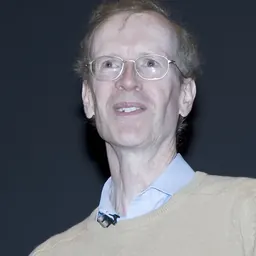
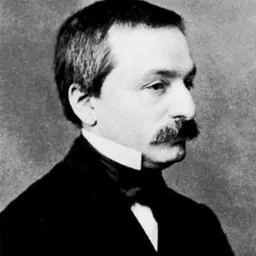
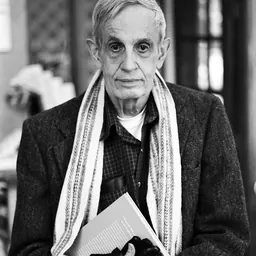
Writing about mathematics Bell wrote a book of biographical essays titled Men of Mathematics (one chapter of which was the first popular account of the 19th century mathematician Sofya Kovalevskaya), which is still in print. He originally wrote it under the title The Lives of Mathematicians, but the publishers, Simon and Schuster, cut about a third of it (125,000 words), and, in order to tie in with their book Men of Art (by Thomas Craven), gave it the title Men of Mathematics which he did not like. The book inspired notable mathematicians including Julia Robinson, John Forbes Nash, Jr., and Andrew Wiles to begin careers in mathematics. However, historians of mathematics have disputed the accuracy of much of Bell's history. In fact, Bell does not distinguish carefully between anecdote and history. He has been much criticized for romanticizing Évariste Galois. For example: "[E. T.] Bell's account [of Galois's life], by far the most famous, is also the most fictitious". His treatment of Georg Cantor, which reduced Cantor's relationships with his father and with Leopold Kronecker to stereotypes, has been criticized even more severely.
While this book was under printing, he also wrote and had published another book, The Handmaiden of the Sciences. His book on Fermat's Last Theorem, The Last Problem, was published the year after his death and is a hybrid of social history and the history of mathematics. It inspired mathematician Andrew Wiles to solve the problem.
In his book about Paul Erdős, titled The Man Who Loved Only Numbers, Paul Hoffman wrote:
Non-fiction books An Arithmetical Theory of Certain Numerical Functions, Seattle Washington, The university, 1915, 50p. PDF/DjVu copy from Internet Archive. The Cyclotomic Quinary Quintic, Lancaster, Pennsylvania, The New Era Printing Company, 1912, 97p. Algebraic Arithmetic, New York, American Mathematical Society, 1927, 180p. Debunking Science, Seattle, University of Washington book store, 1930, 40p. The Queen of the Sciences, Stechert, 1931, 138p. Numerology, Baltimore: The Williams & Wilkins Co., 1933, 187p. Reprint: Westport, CT: Hyperion Press, 1979, , 187p. – "Reprint of the ed. published by Century Co., New York" The Search for Truth, Baltimore, Reynal and Hitchcock, 1934, 279p. Reprint: Williams and Wilkins Co, 1935 The Handmaiden of the Sciences, Williams & Wilkins, 1937, 216p. Man and His Lifebelts, New York, Reynal & Hitchcock, 1938, 340p. Reprint: George Allen & Unwin Ltd., 1935, 2nd printing 1946 Reprint: Kessinger Publishing, 2005 Men of Mathematics, New York, Simon & Schuster, 1937, 592p. Reprint: Touchstone (Simon & Schuster paperback), 1986. The Development of Mathematics, New York, McGraw–Hill, 1940, 637p. Second Edition: New York, McGraw–Hill, 1945, 637p. Reprint: Dover Publications, 1992 The Magic of Numbers, Whittlesey House, 1946, 418p. Reprint: New York, Dover Publications, 1991, , 418p. Reprint: Sacred Science Institute, 2006 Mathematics: Queen and Servant of Science, McGraw-Hill, 1951, 437p. The Last Problem, New York, Simon & Schuster, 1961, 308p. Reprint: Mathematical Association of America, 1990, , 326p.
Scholarly papers "Arithmetical paraphrases". In: Transactions of the American Mathematical Society 22, 1921, pp. 1–30 and 198–219 "Arithmetical equivalents for a remarkable identity between theta functions". In: Mathematische Zeitschrift 13, 1922, pp. 146–152 "Existence theorems on the numbers of representations of odd integers as sums of 4t + 2 squares". In: Crelles Journal 163, 1930, pp. 65–70 "Exponential numbers". In: The American Mathematical Monthly 41, 1934, pp. 411–419
Novels The Purple Sapphire was reprinted in the August 1948 issue of Famous Fantastic Mysteries. The Purple Sapphire (1924) The Gold Tooth (1927) Quayle's Invention (1927) Green Fire (1928) The Greatest Adventure (1929) The Iron Star (1930) The White Lily (1930) The Time Stream (1931) Seeds of Life (1931) Before the Dawn (1934) Tomorrow (1939) The Forbidden Garden (1947) The Cosmic Geoids and One Other (1949) The Crystal Horde (1952) G.O.G. 666 (1954)
Poetry The Singer (1916)
Don’t just read it —
keep it.
Full-length biographies made to live with: read them, listen on the way to work, watch them tonight.
- E-book
- Audio
- Video
Instant download · yours to keep · every purchase keeps this site free
Important facts
People in Eric Temple Bell's life
Named in this biography and alive at the same time





Related people
Same field, nearest in time



Contemporaries
People whose lives overlapped Eric Temple Bell's


Frequently asked questions
Who was Eric Temple Bell?
Scottish American mathematician and science fiction author (1883-1960)
When was Eric Temple Bell born?
Eric Temple Bell was born on 7 February 1883 in Peterhead.
When did Eric Temple Bell die?
Eric Temple Bell died on 21 December 1960 in Watsonville.
What was Eric Temple Bell's occupation?
Eric Temple Bell was a mathematician, historian of mathematics, novelist, writer and science fiction writer.
What was Eric Temple Bell known for?
Eric Temple Bell was known for Bell number, Bell polynomials, Bell series, Bell triangle, Number theory and Ordered Bell number.
What nationality was Eric Temple Bell?
Eric Temple Bell was British and American.
Sources & further reading
Cite this page
APA: Biography.guide. (2026). Eric Temple Bell. https://biography.guide/eric-temple-bell/
MLA: "Eric Temple Bell." Biography.guide, https://biography.guide/eric-temple-bell/.
Chicago: "Eric Temple Bell." Biography.guide. https://biography.guide/eric-temple-bell/.
Data last updated: 2026-09-25 · Spot an error? Report a correction.
Page generated 2026-09-27 05:12 UTC