
About Eric Fogg
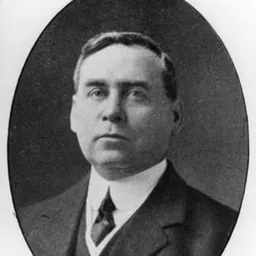
Lived 1903 – 1939 (aged 35–36). Eric Fogg was a British conductor, composer and pianist.
Charles William Eric Fogg (21 February 190319 December 1939) was an English composer, conductor and BBC broadcaster. His early works were influenced by Igor Stravinsky, where he came under the influence of Sydney Nicholson and Ernest Bullock. His contemporaries there included Leslie Heward and Eric Warr. Fogg went on to study with Granville Bantock in Birmingham On 16 June 1921, his "Chinese suite" The Golden Valley was premiered by Adrian Boult with the Queen's Hall Orchestra at the Royal College of Music, in the same concert as the first and only performance of Ivor Gurney's War Elegy.
He joined the BBC in Manchester in 1924 as an accompanist, rising to assistant music director under T H Morrison. In the 1930s he was well known as "Uncle Eric" of the radio programme Children's Favourites. He succeeded Archie Camden as the conductor of the Manchester Schoolchildren's Orchestra. In 1934 he moved to London and became musical director of the BBC's Empire Service (now the BBC World Service), where he founded the Empire Orchestra of 22 players in December 1934.
After this time his composition work tailed off due to pressure of other work, which included conducting the Empire Orchestra five times a week, mostly in the early mornings and late at night.
Personal life and death Eric Fogg's first wife was the cellist Kathleen Moorhouse (c1900-1952), who studied (and later taught) at the Royal Manchester College of Music with Walter Hatton and Arnold Trowell. Fogg dedicated his 1922 Poem for cello and piano to her, and they married in 1926. She was a frequent performer and broadcaster of chamber music, with (among others) her husband, Frank Merrick and Maurice Jacobson. In the mid-1930s their address was 12, Marlborough House, Osnaburgh Street, Regent's Park.
Eric Fogg died on 19 December 1939, when he either fell or jumped under the wheels of a train at Waterloo Station in London. He had been on his way to Brighton for his second wedding.
Music Fogg's music attracted differing opinions and even some hostility during his lifetime. Some critics felt that he was too modernistic, but others complained that he did not wholeheartedly encompass modernism. and orchestral versions, the latter recorded by the BBC Midland Light Orchestra conducted by Gilbert Vinter, and more recently by the BBC Concert Orchestra under Gavin Sutherland. The tone poem Merok (1929), in the form of variations on a Norwegian folk song, refers to a village in Western Norway at the head of the Geiranger Fjord. It was recorded for the first time by the BBC Concert Orchestra under Vernon Handley. Gamba describes the work as showing "restrained beauty and a certain melancholy by using shifting, unexpected harmonies and constantly altering the placement of the melody within the orchestra – most hauntingly at the end where the bass clarinet disappears into the misty fjord..." The original score for the choral and orchestral work The Seasons (words by William Blake) It was premiered at the Leeds Festival in 1931, in the same concert as the premiere of William Walton's Belshazzar's Feast, where it was inevitably overshadowed. To celebrate the centenary of Fogg's birth, a new score was prepared, and the work was performed by the Broadheath Singers and the Windsor Sinfonia conducted by Garry Humphreys at St Mary's Parish Church, Slough, on 13 September 2003. was recorded by Graham Salvage with the Royal Ballet Sinfonia conducted by Gavin Sutherland in 2001. It is the most substantial orchestral score of his to have survived.
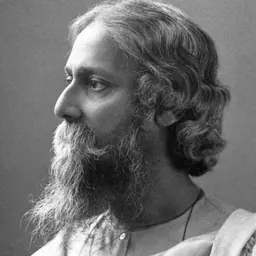
Other works include: Fantasy for cello and piano (1918) Hansel and Gretel, ballet (1918) The Golden Valley, Chinese suite (1919) The Golden Butterfly, ballet suite, op 40 (June 1919) The Hillside (1921; soprano, baritone, chorus and orchestra; words by Rabindranath Tagore) Poem for cello and piano (1922) Ode to a Nightingale (Keats) for baritone, string quartet, harp (1924) Introduction and Allegro for flute, oboe, clarinet, horn and piano (fp 1927) Fantasy Overture: September Night (1934), orchestra Ballade in C minor (piano) The Little Folk, song cycle Prelude for orchestra: Past the Sweet Lilac Clover-field Suite for violin, cello and harp
Don’t just read it —
keep it.
Full-length biographies made to live with: read them, listen on the way to work, watch them tonight.
- E-book
- Audio
- Video
Instant download · yours to keep · every purchase keeps this site free
Important facts
People in Eric Fogg's life
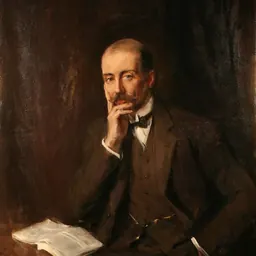
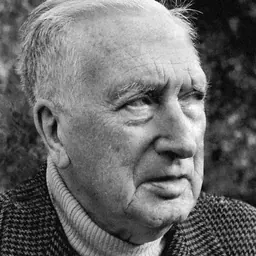
Named in this biography and alive at the same time




Related people
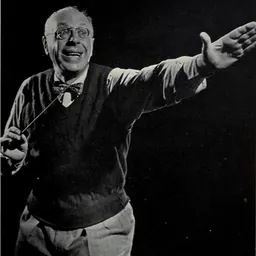
Same field, nearest in time


Contemporaries
People whose lives overlapped Eric Fogg's

Frequently asked questions
Who was Eric Fogg?
British composer and conductor (1903–1939)
When was Eric Fogg born?
Eric Fogg was born in 1903 in Manchester.
When did Eric Fogg die?
Eric Fogg died in 1939 in London.
What was Eric Fogg's occupation?
Eric Fogg was a conductor, composer and pianist.
What nationality was Eric Fogg?
Eric Fogg was British.
Sources & further reading
Cite this page
APA: Biography.guide. (2026). Eric Fogg. https://biography.guide/eric-fogg/
MLA: "Eric Fogg." Biography.guide, https://biography.guide/eric-fogg/.
Chicago: "Eric Fogg." Biography.guide. https://biography.guide/eric-fogg/.
Data last updated: 2026-09-20 · Spot an error? Report a correction.
Page generated 2026-09-27 05:04 UTC