
About Enrique Bernardo Núñez
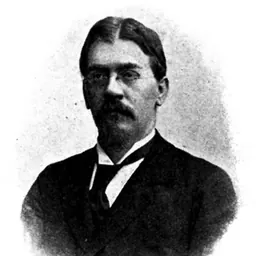
Lived 1895 – 1964 (aged 69). Enrique Bernardo Núñez was a Venezuelan writer.
Enrique Bernardo Núñez Rodríguez (Valencia, May 20, 1895 – Caracas, October 1, 1964) was a Venezuelan writer and journalist, twice the official chronicler of Caracas, author of Cubagua and La galera de Tiberio (1938), and a full member of the National Academy of History since 1948.
Biography The son of Enrique Núñez and Isabel María Rodríguez, he was born and spent his childhood in Valencia. He studied at the Escuela Rafael Pérez and later at the Colegio Requena in Valencia. After finishing secondary school, in 1910 he moved to Caracas intending to study medicine at the Universidad Central de Venezuela and to dedicate himself to journalism. According to Carlos Sandoval, it is one of the early examples of science fiction novels in Venezuela.
In the 1940s he returned to Venezuela, where he continued his journalistic work in various newspapers. He was appointed chronicler of Caracas in 1945 and held that position (intermittently) until 1964, during which time he promoted the magazine Crónica de Caracas. As chronicler of the city, he wrote La ciudad de los techos rojos (1947–1949), considered a milestone in Venezuelan urban chronicle writing for its documented reconstruction of the topography, historical memory, and identity of the capital, Caracas. It was one of Núñez's emblematic projects as the city's official chronicler.
In 1948 he became a full member of the National Academy of History. His induction speech was titled Juicios sobre la historia de Venezuela, and was responded to by Mario Briceño Iragorry. He was also appointed a corresponding member of the National Academy of History of Argentina.
He edited and wrote the prologue for the first four issues of Los Anales Diplomáticos de Venezuela, a publication founded in 1943 by Foreign Minister Caracciolo Parra Pérez but which did not begin to appear until 1952, when Núñez took charge of it. His prose, symbolism, and essayistic-poetic tone resonate with contemporaries such as Julio Garmendia and José Antonio Ramos Sucre.
According to Carlos Pacheco, “As happened with the work of other ex-centric Venezuelan writers such as José Antonio Ramos Sucre or Julio Garmendia, Núñez’s literary writing—and particularly the aesthetic significance of Cubagua—only came to be truly recognized in the second half of the 20th century. Critics of multiple and sometimes contrasting orientations have been ‘discovering’ since the 1960s this narrative island, and many persist today in venturing into its dense textual geography to carry out new analytical and interpretive explorations (...) What happened with Núñez also happened in the same period with Roberto Arlt or Macedonio Fernández in Argentina, Pablo Palacio in Ecuador, Julio Torri in Mexico, or Felisberto Hernández in Uruguay: no one read them carefully or perceptively, and some were even branded as mad or strange.”
In both Cubagua and La galera de Tiberio, cyclical time and the indigenous perspective articulate a historical and counter-colonial reading of the conquest that engages with oil-era neocolonialism.
The National Association of Chroniclers of Venezuela (ANCOV) designated his birthday as the National Day of the Official Chronicler. In his honor, the Municipal Council of Caracas established the “Premio Municipal al Patrimonio Histórico Enrique Bernardo Núñez.”
Works
Novels
1918: Sol interior 1920: Después de Ayacucho 1931: Cubagua 1938: La galera de Tiberio
Short stories collections
1932: Don Pablos en América 1997: La insurgente y otros relatos
Essays
1918: Bolívar orador 1939: Signos en el tiempo 1943: El hombre de la levita gris 1944: Arístides Rojas, anticuario del Nuevo Mundo 1945: Tres momentos en la controversia de límites con Guayana 1947–1949: La ciudad de los techos rojos 1954: Viaje por el país de las máquinas 1963: Bajo el samán
Awards and distinctions
1947: Municipal Literature Prize 1948: Full member of the National Academy of History 1950: Premio Nacional de Periodismo Juan Vicente González
Don’t just read it —
keep it.
Full-length biographies made to live with: read them, listen on the way to work, watch them tonight.
- E-book
- Audio
- Video
Instant download · yours to keep · every purchase keeps this site free
Important facts
People in Enrique Bernardo Núñez's life
Named in this biography and alive at the same time


Related people
Same field, nearest in time






Contemporaries
People whose lives overlapped Enrique Bernardo Núñez's
Frequently asked questions
Who was Enrique Bernardo Núñez?
Venezuelan writer (1895–1964)
When was Enrique Bernardo Núñez born?
Enrique Bernardo Núñez was born on 20 May 1895 in Valencia.
When did Enrique Bernardo Núñez die?
Enrique Bernardo Núñez died on 1 October 1964 in Caracas.
What was Enrique Bernardo Núñez's occupation?
Enrique Bernardo Núñez was a writer.
What nationality was Enrique Bernardo Núñez?
Enrique Bernardo Núñez was Venezuelan.
Sources & further reading
· Wikipedia: Enrique Bernardo Núñez
· DBpedia: Enrique Bernardo Núñez
Cite this page
APA: Biography.guide. (2026). Enrique Bernardo Núñez. https://biography.guide/enrique-bernardo-nunez/
MLA: "Enrique Bernardo Núñez." Biography.guide, https://biography.guide/enrique-bernardo-nunez/.
Chicago: "Enrique Bernardo Núñez." Biography.guide. https://biography.guide/enrique-bernardo-nunez/.
Data last updated: 2026-09-20 · Spot an error? Report a correction.
Page generated 2026-09-27 05:18 UTC