
About Enid Tribe Oppenheimer
Lived 1885 – 1966 (aged 80–81). Enid Tribe Oppenheimer was a physiologist.
Enid Tribe Oppenheimer (1885 – 1966) was a British physiologist. After becoming one of the first six women admitted as members of the Physiological Society, she studied cardiology and the carcinogenic properties of plastics at Columbia University.
Early life Born Enid Muriel Simmons in 1885 to London architect William Simmons and his wife Louisa, née Johnstone, she won a scholarship to Bedford College, London in 1904, and gained a Class I pass in her BSc. Her first husband was Joseph Tribe.
Scientific career in Britain Tribe spent ten years on the faculty of the London School of Medicine for Women, where she was lecturer in histology and published on neuroscience.
In 1915, she became one of the six first women to be admitted as members of the Physiological Society along with Florence Buchanan, Winifred Cullis, Constance Leetham, Ruth Skelton, and S.C.M Sowton. She became instructor in physiology there from 1932 to 1956. and Alvan Barach and instituted formal stress testing with Arthur Master, but her most influential work was carried out with her husband and Arthur Purdy Stout. While studying hypertension drugs, the team accidentally discovered a connection between plastics and tumours, and they turned to pursue further research on the carcinogenic properties of plastics at the Institute for Cancer Research at Columbia. Their work was reviewed by the Plastics Committee of the Manufacturing Chemists' Association; however, their concerns about the plastics were not fully implemented (the plastics were deemed 'non-toxic' and their carcinogenic nature was not addressed).
In 1961, she was discovered to be the oldest living woman member of the American Physiological Society (having been elected a member in 1932) and was unofficially elected 'Mother' of the Society, receiving a bouquet of flowers on Mothers Day.
Solo publications Enid M. Tribe, 'Vaso-motor nerves in the lungs,' Journal of Physiology 48:2-3 (1914), 154-170 Enid T. Oppenheimer, 'Studies on the so-called heart hormone,' American Journal of Physiology 90:3 (1929), 656-667
Don’t just read it —
keep it.
Full-length biographies made to live with: read them, listen on the way to work, watch them tonight.
- E-book
- Audio
- Video
Instant download · yours to keep · every purchase keeps this site free
Important facts
People in Enid Tribe Oppenheimer's life
Named in this biography and alive at the same time
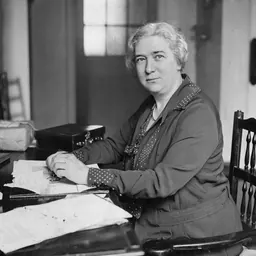
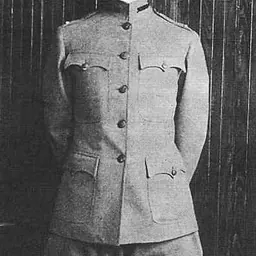




Related people
Same field, nearest in time

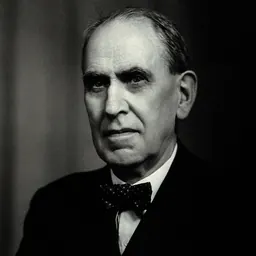


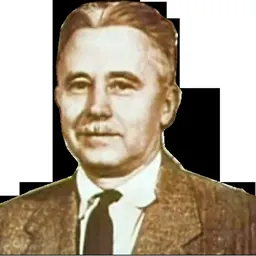
Contemporaries
People whose lives overlapped Enid Tribe Oppenheimer's



Frequently asked questions
Who was Enid Tribe Oppenheimer?
British physiologist
When was Enid Tribe Oppenheimer born?
Enid Tribe Oppenheimer was born in 1885.
When did Enid Tribe Oppenheimer die?
Enid Tribe Oppenheimer died in 1966.
What was Enid Tribe Oppenheimer's occupation?
Enid Tribe Oppenheimer was a physiologist.
Sources & further reading
· Wikipedia: Enid Tribe Oppenheimer
· DBpedia: Enid Tribe Oppenheimer
Cite this page
APA: Biography.guide. (2026). Enid Tribe Oppenheimer. https://biography.guide/enid-tribe-oppenheimer/
MLA: "Enid Tribe Oppenheimer." Biography.guide, https://biography.guide/enid-tribe-oppenheimer/.
Chicago: "Enid Tribe Oppenheimer." Biography.guide. https://biography.guide/enid-tribe-oppenheimer/.
Data last updated: 2026-09-20 · Spot an error? Report a correction.
Page generated 2026-09-27 04:59 UTC