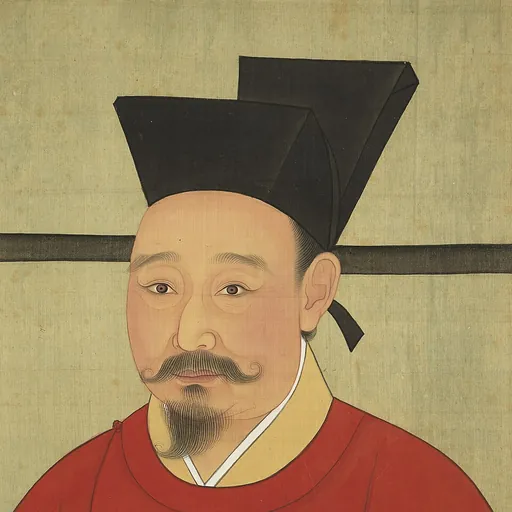
About Emperor Xiaozong of Song
Lived 1127 – 1194 (aged 66). Emperor Xiaozong of Song was a Chinese emperor, poet, ruler and aristocrat.
Emperor Xiaozong of Song (27 November 1127 – 28 June 1194), personal name Zhao Shen, courtesy name Yuanyong, was the 11th emperor of the Song dynasty of China and the second emperor of the Southern Song dynasty. He started his reign in 1162 when his adoptive father and predecessor, Emperor Gaozong, abdicated and passed the throne to him. Even though Emperor Gaozong became a Taishang Huang ("Retired Emperor") after his abdication, he remained the de facto ruler, so Emperor Xiaozong only took full power in 1187 after Emperor Gaozong's death. After ruling for about a year, Emperor Xiaozong followed in his predecessor's footsteps and abdicated in favour of his third son Zhao Dun (Emperor Guangzong), while he became Taishang Huang and still remained in power until his death in 1194.
He was the first descendant of Emperor Taizu to become emperor and remembered as an effective ruler as the Song enjoyed prosperity during his reign.
Names Zhao Shen's birth name was Zhao Bocong (趙伯琮). In March 1133, after Zhao Bocong entered the imperial palace, his name was changed to Zhao Yuan (趙瑗). In April 1160, after Zhao Yuan was adopted by Emperor Gaozong, his name was changed to Zhao Wei (趙瑋). In July 1162, when Zhao Wei became crown prince, his name was changed again to Zhao Shen (趙眘).
Zhao Shen was given the courtesy name Yuangui (元瑰) in May 1160. In July 1162, when he became crown prince, his courtesy name was changed to Yuanyong (元永).
Early life Zhao Shen was a seventh-generation descendant of Emperor Taizu, the founder and first emperor of the Song dynasty. He was the second son of Zhao Zicheng (趙子偁; died 1143), a sixth cousin of Emperor Gaozong, the 10th Song emperor. After the Jingkang Incident in 1127, Emperor Gaozong's father, eldest brother and most of his close relatives were taken prisoner by the Jurchen-led Jin Empire. As Emperor Gaozong's only son, Zhao Fu, died prematurely around the age of two, the emperor ordered his officials to start searching for other living descendants of the imperial family. Zhao Shen was discovered and adopted by Emperor Gaozong in April 1160 as a son. Another relative, Zhao Qu was also adopted. In July 1162, Emperor Gaozong officially designated Zhao Shen as his crown prince and heir apparent. One of the main reasons Gaozong chose Shen over Qu was of Shen's virtue. It is said that Gaozong gave ten maids to Shen and Qu.
The Emperor also controlled his ministers by curtailing their authority. Early in 1167 the Emperor finally filled every vacancy in the Council of State by appointing chief councilors of the left and right and two assistant councilors. The bureaucracy was generally pleased with the appointments, but the remarks of the vice-minister for war, Chen Yanxiao, contained both jubilations over the appointments but skepticism over the reduced powers of the councilors. Although Xiaozong is said to have listened to Chen, he never put his advice into practice. Throughout the Xiaozong reign the chief complaint of officials was his is tendency to infringe on their authority. Xiaozong in principle realized the importance of treating his councilors with dignity and granting them executive authority, however in reality his participation in all major decisions greatly limited their authority. In 1163 chief councilors were appointed to positions of Commissioners of military affairs, and in 1167 they were also granted financial authority with the titles of controller of national finance (Zhi Guoyongshi). Later in Southern Song this contributed to the power of the chief councilors, however during Xiaozongs reign this was not the case. Xiaozong intended for his ministers to exercise their powers in ordinary administrative affairs, however the emperor was in the habit of guarding his imperial prerogatives and frequently exercised them especially in military matters. As in 1167 when Imperial orders issued to the Bureau of Military affairs bypassed the Secretariat and Imperial Councilors and went straight to the Imperial Chancellery. After requests to the Emperor that orders go through regular bureaucratic streams he promised to rectify this, but instead he continued to issue direct dispatches as "confidential orders" (mi-pai). Xiaozong began to directly issue palace orders (nei-pi) and imperial decrees (yu-pi) without prior consultation with councilors to enhance his power in other areas. He closely supervised the court and central government to make sure power remained balance among high officials and tried in earnest to live up to Confucian standards of moral behavior.
In 1165, he reached peace with the Jin Dynasty.
In the Southern Song years, revenue from state monopolies on tea, salt, and jiu, along with commercial taxes, was crucial to the state's finances and was increasing. During Emperor Xiaozong's late Chunxi period, summer and autumn agricultural land taxes dropped to 20.4 percent and 15.3 percent of total revenue of the government compared from the reign of Emperor Shenzong.
In 1187, the retired Emperor Gaozong died. Xiaozong was stricken with grief and retreated from governing, insisting on mourning Gaozong and stating that he would only rule for two more years. Xiaozong turned all government affairs to his son Zhao Dun. On one occasion, at the sickbed of the emperor, her father-in-law threatened to have her executed for not taking proper care of the monarch. Xiaozong soon died. Emperor Guangzong refused to attend his funeral and as a result, was forced to give his throne to the deceased retired emperor's grandson Emperor Ningzong.
Family Empress Chengmu, of the Guo clan (; 1126–1156) Zhao Qi, Crown Prince Zhuangwen (; 1144–1167), first son Zhao Kai, Prince Huixian of Wei (; 1146–1180), second son Zhao Dun, Guangzong (; 1147–1200), third son Zhao Ke, Prince Daosu of Shao , fourth son Princess Jia (嘉公主; 1149 – 1162), first daughter Empress Chenggong, of the Xia clan (; d. 1167) Second daughter Fifth son Empress Chengsu, of the Xie clan (; 1132–1203), personal name Sufang Noble Consort, of the Cai clan (贵妃 蔡氏) Worthy Consort, of the Li clan (贤妃 李氏) Third daughter (b. 1182)
Don’t just read it —
keep it.
Full-length biographies made to live with: read them, listen on the way to work, watch them tonight.
- E-book
- Audio
- Video
Instant download · yours to keep · every purchase keeps this site free
Important facts
more
Bo Cong, Xiao Zong, Zhao Bocong, Zhao Wei, Zhao Ai, YuanguiFamily & relationships
People in Emperor Xiaozong of Song's life
Named in this biography and alive at the same time


Related people
Same field, nearest in time
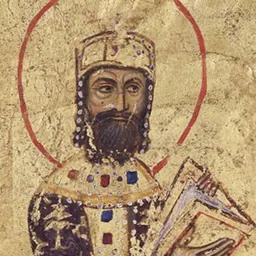
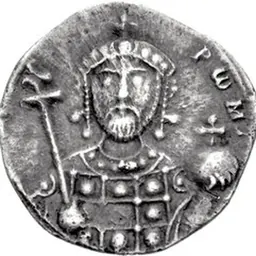
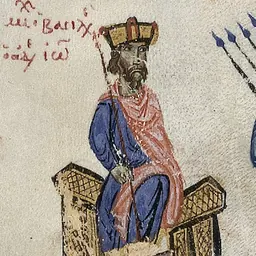
Contemporaries
People whose lives overlapped Emperor Xiaozong of Song's
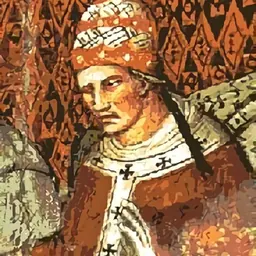
Frequently asked questions
Who was Emperor Xiaozong of Song?
Chinese Song dynasty emperor from 1162 to 1189
When was Emperor Xiaozong of Song born?
Emperor Xiaozong of Song was born on 27 November 1127 in Xiu Prefecture.
When did Emperor Xiaozong of Song die?
Emperor Xiaozong of Song died on 28 June 1194.
What was Emperor Xiaozong of Song's occupation?
Emperor Xiaozong of Song was an emperor, poet, ruler and aristocrat.
What nationality was Emperor Xiaozong of Song?
Emperor Xiaozong of Song was Chinese.
Sources & further reading
· Wikipedia: Emperor Xiaozong of Song
· DBpedia: Emperor Xiaozong of Song
Cite this page
APA: Biography.guide. (2026). Emperor Xiaozong of Song. https://biography.guide/emperor-xiaozong-of-song/
MLA: "Emperor Xiaozong of Song." Biography.guide, https://biography.guide/emperor-xiaozong-of-song/.
Chicago: "Emperor Xiaozong of Song." Biography.guide. https://biography.guide/emperor-xiaozong-of-song/.
Data last updated: 2026-09-30 · Spot an error? Report a correction.
Portrait: Wikimedia Commons · author & licence
Page generated 2026-10-05 02:42 UTC