
About Emperor Shirakawa
Lived 1053 – 1129 (aged 75–76). Emperor Shirakawa was a Japanese ruler.
was the 72nd emperor of Japan, according to the traditional order of succession.
Shirakawa's reign lasted from 1073 to 1087.
Genealogy Before his ascension to the Chrysanthemum Throne, his personal name (imina) was Sadahito-shinnō (貞仁親王).
He was the eldest son of Emperor Go-Sanjō and Fujiwara Shigeko (藤原茂子).
Shirakawa had one Empress and one Imperial Consort and nine Imperial sons and daughters.
Empress (chūgū): Fujiwara no Kenshi (藤原賢子)—Minamoto Akifusa‘s daughter, adopted by Fujiwara Morozane First Son: Imperial Prince Atsufumi (敦文親王; 1075–1077) First Daughter: Imperial Princess Yasuko (媞子内親王) later Ikuhomon’in (郁芳門院) Third Daughter: Imperial Princess Reishi (令子内親王) saigū Third Son: Imperial Prince Taruhito (善仁親王) later Emperor Horikawa Fourth Daughter: Imperial Princess Shinshi (禛子内親王; 1081–1156)—Tsuchimikado Saiin (土御門斎院) Consort (Nyogo): Fujiwara Michiko (藤原道子; 1042–1132), Fujiwara no Yoshinaga‘s daughter Second Daughter: Imperial Princess Yoshiko (善子内親王; 1076–1131) Rokkaku >saigū at the Grand Shrine of Ise Lady-in-Waiting: Fujiwara Tsuneko (藤原経子), Fujiwara no Tsunehira's daughter Second Son: Imperial Prince Priest Kakugyō (覚行法親王; 1075–1105) Court Lady: Minamoto Raishi (源師子; 1070–1148), Minamoto Akifusa's daughter Fourth Son: Imperial Prince Priest Kakuhō (覚法法親王; 1092–1153) Minamoto Yoriko (源頼子), Minamoto Yoritsune's daughter Fifth Daughter: Imperial Princess Kanshi (官子内親王; b.1090)—Saiin (斎院) Fujiwara Suesane's daughter Sixth Daughter: Imperial Princess Junko (恂子内親王; 1093-1132) Kasuga-dono (春日殿), Fujiwara Morokane's daughter Fifth Son: Imperial Prince Priest Shōe (聖恵法親王; 1094–1137) Minamoto Masanaga's daughter Gyōkei (行慶; 1101–1165) Bizen-dono (備前), Minamoto Arimune's daughter Engyō (円行, b.1128) Minamoto Akifusa's daughter Josho (静證) Gion Nyōgo (祇園女御) Gion Nyōgo‘s younger sister Rō-no-Kata (廊御方), Fujiwara Michisue's daughter Kamo Nyōgo (賀茂女御, 1070 - 1148), Kamo Shigesuke's daughter Kamo Nyōgo‘s younger sister, Kamo Shigesuke's daughter
Events of Shirakawa's life He was the first emperor to ostensibly retire to a monastery, but in fact continue to exert considerable influence over his successor. This process would become known as cloistered rule.
When he was very young, his relations with his father were very cold but loving and in 1068, when his father was enthroned, he was proclaimed a shinnō (Imperial Prince), becoming Imperial Prince Sadahito. In 1069, he became Crown Prince and in due course, he became emperor at the age of 19.
January 18, 1073 (Enkyū 4, on the 8th day of the 12th month) : In the 5th year of Emperor Go-Sanjō-tennōs reign (桓武天皇六年), the emperor abdicated; and the succession (‘‘senso’’) was received by his son. Shortly thereafter, Emperor Shirakawa is said to have acceded to the throne (‘‘sokui’’).
A kampaku was put in place, but Shirakawa attempted to rule directly, like his father. He attempted to regulate the shōen (manor) system, working to weaken the influence of the sekkan lines.
1074 (Jōhō 1, 1st month): Dainagon Minamoto- no Takakune asked to be relieved of his duties because of his age. He was 71, and he wanted to retire to Uji. In his retirement, he was visited by many friends with whom he pursued research into the history of Japan. He brought this work together in a book. 1074 (Jōhō 1, 7th day of the 2nd month): The former kampaku Fujiwara Yorimichi died at the age of 83. In this same period, his sister, the widow of Emperor Ichijo, died at the age of 86. 1077 (Jōryaku 1, 1st month): Shirakawa went to the Kamo Shrines; and he visited Kiyomizu-dera and other Buddhist temples. 1077 (Jōryaku 1, 2nd month): Udaijin Minamoto no Morofusa died of an ulcer at the age of 70. 1079 (Jōryaku 3, i10th month): The emperor visited the Fushimi Inari-taisha at the foot of Mount Fushimi and the Yasaka Shrine. 1081 (Eihō 1, 4th day of the 6th month): Miidera was burned again by monks from Mt. Hiei. 1083 (Eihō 3, 10th month): At Hosshō-ji, construction begins on a nine-story pagoda. 1084 (Ōtoku 1, 9th month): The empress Kenshi, the emperor's principal consort, died. Shirakawa was afflicted with great grief, and for a time, he turned over the administration of the government to his ministers.
Go-Sanjō had wished for Shirakawa's younger half-brother to succeed him to the throne. In 1085, this half-brother died of an illness; and Shirakawa's own son, Taruhito-shinnō (善仁親王) became Crown Prince.
On the same day that Taruhito was proclaimed as his heir, Shirakawa abdicated, and Taruhito became Emperor Horikawa. The now-retired Emperor Shirakawa was the first to attempt what became customary cloistered rule. He exercised power, ruling indirectly from the Shirakawa-in (lit. "White River Mansion/Temple"); nevertheless, nominal sesshō and kampaku offices continued to exist for a long time.
1087 (Kanji 1, 5th month): Daijō-tennō Shirakawa retired himself to Uji. 1088 (Kanji 2, in the 1st month): The emperor paid a visit to his father's home. 1088 (Kanji 2, 10th month): Shirakawa visited the temples at Mt. Hiei. In this context, it matters a great deal that the mother of Emperor Horikawa, formerly the daughter of udaijin Minamoto no Akifusa, was also formerly the adopted child of Morozane. 1089 (Kanji 3, 5th month): Shirakawa made a second visit to Mt. Hiei; and this time, he stayed seven days. 1095 (Kahō 2, i4th month): Emperor Horikawa paid visits to the Shinto Iwashimizu Shrine and to the Shinto Kamo Shrines. 1095 (Kahō 2, 8th month): The emperor was stricken with intermittent fevers; and he ordered prayers to be offered for his return to good health. After Horikawa recovered his health, he was generous and appreciative to the Buddhist priests who had prayed for his recovery. 1096 (Kahō 3, 9th day of the 11th month): Former-Emperor Shirakawa entered the Buddhist priesthood at the age of 44 and received the Dharma name Yūkan (融観). Kampaku, Fujiwara Morozane, 1042–1101. Enkyū (1069–1074) Jōhō (1074–1077) Jōryaku (1077–1081) Eihō (1081–1084) Ōtoku (1084–1087)
Ancestry
Don’t just read it —
keep it.
Full-length biographies made to live with: read them, listen on the way to work, watch them tonight.
- E-book
- Audio
- Video
Instant download · yours to keep · every purchase keeps this site free
Important facts
Family & relationships
People in Emperor Shirakawa's life
Named in this biography and alive at the same time
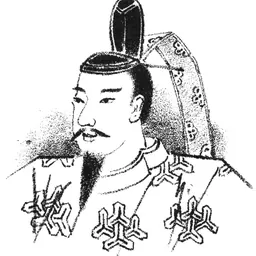
Related people
Same field, nearest in time
Contemporaries
People whose lives overlapped Emperor Shirakawa's



Frequently asked questions
Who was Emperor Shirakawa?
Emperor of Japan
When was Emperor Shirakawa born?
Emperor Shirakawa was born in 1053 in Kyoto.
When did Emperor Shirakawa die?
Emperor Shirakawa died in 1129 in Kyoto.
What was Emperor Shirakawa's occupation?
Emperor Shirakawa was a ruler.
What nationality was Emperor Shirakawa?
Emperor Shirakawa was Japanese.
Sources & further reading
· Wikipedia: Emperor Shirakawa
Cite this page
APA: Biography.guide. (2026). Emperor Shirakawa. https://biography.guide/emperor-shirakawa/
MLA: "Emperor Shirakawa." Biography.guide, https://biography.guide/emperor-shirakawa/.
Chicago: "Emperor Shirakawa." Biography.guide. https://biography.guide/emperor-shirakawa/.
Data last updated: 2026-09-20 · Spot an error? Report a correction.
Page generated 2026-09-27 05:25 UTC