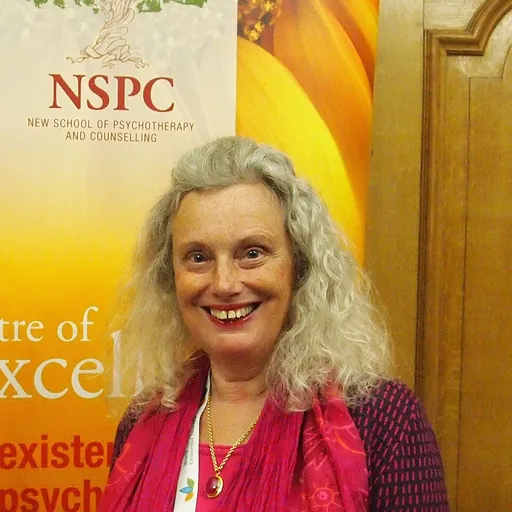
Emmy van Deurzen
Dutch existential therapist
About Emmy van Deurzen
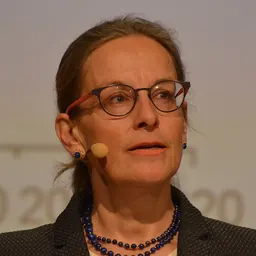
Born 1951. Emmy van Deurzen is a Dutch psychologist, existential therapist, psychotherapist, philosopher, university teacher and psychotherapy.
Emmy van Deurzen (born 13 December 1951) is an existential therapist, psychologist, philosopher, and author who works in the United Kingdom and who has been instrumental in developing existential therapy worldwide. She developed a philosophical therapy based in existential-phenomenology, which was detailed in her many publications, and taught in the organizations she founded.
Van Deurzen was the founder of the Society for Existential Analysis in 1988 and initiated the first World Congress for Existential Therapy in 2015, which also led to the founding of the Federation for Existential Therapy in Europe. She co-founded the School of Psychotherapy and Counselling at Regent's University in 1990, the New School of Psychotherapy and Counselling in 1996, Dilemma Consultancy in 2000 and the Existential Academy in 2010. She was the founder and first president of the worldwide Existential Movement. She established a philosophical therapy based in existential-phenomenology and her twenty plus books have been translated into more than two dozen languages.
Early life and education Van Deurzen was born on 13 December 1951 in The Hague, Netherlands, Her parents were Arie van Deurzen and Anna Hensel. They were both raised in The Hague, and lived in a small flat near the North Sea, at the south-west of the city of The Hague. She was an active member of the school community and published poetry in the school newsletter, took small parts in school plays and sang soprano in the choir, as well as performing songs of her own composition at various school events, with her guitar. She wrote her thesis on phenomenology and psychiatry in relation to solitude and solipsism for her philosophy dissertation.
Psychotherapy career Van Deurzen began her career in psychotherapy by doing voluntary work at the Psychiatric Hospital of Montpellier, Font D’Aurelle, in the children's and outpatient departments, between 1971 and 1973 together with her first husband, psychiatrist Jean Pierre Fabre.
During this period, Van Deurzen began teaching existential therapy in the Arbours training programme and started developing her own ideas. She also entered into a lifelong friendship with Hungarian psychiatrist Thomas Stephen Szasz. In 1978, van Deurzen and Fabre made a three months long work study trip to California where they spent time at the Esalen Institute, as guests of Richard Price, and received training in Gestalt therapy and body therapy. Van Deurzen met with Gregory Bateson at Esalen and Hubert Lederer Dreyfus at Berkeley University and together they met with John Weir Perry to speak about madness as well as having meetings with several members of the Palo Alto Mental Research Institute and visiting The Soteria model halfway house of Loren Richard Mosher in San Jose.
Lecturing and academic career
From 1978 onwards van Deurzen has lectured on her method of existential therapy in many different contexts and countries. She created the first master's programme in existential psychotherapy with Antioch University in 1982 and was able to help the Antioch programmes to move to Regent's University London in 1985 and joined the Regent's faculty as Head of the Psychology department, when the program was incorporated into the college. She was made a professor in psychotherapy and counselling and appointed Dean of the School of Psychotherapy and Counselling at Regent's University, after co-founding this with the president of the then Regent's College, John Payne. This was initially based at the London centre of Schiller International University (SIU), where she was made an honorary professor. Van Deurzen and Tantam also co-founded the Centre for the Study of Conflict and Reconciliation at the University of Sheffield in 1999 when van Deurzen became an honorary lecturer, then a reader at the university. In 2005 she became an honorary professor and was involved in four large European funded research projects in psychotherapy with Digby Tantam and colleagues from around Europe, including Ireland, Poland, Austria, Romania, France, Portugal, Belgium, Italy and Czechia. She published her first chapter on existential therapy in 1984 in Windy Dryden's Handbook on individual psychotherapy. Her first book on her existential approach to psychotherapy and counselling was published in 1987 with Sage, has known several editions and continues to be a bestseller. Drawing on the work of Ludwig Binswanger and her own clinical observations, she conceptualized a four-world model of human existence—physical (Umwelt), social (Mitwelt), personal (Eigenwelt), and spiritual (Überwelt). The originality of the model is further enhanced by its emphasis on the paradoxical nature of each dimension, showing the dialectical movement between polarities and inevitable tensions at each level. It became the basis of her method of Structural Existential Analysis.
Existential Counselling and Psychotherapy (1987–1990s) Van Deurzen's first major book, Existential Counselling in Practice (1987), later republished in expanded editions, articulated her therapeutic approach in accessible language. She introduced the "emotional compass" to map emotions across the four existential dimensions, linking them to human values. In 1988, she co-founded the Society for Existential Analysis and in 1993 became a key figure in professional regulation as the first elected Chair of the UK Council for Psychotherapy (UKCP). Her third major work, Paradox and Passion (1998), reflected on emotional tensions and personal experience, including her early struggles with suicidality. Throughout the 2000s, she published extensively, including the co-authored Dictionary of Existential Psychotherapy and Counselling (2005) and several edited volumes on existential perspectives in supervision, coaching, and relationships. With Martin Adams, she co-authored Skills in Existential Counselling & Psychotherapy (2011), a practical guide for clinicians.
Existential-Phenomenological Research and Structural Methodology (2010s–2020s) Van Deurzen developed a research method rooted in existential therapy, integrating phenomenological, hermeneutic, heuristic, and narrative elements. Her Structural Existential Analysis (co-authored with Claire Arnold-Baker, 2022) formalized this approach, using five existential lenses—Space, Time, Purpose, Paradox, and Passion—and introduced the Existential Research Dialogue (ERD), a dialogical interview technique. She served as senior editor of The Wiley World Handbook of Existential Therapy (2019), the most comprehensive text in the field, bringing together leading figures like Irvin Yalom, Alfried Laengle, and Kirk Schneider.
In 2014, van Deurzen and her husband Digby Tantam created the Existential Academy, a community interest company, in West Hampstead, on Fortune Green Road, where they offer five masters programmes and two doctoral programmes in conjunction with Middlesex University, as well as a range of short courses. She founded the Voices for Europe initiative and served as Vice Chair of the New Europeans. She organized free counselling services for affected populations and gave public speeches, including at several major protests in Parliament Square. The Existential Academy also provided free emotional support services for Ukrainians who took refuge in the UK during the UK/Russian war and to all those affected by the war between Israel and Gaza. Her more recent book Rising from Existential Crisis (2022) addressed the psychological effects of sociopolitical trauma and immigration. Van Deurzen married Digby John Howard Tantam, a British professor of psychiatry and psychotherapy, in 1998, after they met through their work with the United Kingdom Council for Psychotherapy. Digby has two children by his previous wife, Robert Tantam, born 1978 and Grace Tantam, born in 1980.
Honours In 2024 van Deurzen was honoured with a lifelong honorary fellowship by the British Psychological Society for services to psychology and psychotherapy.
In 2015, van Deurzen was made Honorary member of the Circulo de Estudios en Psicoterapia Existencial por una Co-existencia Apasionata, Mexico City. She was made an honorary member of the Latin American Association for Existential Therapy in Buenos Aires in 2013. 2006, Fellow, United Kingdom Council for Psychotherapy 2001, Fellow, British Association for Counselling and Psychotherapy (BACP) 1999–2002, Official Delegate to the Council of Europe, for the European Association for Psychotherapy (EAP) 1998–1999, Chair of the British Psychological Society, Psychotherapy Section 1998, Honorary European Certificate for Psychotherapy 1997–1999, Chair of the Universities Psychotherapy Association (UPCA) 1995–2002, European Association for Psychotherapy (EAP) Ambassador
Books Structural Existential Analysis: an Existential-Phenomenological Method for Researching Life, (2025) with Claire Arnold-Baker, London: Routledge. Rising from Existential Crisis: Living Beyond Calamity, (2021) Monmouth: Monmouth: PCCS books. Wiley World Handbook for Existential Therapy, (2019) Co-edited with Craig, E., Schneider K. Längle, A., Tantam, D. and du Plock, S, London: Wiley Existential Therapy: Distinctive Features, London: Routledge. (2018) Co-authored with Claire Arnold-Baker, London: Routledge Skills in Existential Counselling and Psychotherapy, 2nd Edition (2016). Co-authored with Martin Adams, London: Sage. Paradox and Passion in Psychotherapy, Second Edition (2015). Chichester: Wiley Existential Perspectives on Relationship Therapy (2013). Edited with Susan Iacovou, London: Palgrave Macmillan. Existential Psychotherapy and Counselling in Practice, Third Edition (2012), London: Sage Publications Existential Perspectives on Coaching (2012). Co-edited with Monica Hanway, London: Palgrave, Macmillan Skills in Existential Counselling and Psychotherapy (2011). Co-authored with Martin Adams, London: Sage Publications Everyday Mysteries: A Handbook of Existential Psychotherapy, Second Edition (2010), London: Routledge Existential Perspectives on Supervision (2009). Co-edited with Sarah Young, London: Palgrave Macmillan Psychotherapy and the Quest for Happiness (2008), London: Sage Publications Dictionary of Existential Psychotherapy and Counselling (2005). With Raymond Kenward, London: Sage Existential Perspectives on Existential and Human Issues (2005). Edited with Claire Arnold-Baker, Basingstoke: Palgrave, Macmillan Existential Psychotherapy and Counselling in Practice, Second Edition (2002), London: Sage Paradox and Passion in Psychotherapy (1998), Chichester: Wiley Everyday Mysteries: Existential Dimensions of Psychotherapy (1997), London: Routledge Existential Counselling in Practice (1988), London: Sage
Don’t just read it —
keep it.
Full-length biographies made to live with: read them, listen on the way to work, watch them tonight.
- E-book
- Audio
- Video
Instant download · yours to keep · every purchase keeps this site free
Important facts
People in Emmy van Deurzen's life
Named in this biography and alive at the same time





Related people
Same field, nearest in time




Contemporaries
People whose lives overlapped Emmy van Deurzen's


Frequently asked questions
Who is Emmy van Deurzen?
Dutch existential therapist
When was Emmy van Deurzen born?
Emmy van Deurzen was born on 13 December 1951 in The Hague.
What is Emmy van Deurzen's occupation?
Emmy van Deurzen is a psychologist, existential therapist, psychotherapist, philosopher, university teacher and psychotherapy.
What nationality is Emmy van Deurzen?
Emmy van Deurzen is Dutch.
Sources & further reading
Cite this page
APA: Biography.guide. (2026). Emmy van Deurzen. https://biography.guide/emmy-van-deurzen/
MLA: "Emmy van Deurzen." Biography.guide, https://biography.guide/emmy-van-deurzen/.
Chicago: "Emmy van Deurzen." Biography.guide. https://biography.guide/emmy-van-deurzen/.
Data last updated: 2026-09-22 · Spot an error? Report a correction.
Portrait: Wikimedia Commons · author & licence
Page generated 2026-09-27 05:01 UTC