
About Emmanuel Bartelemy
Lived 1820 – 1855 (aged 34–35). Emmanuel Bartelemy was a revolutionary.
Emmanuel Barthélemy (1823–1855) was a French revolutionary and a member of secret Blanquist societies during the reign of Louis-Phillipe, the citizen king of France in the July Monarchy from 1830 until 1848. He fled to London in 1850.
He is remembered for being the winner of the last fatal duel in England, fought in 1852 with another French exile. In 1855, he was hanged in London after killing two Englishmen.
Revolutionary activity Born in 1823, Barthélemy was from Sceaux, Hauts-de-Seine, on the outskirts of Paris. In 1839, he was imprisoned for shooting a police officer during a coup attempt by the Société des saisons, led by Louis Auguste Blanqui and Armand Barbès. Some sources state the officer was killed,
Exile in London In London, Barthélemy became involved in producing a journal, Les Veilles du Peuple, alongside Louis Auguste Blanqui, Eugène Sue, and others.
Barthélemy visited Karl and Jenny Marx at their apartment several times although Jenny Marx disliked him intensely. Barthélemy was also an associate of the German radical August Willich. According to Wilhelm Liebknecht, Willich and Barthélemy plotted to kill Marx for being too conservative. However Willich was challenged in turn by Konrad Schramm, a young follower of Marx. The duel, with pistols, took place in Belgium, with Barthélemy acting as Willich's second. Barthélemy challenged Cournet after taking offense at remarks Cournet made about a former girlfriend of his. Cournet and Barthélemy, each accompanied by two men acting as seconds, traveled by train to the meeting place.
Cournet received a bullet wound, but Barthélemy was unhurt. He and his two seconds left the scene to return to London. One of Cournet's seconds fled and was never found but the other remained by his side until both men were found by chance by a local doctor. Cournet was carried to a nearby pub, the Barley Mow, and the police were alerted. By this time, Barthélemy and his two seconds were on the train to London. However, the Surrey police alerted their London colleagues by telegraph and the three were arrested when they arrived at Waterloo station.
Cournet is buried at St. John's Church, Egham.
Murder conviction and execution In 1854, Barthélemy began working as an engineer for a soda water maker called George Moore. On the evening of 8 December 1854, he visited his employer's house at Warren Street, London, accompanied by a woman. Evidence suggested the meeting was initially cordial, but it ended in a struggle which resulted in Moore being beaten with a stick, then shot and killed. As Barthélemy left the house, Charles Collard, an ex-policeman her face was concealed by a heavy veil and she was never identified or arrested. There were press claims she was a man in disguise, but this was denied by the police, who later stated their belief she escaped the country.
Collard died the next day from his wound, although not before identifying Barthélemy as the man who shot him, when he was brought to his hospital bedside. Barthélemy was tried for the murder of Charles Collard on 4 January 1855 (he was not charged over the killing of George Moore ). He was defended by Robert Collier QC but was found guilty.
Although the jury delivered a strong recommendation for mercy, the judges John Campbell, 1st Baron Campbell and Richard Crowder, condemned him to death. It was only after his conviction, that he gave an account of what happened. He stated he quarreled with Moore over money that Moore owed to the woman. He shot Collard accidentally while struggling with him in his attempt to escape. Wilhelm Liebknecht later wrote in his work Karl Marx: Biographical Memoirs, that before the meeting with Moore, Barthélemy had been planning to travel to France. He had managed to obtain an admission ticket to a ball due to be held at the Tuileries Palace and planned to attempt the assassination of Napoleon III during the event. A request he made to the authorities was for a French translation of Paradise Lost, a copy was found for him with some difficulty and he read it with great attention during his final days.
Barthélemy was publicly hanged at Newgate, on the morning of Monday 22 January 1855. His final request was to hold a piece of paper in his hand while he was hanged - this was later found to be a letter from a Frenchwoman called Sophie. It was speculated she was the woman present at the killing of Moore, but nothing further was ever known about her.
Legacy After his execution, a wax effigy of Barthélemy was exhibited at Madame Tussauds.
Cournet and Barthélémy's duel was fictionalized in a short, 2010 French film, Le Dernier Duel. Barthélémy was played by André Refig. It won an award for the best short film at the 2011 British Independent Film Festival.
Don’t just read it —
keep it.
Full-length biographies made to live with: read them, listen on the way to work, watch them tonight.
- E-book
- Audio
- Video
Instant download · yours to keep · every purchase keeps this site free
Important facts
People in Emmanuel Bartelemy's life
Named in this biography and alive at the same time
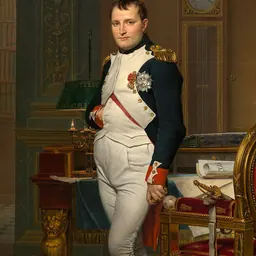

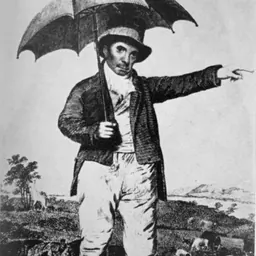

Related people
Same field, nearest in time

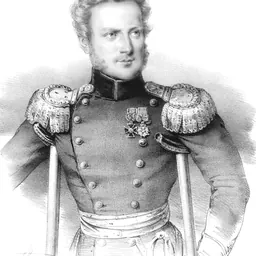
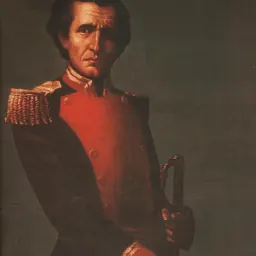
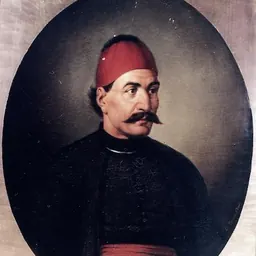
Contemporaries
People whose lives overlapped Emmanuel Bartelemy's

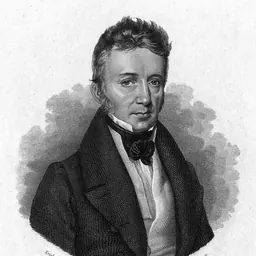



Frequently asked questions
Who was Emmanuel Bartelemy?
revolutionary
When was Emmanuel Bartelemy born?
Emmanuel Bartelemy was born in 1820 in Sceaux.
When did Emmanuel Bartelemy die?
Emmanuel Bartelemy died on 22 January 1855 in Newgate Prison.
What was Emmanuel Bartelemy's occupation?
Emmanuel Bartelemy was a revolutionary.
Sources & further reading
· Wikipedia: Emmanuel Bartelemy
· DBpedia: Emmanuel Barthélemy
Cite this page
APA: Biography.guide. (2026). Emmanuel Bartelemy. https://biography.guide/emmanuel-bartelemy/
MLA: "Emmanuel Bartelemy." Biography.guide, https://biography.guide/emmanuel-bartelemy/.
Chicago: "Emmanuel Bartelemy." Biography.guide. https://biography.guide/emmanuel-bartelemy/.
Data last updated: 2026-09-20 · Spot an error? Report a correction.
Page generated 2026-09-27 05:08 UTC