
About Emma Cadwalader-Guild
Lived 1843 – 1911 (aged 67–68). Emma Cadwalader-Guild was an American artist, sculptor and painter.
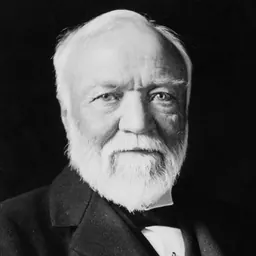
Emma Marie Cadwalader-Guild, also spelled Cadwallader-Guild (August 27, 1843 – c. 1911) was an American sculptor and painter, notable for her portrait busts of figures such as President William McKinley, Andrew Carnegie, and George Frederick Watts, as well other sculptures. She worked primarily in marble and bronze, and her works were exhibited at the Royal Academy of Arts, the 1894 Paris Salon, the 1876 Philadelphia Centennial Exposition, and the 1904 Louisiana Purchase Exposition, where she won a bronze medal. Cadwalader-Guild spent much of her career abroad and was particularly well known in England and Germany.
Life and career Cadwalader-Guild was born in Zanesville, Ohio in 1843. Her father, a doctor, was a member of the English Cadwallader family, and her name was spelled both Cadwalader and Cadwallader during her lifetime.
After her marriage, Cadwalader-Guild and her husband lived in Waltham, Massachusetts, near Boston, where she spent time with local artists in their studios and attended William Rimmer's lectures on anatomy. She is said to have completed a lifesize David in clay in 1875, and her first recorded exhibition was in 1876 at the Women's Pavilion of the Philadelphia Centennial Exhibition. According to a frequently repeated story, which first appeared in a profile of the artist in 1904, the inspiration for the work came from her encounter with a dejected African-American man at the Boston market. After spending weeks creating a clay model of the man, she arranged for it to be cast in bronze in Italy. In Braun's copy, the half-nude man leans against a tree trunk with his head down; his hands, held behind his back, are unbound, but from the front his posture suggests that he is still in chains. The ambivalence of the figure has been interpreted as a reflection of the lasting psychological effects of slavery and the ambiguous position of emancipated slaves in the Reconstruction era. a marble bust of Lotos/Lotus,
Though her primary work was sculpture, she also painted, though mostly without patronage. Her focus was on still lives
Once Free was completed, By 1897 she had relocated the majority of her work to Berlin Prior to December 1905 Cadwalader-Guild purportedly spent several years in England. During this time she made her busts of Gladstone and other notable figures including royalty. Another report attests that prior to March 1905 Cadwalader-Guild spent several years in Berlin before returning to America to work in the Bryant Park Building. and two busts in 1887, one of the inventor Peter Brotherhood, At the Royal Academy in 1888 she had a bronze portrait medallion and a bust of the Rev. Canon Wilberforce exhibited, in 1891 a bronze bust of an Indian rider, in 1893 her busts of the artist George Frederick Watts, Esq. R.A. and of Henry Shore, Esq., and in 1898 her bronze statuette Endymion.
Cadwalader-Guild also exhibited at the Glaspalast in Munich starting in 1883, the Paris Salon, the marble's location is unknown Frederick Seager Hunt, bronze bust, exhibited at the Royal Academy in 1887 exhibited at Royal Academy in 1898, Lotos/Lotus, 1904, marble bust, location currently unknown Head of St. Monica, the mother of St. Augustine, 1905, mixed media of marble and bronze, location currently unknown Tramonto, a plaster bust, exhibited at the Paris Salon in 1894, location currently unknown Electron/Elektron/Electro, 1895, a bronze and a marble statue, the bronze statue given to the German postmaster general Heinrich von Stephan by the Society of the Electrical and Electrochemical Industry of Frankfurt and placed at the Imperial Postal Museum in Berlin, today Museum für Kommunikation Berlin, second exhibited at the 1904 Louisiana Purchase Exposition, location of the bronze Elektron at the Museum für Kommunikation Frankfurt David, 1875, clay sculpture Psyche Ruberta Frond, 1894, alabaster bust Bronze portrait medallion, exhibited at the Royal Academy in 1888 Indian Rider, bronze bust, exhibited at the Royal Academy in 1891
Painting
Still life, exhibited at the Royal Academy in 1886 A series of oil sketches of unknown subjects
Reception The reception to Cadwalader-Guild's work was positive. Her sculpture Lotos was lauded in the German Times as, "This psychic masterpiece stamps Mrs. Guild unequivocally as an artist of the very first rank."
Cadwalader-Guild's bust of Joseph Joachim was also complimented by the German Times, saying, "[the bust is] by far the best and most significant work accomplished by any of the small army of sculptors who have been moved to do the violin-patriarch's characteristic head."
Her marble study of Wilhelmina of the Netherlands so impressed Empress Augusta Victoria that when she saw it on public display, she ordered it to be taken to the palace. Princess Sophia of Saxe-Weimar, Wilhelmina's aunt, had Cadwalader-Guild make a duplicate as a coronation gift for Wilhelmina.
United States politician John Hay described her bust of President McKinley as, "The power of the head is remarkable. It is a great expression of the personality of the man."
In an article about Cadwalader-Guild the Boston Evening Transcript wrote, "...the work of Mrs. Guild shows unmistakable talent and such as fresh, free spirit of originality that one can almost accept the alleged dictum of Berlin that Mrs. Guild 'is the greatest genius in sculpture that America has ever had.'"
Her bronze statuette Endymion was complimented in the 1896 Studio International with, "...since the Italian bronzes of the Quattrocento no finer work of the kind has been seen than this." Similarly, upon the completion of her marble Endymion a complimentary piece was written in The International Studio which focused on the originality, pose, and composition of the sculpture.
An author for The International Studio wrote about the skill of her paintings in the journal's November 1897 to February 1898 volume, saying, "Mrs. Guild has a strong predilection for painting...which she does with no small degree of success, as her free and vigorous landscape studies abundantly testify...This pronounced feeling of hers for colour explains to me how in... her sculpture she employs means which really overstep the bounds of plastic art."
Don’t just read it —
keep it.
Full-length biographies made to live with: read them, listen on the way to work, watch them tonight.
- E-book
- Audio
- Video
Instant download · yours to keep · every purchase keeps this site free
Important facts
People in Emma Cadwalader-Guild's life
Named in this biography and alive at the same time






Related people
Same field, nearest in time



Contemporaries
People whose lives overlapped Emma Cadwalader-Guild's
Frequently asked questions
Who was Emma Cadwalader-Guild?
American sculptor
When was Emma Cadwalader-Guild born?
Emma Cadwalader-Guild was born on 27 August 1843 in Zanesville.
When did Emma Cadwalader-Guild die?
Emma Cadwalader-Guild died in 1911.
What was Emma Cadwalader-Guild's occupation?
Emma Cadwalader-Guild was an artist, sculptor and painter.
What nationality was Emma Cadwalader-Guild?
Emma Cadwalader-Guild was American.
Sources & further reading
· Wikipedia: Emma Cadwalader-Guild
· DBpedia: Emma Cadwalader-Guild
Cite this page
APA: Biography.guide. (2026). Emma Cadwalader-Guild. https://biography.guide/emma-cadwalader-guild/
MLA: "Emma Cadwalader-Guild." Biography.guide, https://biography.guide/emma-cadwalader-guild/.
Chicago: "Emma Cadwalader-Guild." Biography.guide. https://biography.guide/emma-cadwalader-guild/.
Data last updated: 2026-09-26 · Spot an error? Report a correction.
Page generated 2026-09-27 05:14 UTC