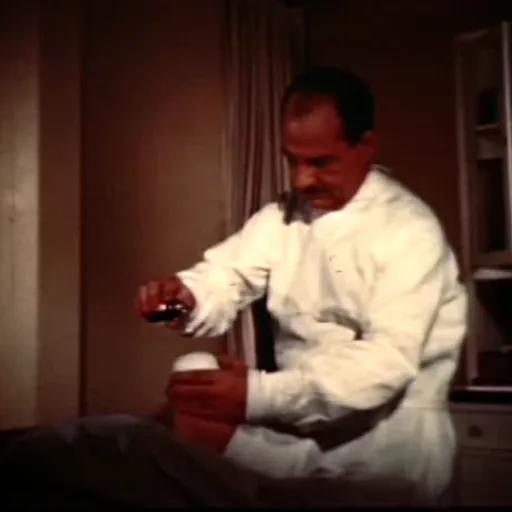
About Emery Andrew Rovenstine
Lived 1895 – 1960 (aged 65). Emery Andrew Rovenstine was an American physician.
Emery Andrew Rovenstine (July 20, 1895 – November 9, 1960) was an American anesthesiologist best known for organizing the first academic Department of Anesthesiology at New York's Bellevue Hospital. He also helped develop the anesthetic use for the gas cyclopropane, and he was a pioneer in therapeutic nerve blocking. Upon his death in 1960, the New York Times proclaimed him "one of the world's foremost anesthesiologists."
Early life
Dr. Rovenstine was born in 1895, in Atwood, Indiana, where he clerked at his father's grocery store. He briefly attended Winona College in nearby Winona Lake and taught high school before moving on to Wabash College, where he was graduated in 1917. Upon graduation, Rovenstine enlisted in the Army and served in France during World War I. During his three years of active duty, much of which he spent in charge of an engineering demolition squad, he witnessed battlefield pain and suffering which inspired him to pursue a career in medicine.
Medical career
After returning home for several years of teaching and coaching, he decided to attend medical school at Indiana University, from which he received a degree in medicine in 1928. In 1930, after struggling to maintain a general practice during economically difficult times, he took a faculty post at the University of Wisconsin–Madison, where he studied under Dr. Ralph M. Waters and served as assistant professor of anesthesia. He and Waters experimented on the gas cyclopropane and were the first doctors to use it on human subjects.
In 1935, Rovenstine was appointed chair of the department of anesthesiology at Bellevue Hospital, where he was influential in shaping the department's mission and mentoring future generations of anesthesiologists. During this time he developed a nerve blocking technique and became the first anesthesiologist to set up a nerve blocking clinic for pain relief. Two years later, he was appointed the second American professor of anesthesiology at New York University School of Medicine.
He became director at Goldwater Memorial Hospital in 1938 and director at University Hospital a decade later. Also in 1938, he accepted a guest professorship at Oxford University in England, and, a year later, at University of Rosario in Argentina. He also accepted visiting appointments in Bohemia, Canada, Cuba, Czechoslovakia, France, Japan, Mexico and South Africa – and was inducted into the medical society of each respective nation.
During World War II, Rovenstine served on the Army Advisory Board and was responsible for an order to Army general hospitals placing operating rooms in charge of anesthesiologists. The practice later became general.
Rovenstine was a co-founder of the reorganized American Society of Anesthesiologists and served as its president from 1943 to 1944. In 1957, he received that Society's Distinguished Service Award. He was also the founder of the PostGraduate Assembly (PGA) in Anesthesiology and the American Board of Anesthesiology.
He was honored by numerous organizations and governments, notably being decorated at the Verdun by the French government (for his service in the war), and being decorated by the Order of the White Lion in Czechoslovakia (for a humanitarian teaching mission there).
Residents Among Rovenstine's notable residents at Bellevue were Stuart Cullen, Emanuel Papper, Virginia Apgar, Perry Volpitto, John Adriani, Louis Orkin, Sam Denson, Richard Ament, Gertie Marx, Martin Helrich, Sara Joffe, and Lewis Wright. Irwin Glasner
Rovenstine Lectureship
The Emery A. Rovenstine Memorial Lecture series began in 1962, shortly following Dr. Rovenstine's death. The lecture is delivered by a prominent anesthesiologist each year at the annual American Society of Anesthesiologists meeting, and has become the meeting's premier event. Year Lecturer Title 1962 Francis D. Moore, M.D. Hemorrhage 1963 Julius H. Comroe, Jr., M.D., Ph.D. The Regulation of Respiration 1964 Eugene Braunwald, M.D. The Control of Cardiac Function 1965 Louis Lasagna, M.D. The Principles and Pitfalls in Evaluation of New Drugs 1966 E. M. Papper, M.D. Regional Anesthesia - A Critical Assessment of Its Place in Therapeutics 1967 Arthur C. Guyton, M.D. The Regulation of Cardiac Output 1968 Hermann Rahn, M.D. Evolution of Gas Transport Mechanisms from Fish to Man 1969 Niels A. Lassen, M.D. Cerebral Circulation and the Anesthetist: An Appraisal of Practical Consequences of Present Knowledge. 1970 Robert D. Dripps, M.D. The Physician and Society 1971 Julius Axelrod, M.D. Biochemical Factors in the Inactivation and Activation of Drugs 1972 Stuart C. Cullen, M.D. Factors Influencing Education in Anesthesiology 1973 William W. Mushin, M.B., B.S. The Decline and Fall of the Anesthesiologist? 1974 Otto K. Mayrhofer, M.D. How Can Acupuncture-Analgesia be Blended into the Modern Practice of Anaesthesiology? 1975 Harry C. Churchill-Davidson, M.D. Clinical Observation 1976 Francis D. Moore, M.D. Anesthesia and Surgical Care 1977 James E. Eckenhoff, M.D. A Wideangle View of Anesthesiology 1978 William K. Hamilton, M.D. Stress and Anesthesia 1979 Leroy D. Vandam, M.D. Anesthesiologists as Clinicians 1980 M. T. Pepper Jenkins, M.D. Responsibility for the Future 1981 E. S. Siker, M.D. A Measure of Worth 1982 S. G. Hershey, M.D. The Rovenstine Inheritance: A Chain of Leadership 1983 Arthur S. Keats, M.D. Cardiovascular Anesthesia: Perceptions and Perspectives 1984 Eugene A. Stead, Jr., M.D. The Physician: Education and Training 1985 John Lansdale, Esq. Anesthesiology: The Search for Identity 1986 Edward R. Annis, M.D. New Challenges—New Opportunities 1987 John F. Nunn, M.D., Ph.D. Balancing the Risks with the New Gases 1988 John D. Michenfelder, M.D. Neuroanesthesia and the Professional Respect 1989 Thomas F. Hornbein, M.D. Lessons from On High 1990 Robert K. Stoelting, M.D. Clinical Challenges for the Anesthesiologist 1991 Alan R. Nelson, M.D. Medicine 2000: Expectations, Realities and Values 1992 Nicholas M. Greene, M.D The Changing Horizons in Anesthesiology 1993 Betty J. Bamforth, M.D. Learning from our Past 1994 Lawrence J. Saidman, M.D. What I Have Learned after Nine Years and 9,000 Papers 1995 Ellison C. Pierce, Jr., M.D. 40 Years Behind the Mask: Safety Revisited 1996 David E. Longnecker, M.D. Navigation in Uncharted Waters: Is Anesthesiology on Course for the 21st Century? 1997 Michael J. Cousins, M.D. Pain: The Past, Present, and Future of Anesthesiology 1998 Francis M. James, III, M.D. Who Will Lead Us? 1999 Carl C. Hug Jr., M.D., Ph.D. Patient Values, Hippocrates, Science and Technology 2000 James F. Arens, M.D. Rovenstine Legacy 40 Years Later in Y2K 2001 Glenn W. Johnson ASA: Education, Science & Advocacy—Past, Present and Future 2002 Burton S. Epstein, M.D. ASA's Efforts In Developing Guidelines for Sedation and Analgesia for Nonanesthesiologists 2003 Terri G. Monk, M.D. Postoperative Cognitive Dysfunction: The Next challenge In Geriatric Anesthesia 2004 Jerome H. Modell, M.D Assessing the Past and Shaping the Future Of Anesthesiology 2005 Mark A. Warner, M.D. Who Better than Anesthesiologists? 2006 Jerry Reves, M.D. We Are What We Make 2007 James E. Cottrell, M.D. We Care, Therefore, We Are: Anesthesia-Related Morbidity and Mortality 2008 Ronald D. Miller, M.D. The Pursuit of Excellence 2009 Peter J. Pronovost, M.D., Ph.D. We Need Leaders 2010 Kevin K. Tremper, Ph.D., M.D. Anesthesiology: From Patient Safety to Population Outcomes 2011 Patricia A. Kapur, M.D. Leading into the Future 2012 Jeffrey L. Apfelbaum, M.D. Safety in Numbers: The Genesis, Development, and Future of ASA Practice Parameters 2013 John B. Neeld, Jr., M.D Winning the War 2014 Karen B. Domino, M.D., M.P.H. Health Care at the Crossroads: The Imperative for Change 2015 James Eisenach, M.D. Without Science There is Little Art in Anesthesiology 2016 David H. Chestnut, M.D On the Road to Professionalism 2017 Lee A. Fleisher, M.D. Quality Anesthesia: Medicine Measures, Patients Decide 2018 John M. Zerwas, M.D Mentoring the Next Generation of Leaders 2019 Jerome Adams, M.D. The Future of the Physician Anesthesiologist 2020 Joanne M. Conroy, M.D. Vital Signs: Transforming 21st Century Anesthesia Practice2021Steve Shafer, M.D.Ever Eger: My Love Affair with Anesthesia2022Claude D. Brunson, M.D.Demonstrating ASA's Leadership by Enhancing Our Relationships: How We Can Do D.E.I. Better2023Daniel Sessler, M.D.The Gathering Storm2024Mary Dale Peterson, M.D.Our Finest Hour-How Anesthesiologists Saved Countless Lives during the COVID-19 Pandemic2025Sachin Kheterpal, M.D., M.B.A.Anesthesiologists as Leaders in a Data Driven World
Athletics
Athletics played a significant role in Rovenstine's life. His first encounter with an anesthesiologist was during a high school basketball game, when he head-butted Arthur Ernest Guedel, a prominent scholar who happened to be officiating. Guedel threw the boy over his knee and gave him a spanking. He later studied under Guedel at Indiana University, and it was Guedel who helped Rovenstine secure the post at the University of Wisconsin.
At Wabash College, Rovenstine played baseball, basketball, football, and was sports editor of the school's newspaper. He also played semi-profession baseball on the side under the name "Jack Andrews."
Rovenstine coached basketball himself at LaPorte High School in LaPorte, Indiana from 1920 to 1924, where he still has the best winning percentage in the school's history. Year Won Lost 1920 - 1921 14 5 1921 - 1922 18 2 1922 - 1923 13 8 1923 - 1924 11 10 Career Total 56 25
Don’t just read it —
keep it.
Full-length biographies made to live with: read them, listen on the way to work, watch them tonight.
- E-book
- Audio
- Video
Instant download · yours to keep · every purchase keeps this site free
Important facts
People in Emery Andrew Rovenstine's life
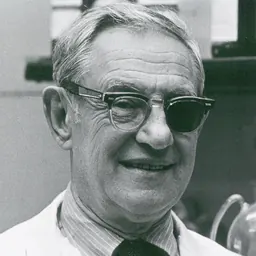
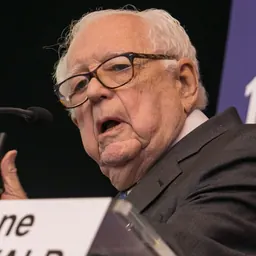
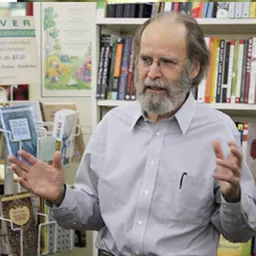
Named in this biography and alive at the same time





Related people
Same field, nearest in time

Contemporaries
People whose lives overlapped Emery Andrew Rovenstine's

Frequently asked questions
Who was Emery Andrew Rovenstine?
American medical researcher
When was Emery Andrew Rovenstine born?
Emery Andrew Rovenstine was born on 20 July 1895 in Atwood.
When did Emery Andrew Rovenstine die?
Emery Andrew Rovenstine died on 9 November 1960 in New York City.
What was Emery Andrew Rovenstine's occupation?
Emery Andrew Rovenstine was a physician.
What nationality was Emery Andrew Rovenstine?
Emery Andrew Rovenstine was American.
Sources & further reading
· Wikipedia: Emery Andrew Rovenstine
· DBpedia: Emery Andrew Rovenstine
Cite this page
APA: Biography.guide. (2026). Emery Andrew Rovenstine. https://biography.guide/emery-andrew-rovenstine/
MLA: "Emery Andrew Rovenstine." Biography.guide, https://biography.guide/emery-andrew-rovenstine/.
Chicago: "Emery Andrew Rovenstine." Biography.guide. https://biography.guide/emery-andrew-rovenstine/.
Data last updated: 2026-09-22 · Spot an error? Report a correction.
Portrait: Wikimedia Commons · author & licence
Page generated 2026-09-27 05:03 UTC