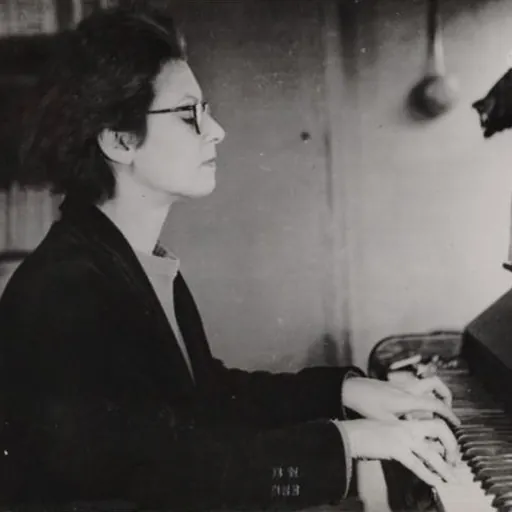
Elsa Barraine
French composer (b. 1910)
About Elsa Barraine
Lived 1910 – 1999 (aged 89). Elsa Barraine was a French composer, music educator, french resistance fighter, classical pianist and university teacher.
Elsa Jacqueline Barraine (; 13 February 1910 – 20 March 1999) was a composer of French music in the time after the neoclassicist movement of Les Six, Ravel, and Stravinsky. Despite being considered “one of the outstanding French composers of the mid-20th century,” Barraine's music is seldom performed today. She won the Prix de Rome in 1929 for La vierge guerrière, a sacred trilogy named for Joan of Arc, Barraine's Symphony No. 2 "Voïna", composed in 1938, was a huge success when it received its world premiere performance by the BBC Symphony Orchestra under the direction of Manuel Rosenthal at Covent Garden on July 7, 1946 during the opening concert of the 1946 ISCM Festival in London . The headline of Philip Whitacre’s review of the concert for London's Evening Standard the next day—in which he described the work as “concise, original, and alive”—was “We shall hear more of Mlle. Barraine” and the symphony was hailed by Alan Frank in The Musical Times as "expert" and as "France's best contribution" to the festival . Along with Barraine's earlier Symphony No. 1, it has been commercially recorded twice recently (by the WDR Symphony Orchestra Cologne under the direction of Elena Schwarz (conductor) for Classic Produktion Osnabrück [cpo] in July 2025 and by the Orchestre National de France under the direction of Cristian Măcelaru for Warner Classics in February 2026).
Biography Paul Dukas and his composition students at the Paris Conservatoire, 1929. From left to right, around the piano: Pierre Maillard-Verger, Elsa Barraine, Yvonne Desportes, Tony Aubin, Pierre Revel, Georges Favre, Paul Dukas, René Duclos, Georges Hugon, Maurice Duruflé. Seated on the right: Claude Arrieu, Olivier Messiaen.
Born in Paris to Alfred Barraine, the principal cellist of the Orchestre de l’Opéra, and Octavie Jeanne Barraine (née Boisson), Elsa Barraine began studying piano at a young age. A talented pupil, Barraine won First Prize in harmony at the Conservatoire at age fifteen (1925) and then in fugue and accompaniment when she was seventeen (1927). This was her first work of many to take inspiration from literature, such as the later Avis (1944) and L’homme sur terre (1949), both based on Paul Éluard texts. She embraced classic forms while making them her own, and used an entirely tonal harmonic language with one notable exception. Her chamber work Musique rituelle (1967) for organ, gongs, and xylorimba features serialism and is inspired by the Tibetan Book of the Dead.
The authors of The Norton/Grove Dictionary of Women Composers observe the following:
Profoundly sensitive to the enormous upheavals of her time, Barraine was unable to dissociate her creative processes from her personal, humanist, political and social pre-occupations.
In all of Elsa Barraine's works there is an ardent focus on the human condition. Le mur, ballet • (1947) Incidental music for Mégarée by Maurice Druon, a play in 3 actes, Bruxelles • (1946) Claudine à l'ecole, ballet • (1950) Suite Astrologique for small orchestra • (1945) Variations on 'Le Fleuve rouge, symphonic poem (1945) Hommage à Prokofiev, for orchestra • (1953) 3 Ridicules, for orchestra • (1955) Les jongleurs, for orchestra • (1959) Les tziganes, for orchestra • (1959) Melodies • (1930) Il y a quelqu'un d'autre je pense, for voice and piano • (1931) Christine, for solo voice, choir and orchestra • (1959) De premier mai en premier mai, for 4 voices and choir • (1977)Chamber musicWind quintet • (1931) Pièce en quintette, for piano quintet • (1932) Élégie et ronde, for flute and piano • (1936) Crépuscules, for French horn and piano • (1936) Ouvrage de Dame, chamber music with diverse instruments • (1937) Improvisation, for saxophone and piano • (1947) Variations, for percussion and piano • (1950) Suite Juive, for violin and piano • (1951) Fanfare de Printemps, for cornet and piano • (1954) Andante & Allegro, for saxhorn in Bb and piano • (1958) Musique Rituelle, trio for organ, gong, tam tam and xylorimba • (1967) The main goals of the organization were listed in their journal, Musiciens d’Aujourd’hui, and were to organize concerts of new and banned French music, to support Jewish musicians by providing shelter or money, to arrange anti-German and anti-Collaborationist protests, and to engage in any and all forms of musical rebellion. The résistant French conductor Roger Désormière, Les Six member Louis Durey, and Barraine together released a “manifesto for ‘the defence of French music’ and against any collaboration with the Nazis.” Her heavy involvement in the Resistance was particularly brave, considering the fact that she seems to have had a Jewish background.
Don’t just read it —
keep it.
Full-length biographies made to live with: read them, listen on the way to work, watch them tonight.
- E-book
- Audio
- Video
Instant download · yours to keep · every purchase keeps this site free
Important facts
People in Elsa Barraine's life
Named in this biography and alive at the same time



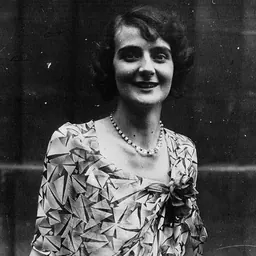
Related people
Same field, nearest in time


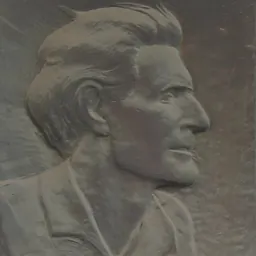

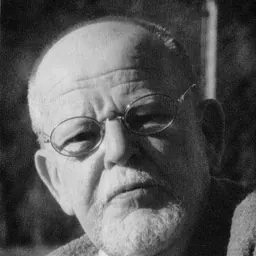

Contemporaries
People whose lives overlapped Elsa Barraine's






Frequently asked questions
Who was Elsa Barraine?
French composer (b. 1910)
When was Elsa Barraine born?
Elsa Barraine was born on 13 February 1910 in 18th arrondissement of Paris, Paris.
When did Elsa Barraine die?
Elsa Barraine died on 20 March 1999 in Strasbourg.
What was Elsa Barraine's occupation?
Elsa Barraine was a composer, music educator, french resistance fighter, classical pianist and university teacher.
What nationality was Elsa Barraine?
Elsa Barraine was French.
Sources & further reading
Cite this page
APA: Biography.guide. (2026). Elsa Barraine. https://biography.guide/elsa-barraine/
MLA: "Elsa Barraine." Biography.guide, https://biography.guide/elsa-barraine/.
Chicago: "Elsa Barraine." Biography.guide. https://biography.guide/elsa-barraine/.
Data last updated: 2026-09-20 · Spot an error? Report a correction.
Page generated 2026-09-27 05:10 UTC