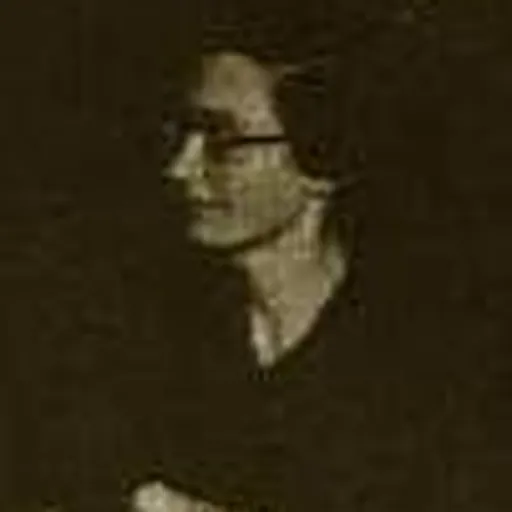
About Claude Arrieu
Lived 1903 – 1990 (aged 86). Claude Arrieu was a French composer.
Louise-Marie Simon (30 November 1903 – 7 March 1990), professionally known as Claude Arrieu, was a French composer, pedagogue, and music producer.
Arrieu wrote hundreds of works in various formats, including incidental music, concert works, and film scores. She was also a teacher and worked as a producer and assistant head of sound effects at Radio France.
Early life and education Born in Paris, Arrieu was the daughter of composer Cécile-Paul Simon. Arrieu was classically trained from an early age and became particularly interested in works by Bach and Mozart, and later, Igor Stravinsky. However, her contemporaries, such as Gabriel Fauré, Claude Debussy, and Maurice Ravel provided her the most inspiration.
She entered the Conservatoire de Paris in 1924. She became a piano student of Marguerite Long and took classes from Georges Caussade, Noël Gallon, Jean Roger-Ducasse, and Paul Dukas. She also became friends with Olivier Messiaen, who considered her a part of a core group of composers alongside himself, Elsa Barraine, and Jean Cartan, all students of Dukas.
Career In 1935, Arrieu joined the Service des programmes de la Radiodiffusion française, where she remained employed until 1947. She participated in the development of a wide range of programming, including Pierre Schaeffer's experimental radio series, La Coquille à planètes (1943–1944).
In 1949, Arrieu won the RAI's Prix Italia for her score for Frédéric Général.
Notable compositions Trio en Ut / Reed Trio (1936)
1. Allegretto ritmico. 2. Pastorale et Scherzo. 3. Allegrement. 9 mins. Oboe, clarinet, bassoon.
Arrieu was thirty-three when she wrote this reed trio. The work was commissioned by the ensemble, Trio D’Anches de Paris. The opening Allegretto ritmico is a pseudo-march, with contrasting episodes. The Pastorale et Scherzo is tender and swaying, sometimes faster, and includes its own middle section. The Allègrement has a more militaristic sound. It's one of two works she composed for reed trio, the other being Suite en Trio (1980).
Recorded by the Ambache ensemble on Liberté, Egalité, Sororité.
Dixtuor pour Instruments à Vent / Wind Dixtuor, 1967 (rev. 1989)
1. Allegretto moderato. 2. Moderato - Allegro scherzando - Andante - Tempo primo. 3. Andante - Allegro scherzando. 4. Cantabile 5. Allegro Risoluto 2 flutes, oboe, 2 clarinets, 2 bassoons, horn, trumpet, trombone.
Arrieu’s Dixtuor pour Instruments à Vent is possibly the only published piece written for this combination of instruments. Composed in 1967, the work exhibits a structure typical of Parisian neoclassicism.
List of works Opera Noé, 1931–1934 (imagerie musicale, 3 acts, A. Obey), f.p. Strasbourg Opéra, 29 January 1950 Cadet Roussel, 1938–1939 (opéra bouffe, 5 acts, André de la Tourasse after Jean Limozin), f.p. Marseilles, Opéra, 2 October 1953 La Coquille à planètes (opéra radiophonique, Pierre Schaeffer), RTF (Radiodiffusion-Télévision Française), 1944 Le deux rendez-vous, 1948 (opéra comique, P. Bertin after G. de Nerval), RTF, 22 June 1951 Le chapeau à musique (opéra enfantine, 2 acts, Tourasse and P. Dumaine), RTF, 1953 La princesse de Babylone, 1953–1955 (opéra bouffe, 3 acts, P. Dominique, after Voltaire), Rheims, Opéra, 3 March 1960 La cabine téléphonique (opéra bouffe, 1 act, M. Vaucaire), RTF, 15 March 1959 Cymbeline, 1958–1963 (2 acts, J. Tournier and M. Jacquemont, after Shakespeare), ORTF, 31 March 1974 Balthazar, ou Le mort–vivant, 1966 (opéra bouffe, 1 act, Dominique), Unperformed Un clavier pour un autre (opéra bouffe, 1 act, J. Tardieu), Avignon, Opéra, 3 April 1971 Barbarine, 1972 (3 acts, after A. de Musset), incomplete Les amours de Don Perlimpin et Belise en son jardin (imaginaire lyrique, 4 tableaux, after F. Garcia Lorca), Tours, Grand Théâtre, 1 March 1980
Chamber music
Cinq movements, 1964 (clarinet quartet: E-flat, two B-flat, and bass), premiered by the Belgian Clarinet Quartet in Aix-la-Chapelle, Germany Concerto en ut, 1938 (2 pianos and orchestra) Deux pieces, 1966 (string quintet, harp, horn, and percussion), premiered at ORTF under the direction of Freddy Alberti Fantaisie lyrique, 1959 (ondes Martenot and piano), contest piece for the Paris Conservatory Impromptu II, 1985 (oboe and piano) Passe-pied, 1966 (cello and piano) Quintette en ut, 1952 (wind quintet), premiered by the French Wind Quintet in Sarrebrück, Germany, 1952 Suite en trio, 1955 (bamboo pipes: soprano, alto in A or G, and bass) Suite en trio, 1980 (flute, oboe, clarinet) Suite en quatre, 1980 (flute, oboe, clarinet, and bassoon), premiered by the Soni Ventorum Ensemble in Washington, U.S., 19 January 1980 Trio en Ut, por Hautbois, Clarinette et Bassoon (oboe, clarinet, bassoon)
Vocal music
A traduire en esthionen, 1947 (René Chalupt) Ah! Si j'étais un oiseau, 1946 (choir: three equal parts, Samivel) Attributs, 1947 (René Chalupt) Chanson de Marianne, 1947 (soprano and/or baritone and piano, Max Jacob) Dix Chansons: Folklore de France, 1957 (unison choir, flute, oboe, clarinet, percussion, and strings) Rondeaux de Clément Marot, 1950 (choir: three equal parts) Rue des Ormeaux, 1953 (music for radio, Claude Roy)
Teaching pieces
Caprice, 1976 (B-flat or C trumpet and piano) Cerf-volant, 1976 (piano) Conte d'hiver, 1976 (bass trombone and piano) Escapade, 1976 (piano) Intermède, 1966 (B-flat or C trumpet and piano) Introduction, scherzo et choral, 1986 (tenor trombone and piano) La fête, 1976 (clarinet and piano) La poupée casée, 1976 (piano) Le cœur volant, 1976 (horn and piano) Lectures pour piano, 1968 (piano) Volume 1: I. Nonchalance, II. L'hiver est fini, III. Bavardes, IV. Carnet de bal Volume 2: V. Ingénue, VI. Capricieuse, VII. Malicieuse, VIII. Péronelle L'enfant sage, 1976 (piano) L'étourdi, 1979 (B-flat or C trumpet and piano) Manu militari, 1979 (B-flat or C trumpet and piano) Ménétrier, 1965 (B-flat or C trumpet or cornet and piano) Nocturne, 1976 (oboe and piano) Nostalgie, 1980 (flute and piano) Pauvre Pierre, 1976 (flute and piano) Petit choral, 1980 (clarinet and piano) Petit récit, 1976 (piano) Prélude pastoral, 1976 (piano) Promenade mélancolique, 1976 (piano) Questionnaire, 1976 (piano) Retour au village, 1986 (B-flat or C trumpet and piano) Rêverie, 1979 (B-flat or C trumpet and piano) Sonatine for flute and piano 1946 (flute and piano) premiered in 1944 by Jean-Pierre Rampal accompanied by Herman Moyens Six-huit, 1965 (Bb or C trumpet and piano) Trois duos faciles, 1977 (two flutes) Trois duos faciles, 1977 (flute and bassoon) Trois duos faciles, 1977 (two oboes) Un jour d'été, 1976 (clarinet and piano) Valse, 1948 (piano) Voyage en hiver, 1976 (flute and piano)
Don’t just read it —
keep it.
Full-length biographies made to live with: read them, listen on the way to work, watch them tonight.
- E-book
- Audio
- Video
Instant download · yours to keep · every purchase keeps this site free
Important facts
People in Claude Arrieu's life
Named in this biography and alive at the same time

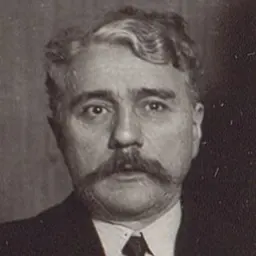

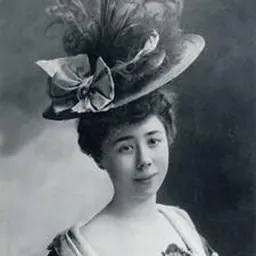
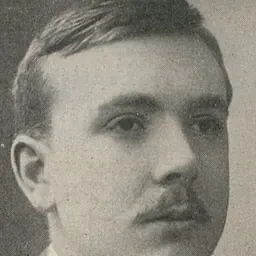
Related people
Same field, nearest in time
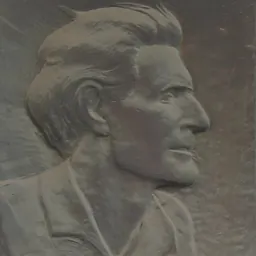




Contemporaries
People whose lives overlapped Claude Arrieu's

Frequently asked questions
Who was Claude Arrieu?
French composer (1903–1990)
When was Claude Arrieu born?
Claude Arrieu was born on 30 November 1903 in 8th arrondissement of Paris, Paris.
When did Claude Arrieu die?
Claude Arrieu died on 7 March 1990 in 19th arrondissement of Paris, Paris.
What was Claude Arrieu's occupation?
Claude Arrieu was a composer.
What nationality was Claude Arrieu?
Claude Arrieu was French.
Sources & further reading
Cite this page
APA: Biography.guide. (2026). Claude Arrieu. https://biography.guide/claude-arrieu/
MLA: "Claude Arrieu." Biography.guide, https://biography.guide/claude-arrieu/.
Chicago: "Claude Arrieu." Biography.guide. https://biography.guide/claude-arrieu/.
Data last updated: 2026-09-23 · Spot an error? Report a correction.
Portrait: Wikimedia Commons · author & licence
Page generated 2026-09-27 05:05 UTC