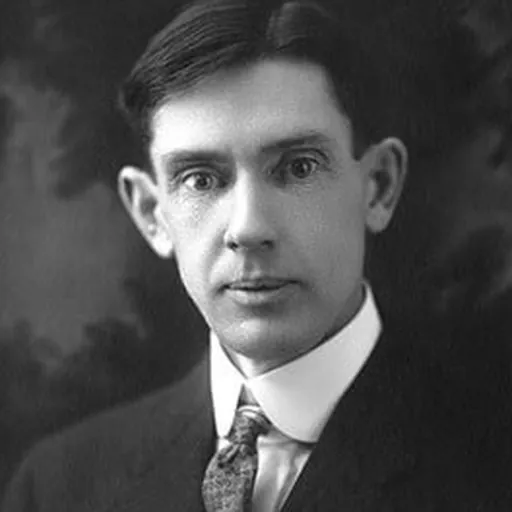
About Elmer McCollum
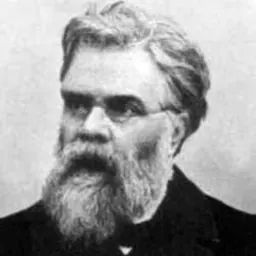
Lived 1879 – 1967 (aged 88). Elmer McCollum was an American biochemist and university teacher, known for Diet (nutrition), Vitamin and Vitamin A.
Elmer Verner McCollum (March 3, 1879 – November 15, 1967) was an American biochemist known for his work on the influence of diet on health. McCollum is also remembered for starting the first rat colony in the United States to be used for nutrition research. Time magazine dubbed him "Dr.Vitamin". His rule was, "Eat what you want after you have eaten what you should."
Living at a time when vitamins were unknown, he asked and tried to answer the questions, "How many dietary essentials are there, and what are they?" McCollum also promoted leafy greens, which had no industry advocates.
McCollum wrote in his 1918 medical textbook (which initially had the title of The Newer Knowledge of Nutrition) that lacto vegetarianism is, "when the diet is properly planned, the most highly satisfactory plan which can be adopted in the nutrition of man".
Family and education McCollum's ancestors immigrated to the United States from Scotland in 1763. McCollum was born in 1879 to Cornelius Armstrong McCollum and Martha Catherine Kidwell McCollum on a farm from Redfield, Kansas, usually reported to have been Fort Scott, Kansas, which was away. His parents had little education but became relatively well-off by local standards.
He spent his first seventeen years on this farm and attended a one-room school. He had one brother, Burton, and three sisters. At some point he had surgery for a detached retina, which the doctors were unable to "glue back again". His father suffered from tuberculosis. His mother, who had only two winters of schooling but was devoted to her children's education, took McCollum and his brother to the 1893 World's Columbian Exposition. All three of his sisters graduated from Lombard University and married Universalist ministers. A lifelong close friend of his brother's, Burton became a geophysicist who helped to pioneer the use of sound waves in oil drilling. In 1896 his mother moved their family to Lawrence, Kansas, where they hoped to profit from a fruit farm adjoining the University of Kansas.
McCollum failed the general certification examination, but was allowed to enter high school provisionally based on his habit of extensive reading and his memorization of standard poetry. Though extremely shy around girls, he was elected class president in his junior and senior years. He fell in love with the school's Encyclopædia Britannica, purchased a set for $25 (about two months of his earnings), and used it for twenty-five years until he bought a new edition. In high school he joined the Unitarian church. As his mother had hoped, McCollum graduated from the University of Kansas in 1903. While there, he abandoned the dream of becoming a doctor, and during his sophomore year, he consumed organic chemistry, earning a bachelor's degree in three years, followed by his master's in 1904. In Wisconsin, McCollum was assigned to analyze cow feed and the animal's milk, blood, feces, and urine for the famous single-grain experiment, directed by department chief Stephen Babcock and his successor Edwin B. Hart. The experiment ran for four years until 1911.
Babcock had studied for his Ph.D. at the University of Göttingen in Germany prior to working at the New York State Agricultural Experiment Station and then joining the staff in Wisconsin. During this era, German chemists were trying to create the perfect foods for farm animals. Due to discoveries by Justus von Liebig and others, they thought that any feed that contains a set amount of protein, carbohydrates, fats, salts, and water was equivalent to any other. Babcock did not believe them, and joked with his German colleagues that cows could survive on coal and ground-up leather according to their calculations. After Hart replaced him as department chief in 1906, Babcock and others created an experiment to test his hypothesis.
Hart and his team published their findings in 1911 in Physiological Effect on Growth and Reproduction of Rations Balanced from Restricted Sources. The researchers and Babcock, the leader, could see the results but, they write, "At present we have no solution for the observations made." so he could read them at home. McCollum captured some rats from a horse barn, but they were too vicious and wild. He replaced them with twelve young albino rats with some domestication that he bought for $6 from a Chicago pet store. His rat colony, started in January 1908, was the first in America used for nutrition research. They also found this food factor in extracts of alfalfa leaves and in organ meats. This substance that McCollum called "factor A," was later called vitamin A. This turned out to be a very close call given that learning about vitaminA took scientists about 130 years, beginning with François Magendie in 1816 through its synthesis in 1947.
Richard Semba has questioned McCollum and Davis's priority claim to the discovery of vitamin A, and Wilhelm Stepp had demonstrated a fat-soluble growth factor in 1911. Semba argues that McCollum's 1913 work should therefore be viewed in the context of earlier research on fat-soluble dietary factors.
Davis published with McCollum from 1909 to 1916, and Nina Simmonds did the same from 1916 to 1929. In the space of six years, McCollum was promoted from instructor to assistant professor, associate professor, and then full professor.
Discovery of vitamin B Looking at beriberi and the problem of polished rice, Christiaan Eijkman and Gerrit Grijns were trying to find the cause of polyneuritis (influenced by Louis Pasteur. Eijkman thought bacteria caused beriberi He later found that B is actually combined from many different compounds.
In 1920 Jack Drummond noted that the rules of nomenclature include "a neutral substance of undefined composition" ending in "in". Drummond also suggested that the "somewhat cumbrous nomenclature" of fat-soluble A, water-soluble B, etc. (Drummond himself used the expression water-soluble C ) stop in favor of vitamins A, B, C, etc., until their nature became known. The word vitamine survived, without its final "e". although he almost didn't get the job. William H. Howell, assistant director of the new school, said, "We had just one misgiving about appointing you to a professorship, McCollum. You look so frail." Indeed, McCollum was six feet tall but weighed only 127 pounds.
McCollum was elected a member of the National Academy of Sciences in 1920. He became emeritus professor in 1945.
During his over twenty-five years at Johns Hopkins, McCollum published about 150 papers. His work was on fluorine and the prevention of tooth decay, vitamins D and E, and the effect of a slew of trace minerals in nutrition, including aluminum, calcium, cobalt, phosphorus, potassium, manganese, sodium, strontium, and zinc.
McCollum worked with Herbert Hoover's U.S. Food Administration to help those who were starving in Europe following World War I. Hoover sent him on a lecture tour of all the major cities in the western U.S., where McCollum explained that the American diet was of poor quality, and that it would be better to eat organ meats (rather than muscle meats), fewer potatoes, and less sugar.
Discovery of vitamin D In conversation with John Howland, a Johns Hopkins pediatrician, and later with Howland's staff doctors Edwards A. Park and Paul G. Shipley, they found that rickets could be induced through diet. After his rats recovered, he named the substance for the next free letter of the alphabet, vitamin D. Then they became convinced that sunshine and cod-liver oil both protected against rickets and tested this by carrying rats outside to the sunshine. Soon after, a generation of children grew up on cod-liver oil, and rickets was virtually wiped out.
Harry Day, a colleague and McCollum biographer, writes that finding vitaminD was the work of "a host of investigators" but that McCollum and his group did "much of the groundwork". According to Carpenter, during this era, nominations were made for Eijkman, Funk, Goldberger, Grijns, Hopkins and Suzuki.
McCollum wanted milk to be fortified with vitamin D. Today, the National Dairy Council's website welcomes researchers, saying that it was McCollum "who first made the scientific connection between dairy foods and good health".
In 1942 he wrote an article, "What Is the Right Diet?" for The New York Times Magazine. He says there are about forty essential ingredients in the human diet: at least ten of the 22 amino acids, four vitamins (A, D, E, K) that are fat-soluble, nine water-soluble vitamins (C, and various B vitamins), one fatty acid, dextrose, at least thirteen minerals, water, and oxygen. In his article, he pictures five food groups. First among them is dairy, with the label, "Our best all around food...."
Two years before he died, he and his wife attended the fiftieth anniversary of the founding of the National Dairy Council. He then traveled to Atlantic City, New Jersey, where he attended the first awarding of the McCollum Award by what is today the American Society for Nutrition, sponsored by the National Dairy Council.
McCollum's textbook The Newer Knowledge of Nutrition (1918) influenced many dietitians and went through multiple editions coauthored by Nina Simmonds and Elsa Orent-Keiles. In this book he introduced his idea of "protective foods". He encouraged a daily quart of milk and plenty of green, leafy vegetables. Not surprisingly, McCollum also promoted lacto-vegetarianism. described how excessive florine would negatively affect dental health in rats. Nonetheless, McCollum would later become a supporter of water fluoridation from the beginning of recorded evidence for the intervention. claimed that vigorous chewing exercises teeth to retain optimum health, that chewing foods has a deterrent effect, and that "protective action of excessive fat in the diet may possibly be due to greasing the tooth surface and the cavity surface".
As a new member of the Food and Nutrition Board, McCollum was part of the decision in 1941 to enrich bread and flour with thiamine, niacin, and iron. McCollum was critical of the decision; while he agreed that white bread has nutritional deficiencies, he felt that this action did not compensate for all of the nutrients that are stripped away by milling. In the ensuing controversy, McCollum's status was changed from "board member" to "panel member" and he was no longer invited to board meetings. For years, he continued to think his own plan of adding "nonfat milk solids, brewer's yeast, and wheat and corn germs" was superior to the plan as enacted.
As he became a public figure, McCollum often gave lectures,
In 1934 he told The New York Times, "We have proved the necessity for [magnesium] in human food, but in very small amounts. Too much results in dopiness. I would say you can't have a sweet disposition without magnesium, but that does not prove that you will have one when you take plenty."
According to The New York Times, in 1936 he asked an audience of four hundred doctors at the Kings County Medical Society in Brooklyn to help investigate the "extravagant claims" being made for some medicinal preparations. He thought that doctors could stop false advertising by immediately establishing the facts of each new discovery. McCollum then gave a long list of dos and don'ts with vitaminsA andB.
In 1937 he told an audience at the University of Buffalo that a lack of maternal instincts is due to a deficiency in manganese. When the rat was fed a small amount of manganese chloride, the mothering instinct returned immediately.
Health At seven months of age, McCollum fell ill with what we know today as scurvy when his mother became pregnant. She weaned him on mashed potatoes and boiled milk. The boy was slowly dying, and had painful sores, bleeding gums, and swollen joints. One day while his mother was peeling apples, McCollum started to suck on the peels. When on the following day he felt a little better, she fed him more apple skins. When spring came, she gave him other fruits and vegetables. but his teeth caused him trouble for the rest of his life. Finally, in 1926 he had all his teeth removed and got dentures. His health improved.
McCollum suffered from diverticulitis, and was often in pain. He had a number of operations, and finally his descending colon was removed. Again his health improved.
McCollum criticized drugstore vitamin supplements as being no better than old-time patent medicines.
While working with Olaf S. Rask ten years before he retired, McCollum began to search for ways to separate specific amino acids from protein hydrolysates. When he retired, he worked on this project exclusively. He had a small laboratory at Johns Hopkins's Homewood Campus and an assistant, Mrs.Agatha Ann Rider. In retirement, he produced six papers and three patents, the last one issued to him and Rider on March15, 1960, for the purification of glutamine.
In 1961 he was elected a foreign member of the Royal Society.
In 1965 the University of Kansas named a ten-story dormitory, McCollum Hall, after McCollum and his brother Burton.
One issue became especially important to him, and he wrote dozens of his friends asking what could be done about it. He thought the country was losing its potassium and phosphorus, and he wanted to find a way to recycle them instead of throwing them in our sewage.
McCollum died on November 15, 1967, at the age of 88. Shortly before his death, he remarked: "I have had an exceptionally pleasant life and am thankful." Semba cites a 1918 letter written by Edwin B. Hart, chair of the University of Wisconsin department of agricultural chemistry, to the journal Science. Hart states in this letter, which was published under the title "Professional Courtesy", that a paper co-authored by McCollum and Nina Simmonds, "A Study of the Dietary Essential, Water-SolubleB, in Relation to its Solubility and Stability Towards Reagents", is actually the work of Harry Steenbock, who is mentioned only in a footnote and is thus the victim of a "gross injustice". Further, Hart says that all the records of rat feeding at Wisconsin disappeared during the change of staff.
In his book, Semba mentions a recollection attributed to Harry Steenbock that McCollum released the rats from their cages when he left Wisconsin in 1917, which Semba characterizes as an act of sabotage. The account was conveyed to Semba in 2009 by Hector DeLuca, who said he had heard it from Steenbock. No contemporary account of the alleged incident has been identified; Hart's 1918 letter to Science, while critical of McCollum's conduct during his move to Johns Hopkins, does not mention the release of the rats.
Books
Don’t just read it —
keep it.
Full-length biographies made to live with: read them, listen on the way to work, watch them tonight.
- E-book
- Audio
- Video
Instant download · yours to keep · every purchase keeps this site free
Important facts
People in Elmer McCollum's life
Named in this biography and alive at the same time

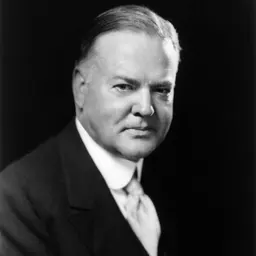


Related people
Same field, nearest in time


Contemporaries
People whose lives overlapped Elmer McCollum's

Frequently asked questions
Who was Elmer McCollum?
American biochemist (1879-1967)
When was Elmer McCollum born?
Elmer McCollum was born on 3 March 1879 in Redfield.
When did Elmer McCollum die?
Elmer McCollum died on 15 November 1967 in Baltimore.
What was Elmer McCollum's occupation?
Elmer McCollum was a biochemist and university teacher.
What was Elmer McCollum known for?
Elmer McCollum was known for Diet (nutrition), Vitamin, Vitamin A, Vitamin B and Vitamin D.
What nationality was Elmer McCollum?
Elmer McCollum was American.
Sources & further reading
Cite this page
APA: Biography.guide. (2026). Elmer McCollum. https://biography.guide/elmer-mccollum/
MLA: "Elmer McCollum." Biography.guide, https://biography.guide/elmer-mccollum/.
Chicago: "Elmer McCollum." Biography.guide. https://biography.guide/elmer-mccollum/.
Data last updated: 2026-09-20 · Spot an error? Report a correction.
Portrait: Wikimedia Commons · author & licence
Page generated 2026-09-27 05:05 UTC