
About Elmer Keiser Bolton
Lived 1886 – 1968 (aged 82). Elmer Keiser Bolton was an American chemist.
Elmer Keiser Bolton (June 23, 1886 – July 30, 1968) was an American chemist and research director for DuPont, notable for his role in developing neoprene and directing the research that led to the discovery of nylon .
Personal life Bolton was born in Frankford, Philadelphia, Pennsylvania, the oldest of two brothers. His father ran the furniture store on Main Street, and both he and his brother attended public school in Frankford and went on to college. Bolton went to Bucknell University in Lewisburg, Pennsylvania, and took the Classical Course, receiving a B.A. degree in 1908. From there he went to Harvard University, receiving his A.M. degree in 1910 and his Ph.D. in organic chemistry in 1913. His thesis advisor was Charles Loring Jackson, and his dissertation concerned the chemistry of periodoquinones.
Several other prominent contemporaries of Bolton's at Harvard Graduate School were Roger Adams, Farrington Daniels, Frank C. Whitmore, James B. Sumner and James Bryant Conant. Adams was particularly influential through Bolton's career. They shared diverse interests, yet a drive for accomplishment in organic chemistry. In later years Adams had significant influence on Bolton's ideas about industrial support of chemical research and university students.
In 1913 Bolton won the Sheldon Fellowship, which he used to work at the Kaiser Wilhelm Institute outside of Berlin, Germany, for two years with Professor Richard Willstätter. Here he worked on anthocyanins, a major program for Willstätter, and published three papers on isolation and structures of anthocyanin pigments. Willstätter, apparently impressed by Bolton's ability but frustrated by his tendency to make arithmetic mistakes, commented "You must have been a bank teller." To his surprise Bolton replied that he had been a bank teller, this was how he paid his way through college.
Bolton was very impressed by Willstätter's careful, logical approach to tackling a research problem. He felt that this was the result of good training in the German university system. He also observed the relationship between German universities and industry, for which there was no counterpart in the United States. Another aspect of German research that impressed Bolton was the effort to create artificial rubber. This work was significant to German industry, and later to the German war effort in World War II because Germany did not have ready access to sources of natural rubber. Also, the approach being used by the Germans undoubtedly lead to the development of neoprene rubber years later at DuPont Labs.
Bolton married Margarite L. Duncan in 1916 and they had three children, a daughter and two sons. He retired from DuPont after a distinguished career in 1951, but continued to follow the scientific literature. He died July 30, 1968, at the age of eighty-two.
World War I and DuPont From the 1870s up to the onset of World War I (1914), the organic chemical industry of Germany was a world-leading force in research, development, production, and export; most organic compounds used in America, such as textile dyes and some medicines, were imported from Germany. After a scramble for rubber during World War I, there was a glut when the war ended, depressing prices. In November 1922 England enacted the Stevenson Act that was intended to protect rubber producers by restricting production and keeping prices from being ruinously low. But this caused a great deal of concern in the United States because an expanding supply of rubber was needed to support the growing number of automobiles in use. The Perkin Medal (1945) Elected to the National Academy of Sciences (1946) The Willard Gibbs Medal (1954)
Don’t just read it —
keep it.
Full-length biographies made to live with: read them, listen on the way to work, watch them tonight.
- E-book
- Audio
- Video
Instant download · yours to keep · every purchase keeps this site free
Important facts
People in Elmer Keiser Bolton's life
Named in this biography and alive at the same time
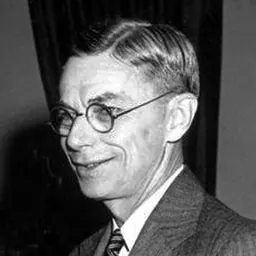
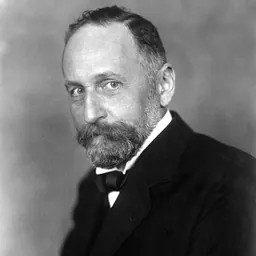


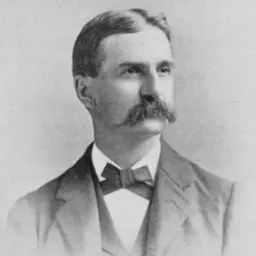

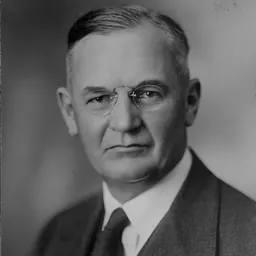

Related people
Same field, nearest in time




Contemporaries
People whose lives overlapped Elmer Keiser Bolton's




Frequently asked questions
Who was Elmer Keiser Bolton?
American chemist (1886-1968)
When was Elmer Keiser Bolton born?
Elmer Keiser Bolton was born on 23 June 1886.
When did Elmer Keiser Bolton die?
Elmer Keiser Bolton died on 30 July 1968.
What was Elmer Keiser Bolton's occupation?
Elmer Keiser Bolton was a chemist.
What nationality was Elmer Keiser Bolton?
Elmer Keiser Bolton was American.
Sources & further reading
· Wikipedia: Elmer Keiser Bolton
· DBpedia: Elmer Keiser Bolton
Cite this page
APA: Biography.guide. (2026). Elmer Keiser Bolton. https://biography.guide/elmer-keiser-bolton/
MLA: "Elmer Keiser Bolton." Biography.guide, https://biography.guide/elmer-keiser-bolton/.
Chicago: "Elmer Keiser Bolton." Biography.guide. https://biography.guide/elmer-keiser-bolton/.
Data last updated: 2026-09-20 · Spot an error? Report a correction.
Page generated 2026-09-27 05:06 UTC